
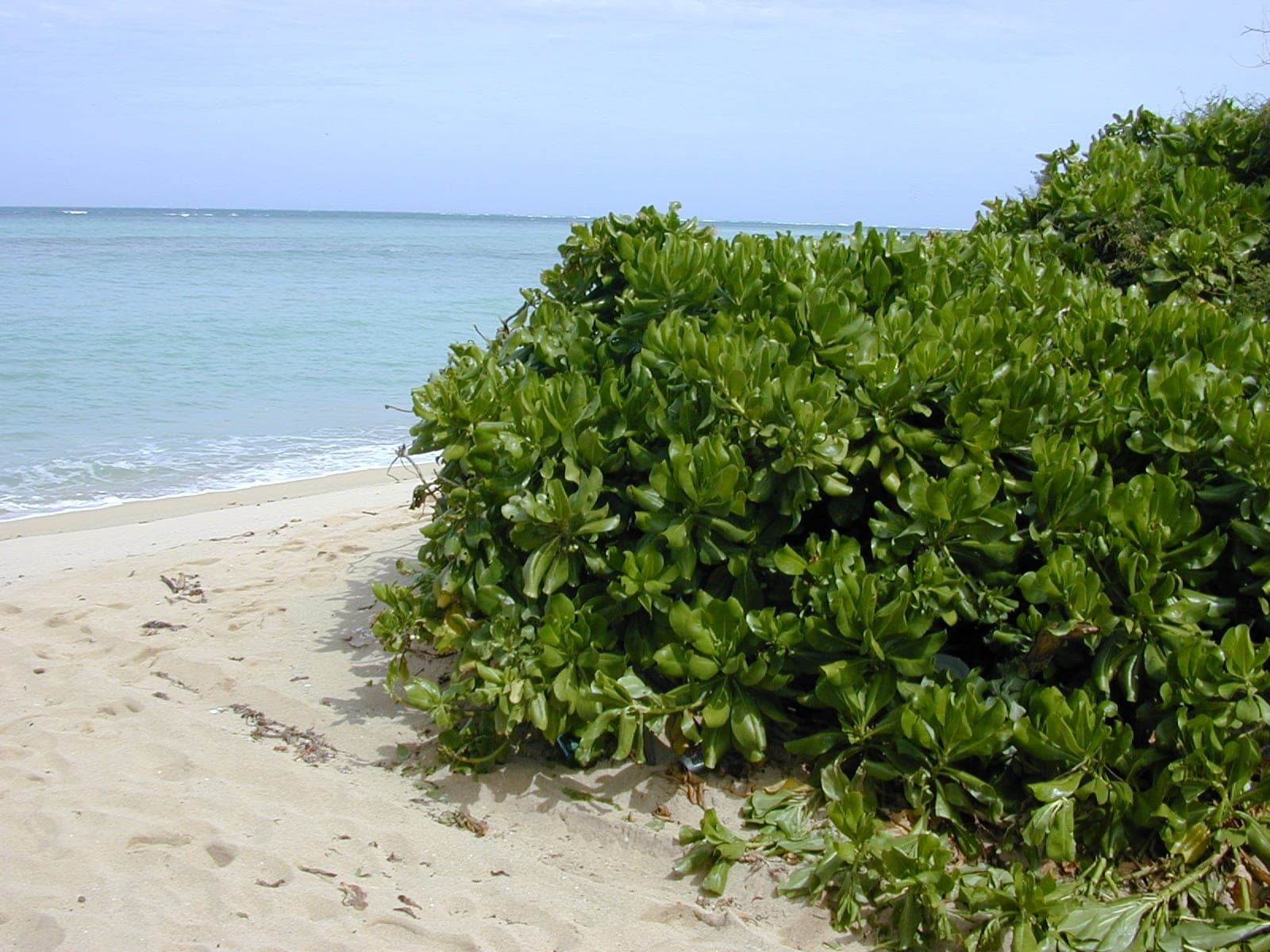
Naupaka kahakai is a rounded, thick-leaved shrub of beaches and rocky shores across Hawaii and the tropical Pacific. The glossy, slightly succulent leaves shrug off salt spray, and the flowers look as though someone tore them in half: a fan of white petals on one side only. In Hawaiian tradition that shape belongs to a story of separated lovers, and the white berries that follow are used in lei.
It is one of the most reliable plants for a hot, windy coastal site. Grow it in full sun to part shade in sandy or rocky soil, water it through establishment, and then leave it alone. It responds well to shearing and makes a good informal hedge or dune stabilizer. Spacing of four to six feet lets it fill in without crowding. Cuttings root easily and are the quickest way to more plants.
Outside its native range this species can be a problem. It is invasive in Florida and the Caribbean, where it crowds out native dune plants, so do not plant it there.
Root rot
Plants wilt, yellow, and stunt even in moist soil; lower stems and roots turn brown, soft, and mushy and the plant may collapse. Most common in heavy, wet, or poorly drained ground.
Improve drainage and stop overwatering, and never plant too deep. Lift and destroy badly affected plants along with the soil around the roots. Grow in raised or free-draining beds to prevent it returning.
Fungal leaf spot
Brown or purplish spots on the leaves, often ringed with a yellow halo, that spread and merge in warm, humid, or wet weather; heavily spotted leaves yellow and drop early.
Pick off spotted leaves and clear fallen debris to remove overwintering spores. Improve air circulation by thinning, and water at the base so foliage dries quickly. If it persists, apply a copper- or sulfur-based fungicide at the first sign.
Sooty Mold (Scale-Associated)
Black, powdery or crusty coating on upper leaf surfaces and stems. Affected leaves may yellow and drop in severe cases. The mold grows on honeydew secreted by scale insects, mealybugs, or aphids feeding on the plant.
Control the underlying pest infestation first using horticultural oil or neem oil applied thoroughly to stems and leaf undersides. Once pest populations are reduced, sooty mold stops spreading and weathers away over time. Rinse foliage with a strong stream of water to dislodge existing mold deposits.