
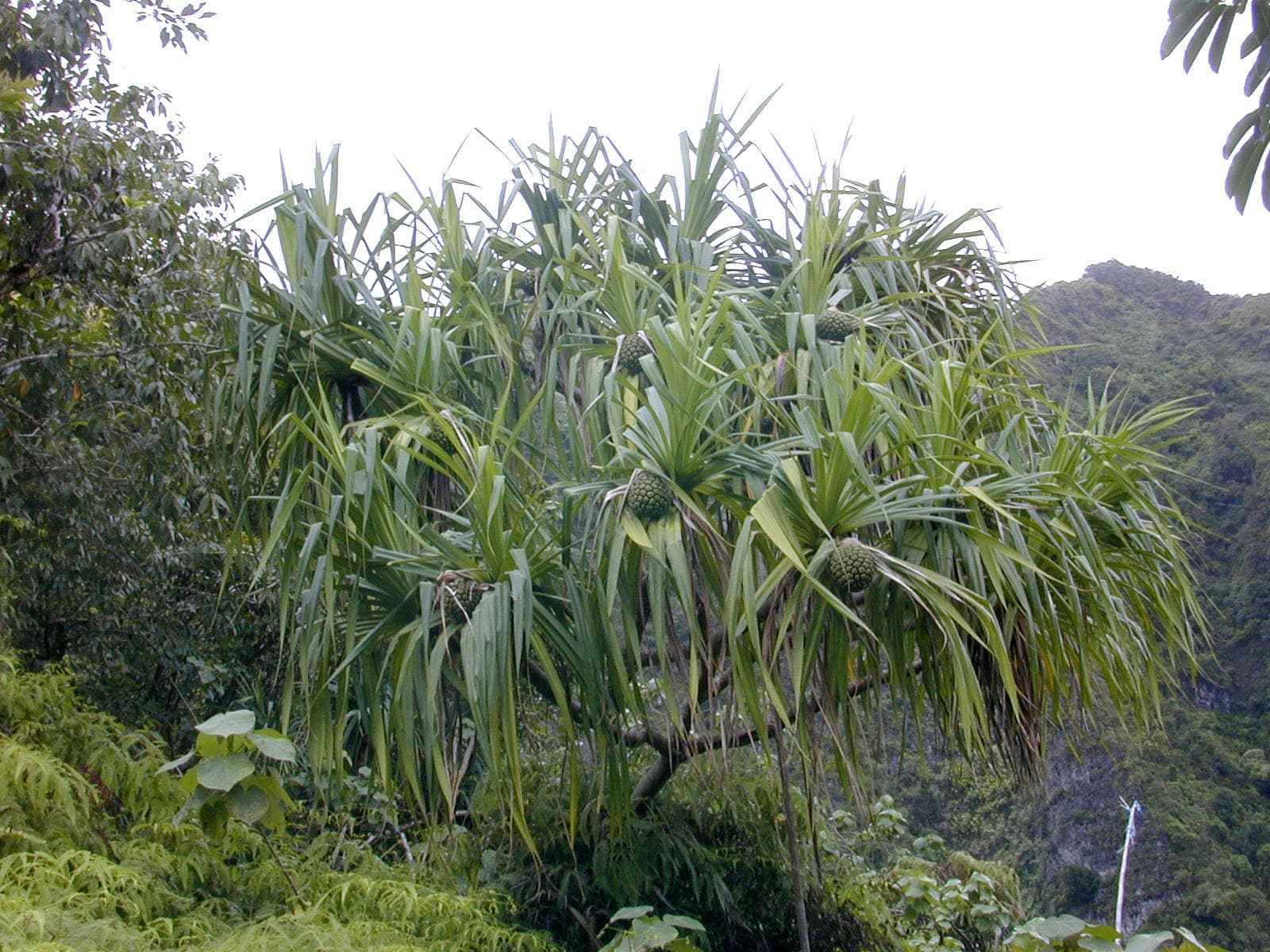
Hala, the screw pine, is a coastal tree of Hawaii and the Pacific with a branching crown, a cluster of stilt roots at the base and long, spiny-edged leaves arranged in spirals. Male and female flowers grow on separate trees. Female trees bear the heavy, segmented fruits, which are used in lei, while the long leaves, called lau hala, are woven into mats, hats and baskets and remain one of the most valued Hawaiian craft materials.
It is a dependable tree for sandy, windy, salty sites, and it grows well in full sun with little care. Give it plenty of room: the crown spreads wide and the leaf margins and midribs are armed with small spines, so avoid planting it beside paths and wear gloves and long sleeves when handling it. Water newly planted trees regularly until they establish. New trees are most easily started from rooted offsets or from fresh seed within the fruit, which germinates slowly.
Sooty Mold (Scale-Associated)
Black, powdery or crusty coating on upper leaf surfaces and stems. Affected leaves may yellow and drop in severe cases. The mold grows on honeydew secreted by scale insects, mealybugs, or aphids feeding on the plant.
Control the underlying pest infestation first using horticultural oil or neem oil applied thoroughly to stems and leaf undersides. Once pest populations are reduced, sooty mold stops spreading and weathers away over time. Rinse foliage with a strong stream of water to dislodge existing mold deposits.
Root rot
Plants wilt, yellow, and stunt even in moist soil; lower stems and roots turn brown, soft, and mushy and the plant may collapse. Most common in heavy, wet, or poorly drained ground.
Improve drainage and stop overwatering, and never plant too deep. Lift and destroy badly affected plants along with the soil around the roots. Grow in raised or free-draining beds to prevent it returning.
Fungal leaf spot
Brown or purplish spots on the leaves, often ringed with a yellow halo, that spread and merge in warm, humid, or wet weather; heavily spotted leaves yellow and drop early.
Pick off spotted leaves and clear fallen debris to remove overwintering spores. Improve air circulation by thinning, and water at the base so foliage dries quickly. If it persists, apply a copper- or sulfur-based fungicide at the first sign.