
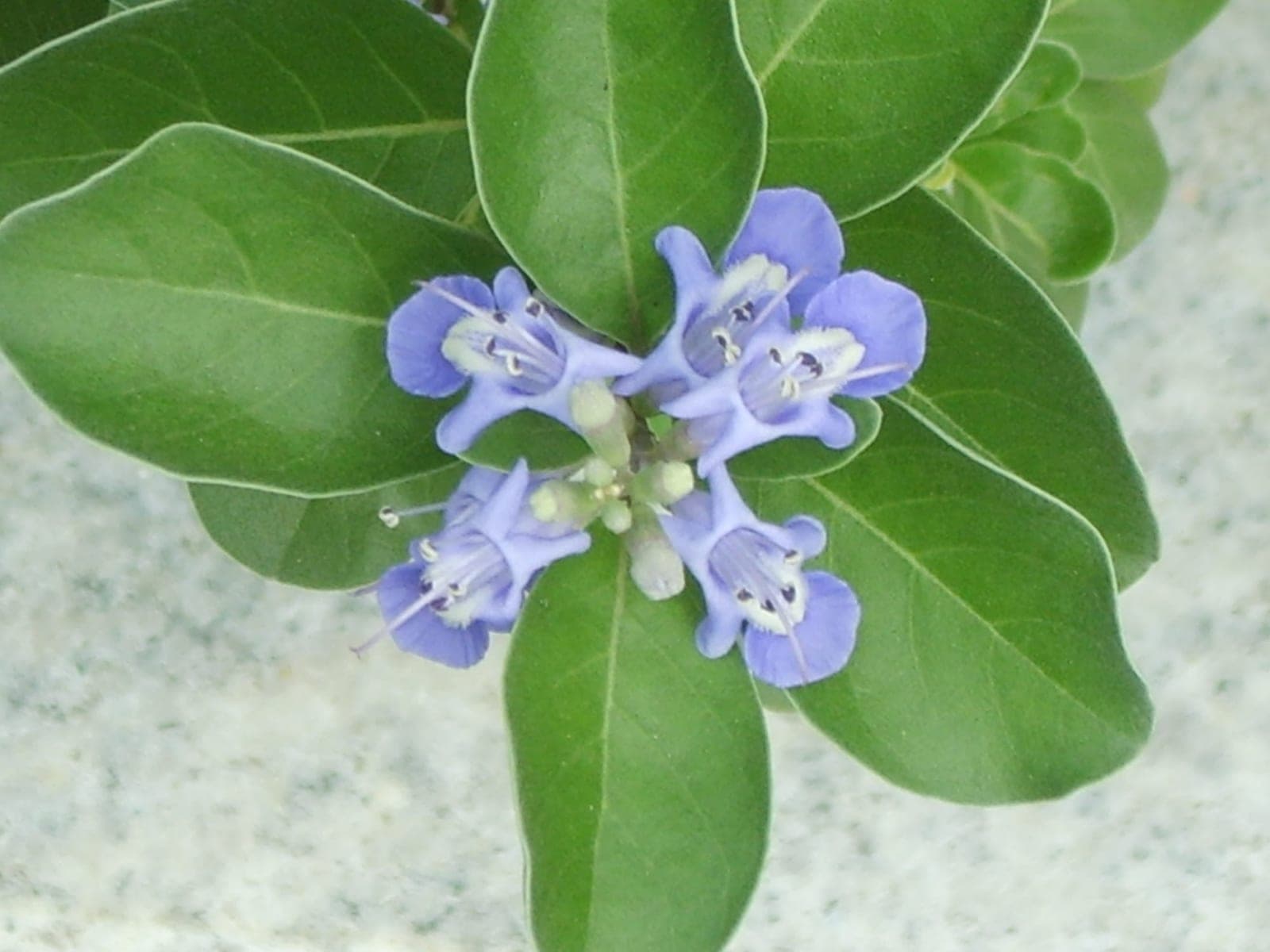
Pōhinahina is a sprawling, silvery shrub of sandy beaches, dunes and rocky shores across Hawaii and the wider Pacific. Round leaves covered in fine hairs give the plant its silver color, release a spicy fragrance when brushed, and carry clusters of small blue-violet flowers in warm weather. The stems root where they touch the ground, which makes it excellent for stabilizing sand and steep slopes.
Plant it in full sun and well-drained soil, ideally sandy. It is tough against salt, wind, pollution and drought, and in fact it flowers more and grows tighter with less water; too much irrigation makes it leggy and invites powdery mildew. Space plants two to three feet apart and keep the area weed-free until they close ranks. It will keep spreading, so trim the edges once or twice a year. Leaves are traditionally used in lei and were layered with kapa cloth to repel insects.
Outside its native range this species is a problem. It is a serious invasive on Atlantic dunes in the Carolinas, where it is called beach kudzu, so do not plant it on the mainland.
Root rot
Plants wilt, yellow, and stunt even in moist soil; lower stems and roots turn brown, soft, and mushy and the plant may collapse. Most common in heavy, wet, or poorly drained ground.
Improve drainage and stop overwatering, and never plant too deep. Lift and destroy badly affected plants along with the soil around the roots. Grow in raised or free-draining beds to prevent it returning.
Fungal leaf spot
Brown or purplish spots on the leaves, often ringed with a yellow halo, that spread and merge in warm, humid, or wet weather; heavily spotted leaves yellow and drop early.
Pick off spotted leaves and clear fallen debris to remove overwintering spores. Improve air circulation by thinning, and water at the base so foliage dries quickly. If it persists, apply a copper- or sulfur-based fungicide at the first sign.