
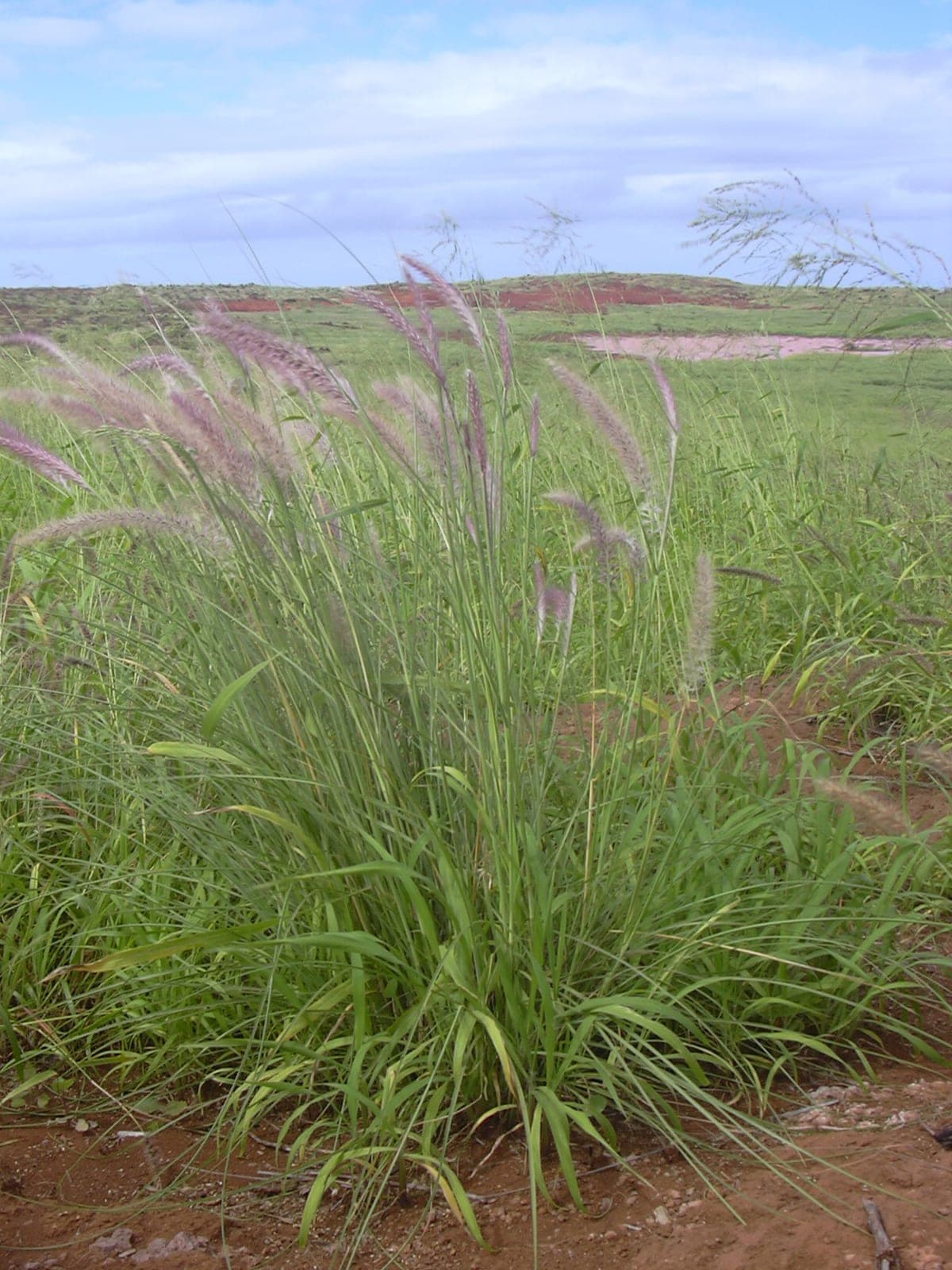
Fountain grass forms a dense, arching clump of narrow, fine-textured foliage topped from midsummer through fall with coppery-pink to purple bottlebrush plumes that hold their color and shape well into the cooler months. Native to Africa, the Middle East, and southwestern Asia, it reads as a soft, textural focal point in gravel gardens, mixed borders, and large containers, and mixes well with other dry-garden plants that share its lean, well-drained requirements. It is now often classified botanically as Cenchrus setaceus, though the older name Pennisetum setaceum is still in wide horticultural use.
It thrives in poor to average soil and needs little water once established, but it is not reliably winter hardy much below zone 8 - in colder zones it's typically grown as a dramatic single-season annual. It self-seeds freely in warm climates and is listed as invasive or restricted in parts of California, Arizona, Florida, and Hawaii, so confirm local status before planting. Cut the whole clump back hard in late winter before new growth starts to keep it tidy.
Rust
Orange to brown raised pustules on the undersides of leaves, with yellow spotting on the upper surface. Heavy infections cause leaves to yellow and drop.
Remove and destroy infected leaves. Avoid overhead watering and improve air circulation. Apply a sulfur or copper-based fungicide if it spreads. Clear plant debris in fall.