
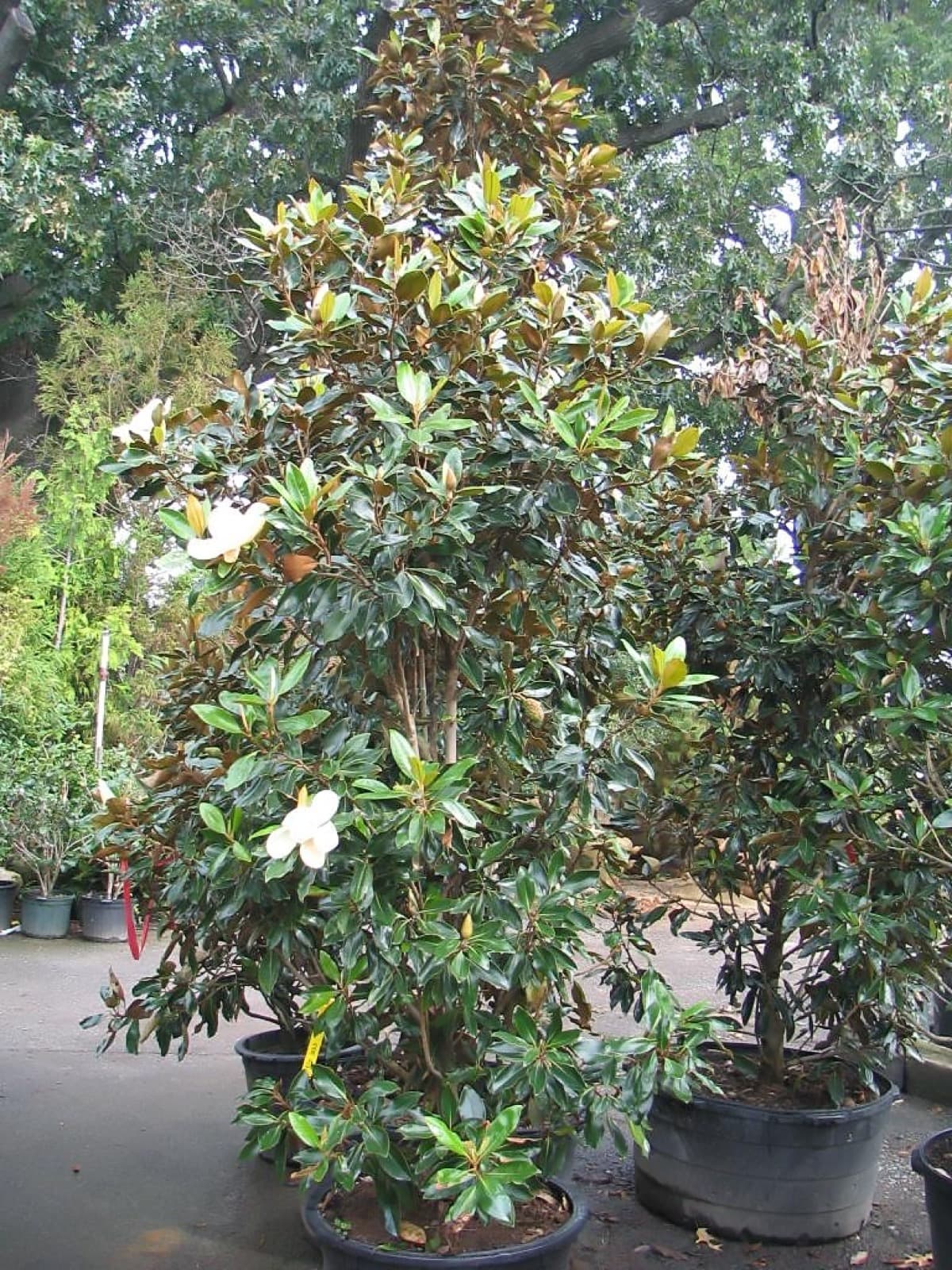
Little Gem is a compact, evergreen cultivar of Southern Magnolia (Magnolia grandiflora) selected for smaller residential landscapes. It produces large, cup-shaped, fragrant white flowers from late spring through summer, with occasional repeat bloom into early fall. The dark, glossy upper leaf surface and rusty-brown felted underside are characteristic of the species and provide ornamental interest year-round.
Growth is slow to moderate, reaching 15–25 ft tall and 8–10 ft wide over many years - roughly one-third the footprint of the straight species. It works as a specimen tree, a privacy screen, or an espalier against a south- or west-facing wall. Full sun produces the best form and most flowers; light afternoon shade is tolerated in hot inland climates. Slightly acidic, well-drained soil is preferred. A 3–4 inch mulch layer over the root zone conserves moisture and buffers soil temperature during establishment. Avoid low-lying sites with poor drainage; prolonged wet roots invite root rot and canker. Hardy to zone 7a but newly planted specimens benefit from trunk wrapping and anti-desiccant treatment before hard freezes.
Young flower buds of M. grandiflora have a documented history in Southern cooking, where they are pickled in vinegar brine and used as a caper substitute. Fresh petals are edible and have been added to salads or steeped into simple syrups.
Ecoregions:Eastern Temperate ForestsGreat Plains
Fungal leaf spot
Brown or purplish spots on the leaves, often ringed with a yellow halo, that spread and merge in warm, humid, or wet weather; heavily spotted leaves yellow and drop early.
Pick off spotted leaves and clear fallen debris to remove overwintering spores. Improve air circulation by thinning, and water at the base so foliage dries quickly. If it persists, apply a copper- or sulfur-based fungicide at the first sign.
Sooty Mold (Scale-Associated)
Black, powdery or crusty coating on upper leaf surfaces and stems. Affected leaves may yellow and drop in severe cases. The mold grows on honeydew secreted by scale insects, mealybugs, or aphids feeding on the plant.
Control the underlying pest infestation first using horticultural oil or neem oil applied thoroughly to stems and leaf undersides. Once pest populations are reduced, sooty mold stops spreading and weathers away over time. Rinse foliage with a strong stream of water to dislodge existing mold deposits.
Root rot
Plants wilt, yellow, and stunt even in moist soil; lower stems and roots turn brown, soft, and mushy and the plant may collapse. Most common in heavy, wet, or poorly drained ground.
Improve drainage and stop overwatering, and never plant too deep. Lift and destroy badly affected plants along with the soil around the roots. Grow in raised or free-draining beds to prevent it returning.
Botryosphaeria Canker
Dark, sunken cankers on stems and major branches, most often occurring after drought stress or mechanical wounding. Bark peeled back from affected areas reveals brown, discolored wood beneath. Branch tips wilt and die back progressively inward.
Prune infected branches at least 6 inches below the visible canker margin using sterilized tools, and dispose of all cuttings away from the garden. Reduce plant stress by maintaining consistent irrigation during dry periods and avoiding bark wounds during maintenance. No curative fungicide is available; keeping plants vigorous is the primary preventive strategy.