
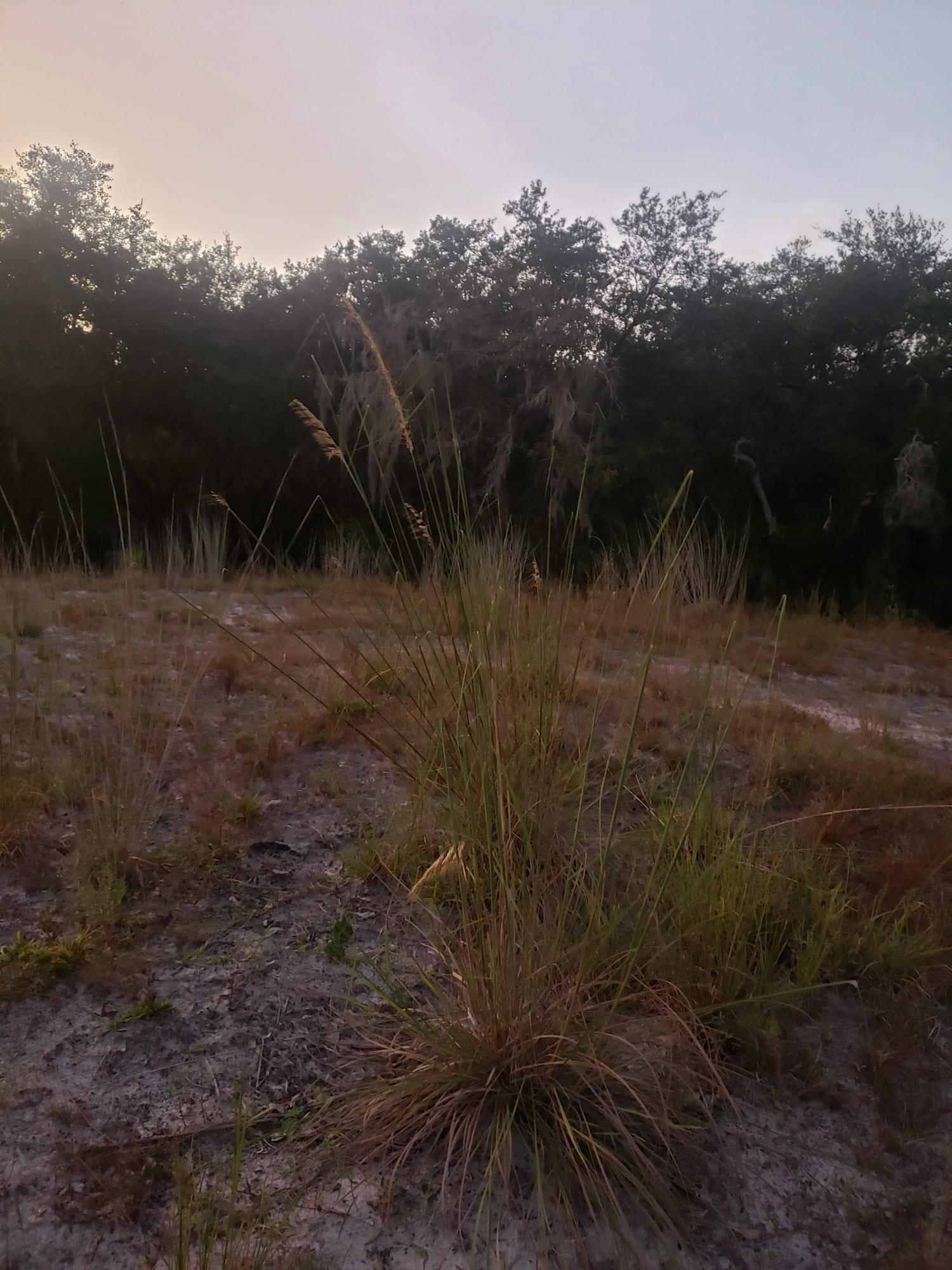
Lopsided Indiangrass is a native warm-season bunchgrass of the southeastern coastal plain, occurring naturally in longleaf pine savannas, sandhills, and open flatwoods from Florida north to Virginia and west into Texas. Its common name describes the distinctly one-sided (secund) panicles, which ripen to golden bronze in fall and hold their structure through winter, providing seeds for birds and visual interest in the off-season.
It thrives in full sun on dry to moderately dry, low-fertility sandy soils and tolerates the heat and humidity of the Deep South. Once established, it is drought tolerant and non-invasive, spreading slowly by seed. It is well suited to longleaf pine savanna restoration plantings and naturalistic landscape designs where a mid-to-tall textural grass is needed. pH tolerates acidic sandy conditions typical of coastal plain soils.
These dates are for Zone 6b. Enter your ZIP to time every job to your own frost dates.
- sow · Oct 30 - Nov 27Direct sow seed on bare, raked sand and leave it outdoors to cold stratify naturally
- cut · Mar 13 - Apr 3Cut last year's clumps to a few inches, or burn them where that's allowed, before new shoots appear
- plant · Apr 10 - May 1Divide crowded clumps every 4-5 years as new growth starts
- buy · Aug 21 - Sep 4Order seed - about two months before sowing
Problems & troubleshooting
Common problems
Rust
Orange to brown raised pustules on the undersides of leaves, with yellow spotting on the upper surface. Heavy infections cause leaves to yellow and drop.
Remove and destroy infected leaves. Avoid overhead watering and improve air circulation. Apply a sulfur or copper-based fungicide if it spreads. Clear plant debris in fall.
Fungal leaf spot
Brown or purplish spots on the leaves, often ringed with a yellow halo, that spread and merge in warm, humid, or wet weather; heavily spotted leaves yellow and drop early.
Pick off spotted leaves and clear fallen debris to remove overwintering spores. Improve air circulation by thinning, and water at the base so foliage dries quickly. If it persists, apply a copper- or sulfur-based fungicide at the first sign.