
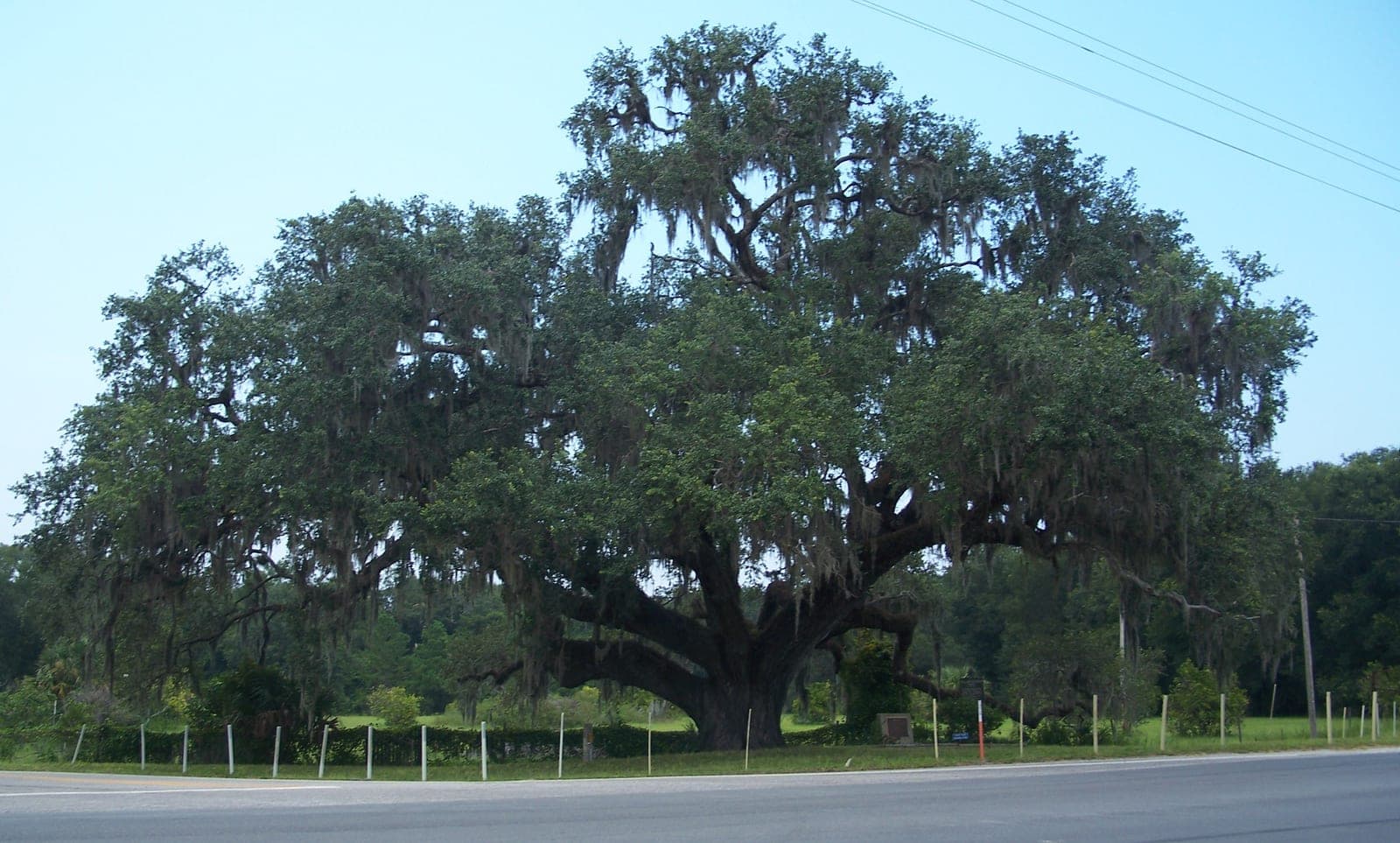
Southern live oak (Quercus virginiana) is an evergreen oak native to the coastal and interior southeastern United States, from Virginia south through Florida and west into central Texas. It produces one of the broadest canopies of any North American oak, with crown spreads routinely reaching 60–100 ft on mature specimens. Gardeners use it as a dominant shade tree, long-lived structural anchor, and wildlife hub in large-scale southeastern landscapes.
The species tolerates salt spray, sandy soils, and periodic drought once roots are established, making it well-suited to coastal and urban conditions. It drops most of its old foliage in early spring just as new leaves emerge, creating a brief semi-deciduous window that is often mistaken for dieback. Acorns ripen in fall and are a critical food source for deer, wild turkey, squirrels, and blue jays. Surface roots spread widely and can lift pavement or hardscape; site selection must account for full mature crown spread. The wood is exceptionally dense and was the primary timber used to build the hull of USS Constitution. pH range of 5.5–7.0 is well-tolerated; mulching the root zone with 3–4 inches of wood chips significantly aids establishment and suppresses grass competition. Spanish moss frequently colonizes the branches in humid coastal climates without harming the tree.
Native Americans across the Gulf Coast range leached tannins from the acorns to produce a meal used in breads and porridges. Oak bark tannins, documented across the Quercus genus in both Indigenous and European folk traditions, have been used as astringents for diarrhea, wound care, and oral inflammation.
Ecoregions:Eastern Temperate ForestsGreat PlainsTropical Wet Forests
Oak Wilt
Leaves wilt and brown starting at branch tips, progressing rapidly toward the trunk. Discoloration may appear as brown or yellow veining across the leaf blade. Individual branches or the entire canopy can defoliate within days to weeks. A cross-section of affected branches reveals dark streaking in the outer sapwood ring.
Contact a certified arborist for trunk injection of propiconazole fungicide, which is most effective as a preventive measure or at earliest symptom onset. Sever root grafts between infected and neighboring live oaks by cutting a trench 3–4 ft deep between trees to prevent fungal spread through connected root systems. Remove and immediately chip, burn, or bury all infected wood; do not store as firewood. Avoid any pruning from March through July when nitidulid sap-feeding beetles that carry the pathogen are most active. Apply wound sealant to all cuts made outside this window within minutes of cutting.
Phytophthora Root Rot
Wilting despite moist soil, yellowing leaves, stunted growth, and dark, decayed roots and crown tissue. Vines may collapse during hot weather.
Plant in well-draining soil and avoid waterlogging. Remove and destroy affected vines. Improve drainage with raised beds or amended soil and avoid overwatering.
Powdery mildew
White or grey powdery coating on leaves - usually starting on older growth in humid conditions or when nights cool.
Improve air circulation by thinning plants. Apply neem oil or potassium bicarbonate spray at first sign. Avoid overhead watering.
Texas Root Rot
Sudden wilting of branches or the entire canopy, often following a wet period. White cottony fungal mats develop on infected roots. Wood at the crown appears dark and water-soaked. Decline can progress to tree death within weeks.
No effective chemical cure exists. Ensure excellent drainage and avoid overwatering. Remove and destroy all infected plant material. Avoid replanting susceptible species in the same soil for several years.