
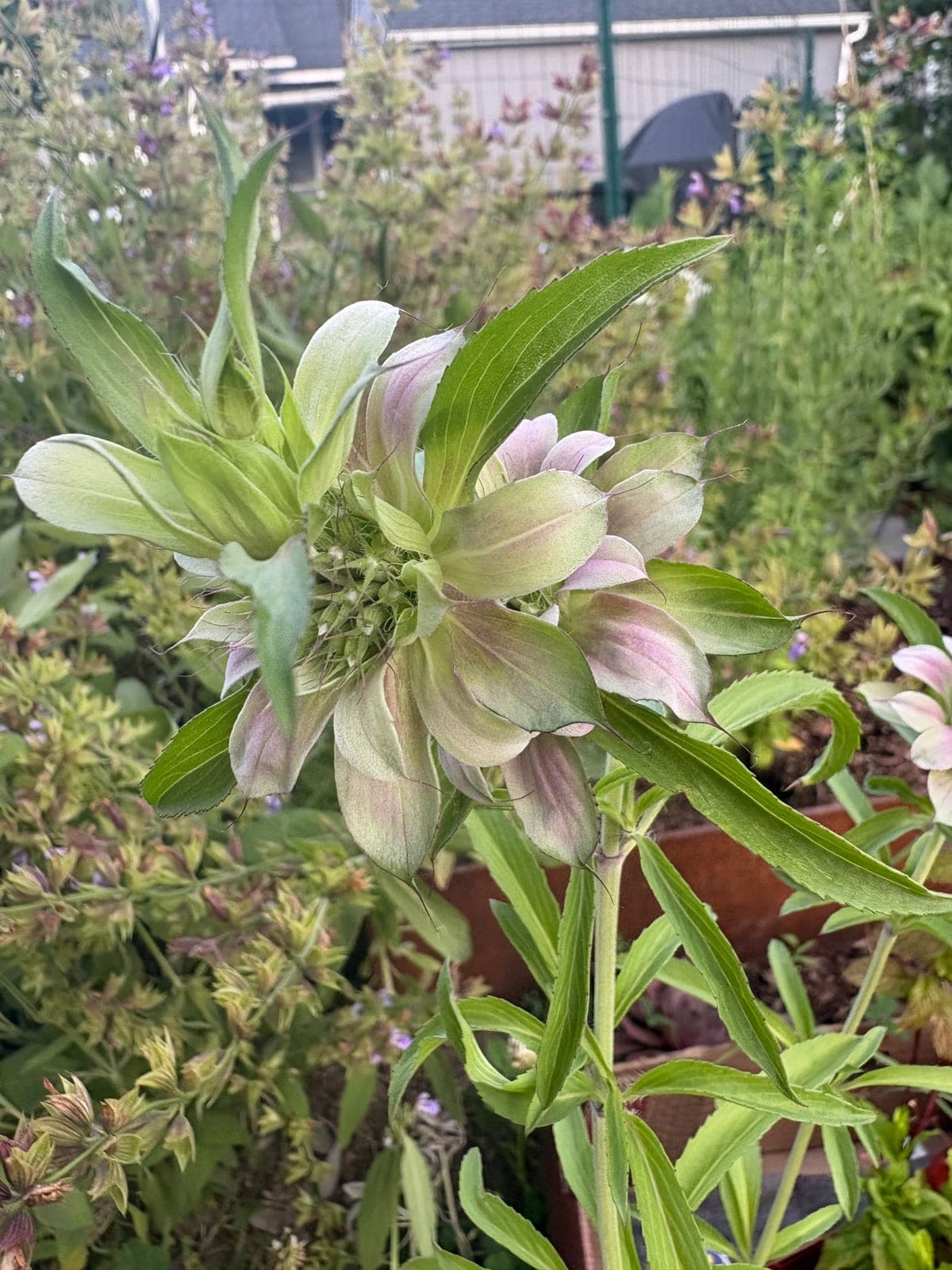
Monarda citriodora is a native annual or short-lived perennial wildflower in the mint family, found across the southern Great Plains and into northern Mexico. Crushing the leaves releases a sharp lemon-oregano scent that intensifies early in the season and shifts toward straight oregano as summer progresses. Tiered whorls of lavender-purple flowers appear from late spring through midsummer and draw consistent traffic from bees, butterflies, and hummingbirds.
It thrives in full sun with dry to average, well-drained soil and tolerates summer heat and drought once established. The plant self-seeds prolifically in open ground and naturalizes readily in prairie, meadow, and pollinator garden settings. In zones 7 and warmer it can persist as a short-lived perennial; in cooler zones it behaves as a warm-season annual that returns reliably from self-sown seed. Keeping stands thinned improves air circulation and reduces powdery mildew pressure, to which the genus is prone in humid climates.
The foliage contains thymol and carvacrol and serves as a workable oregano substitute in cooking. Fresh or dried leaves brew a lemon-scented herbal tea. Indigenous peoples of the southern plains used leaf preparations to address fevers and digestive complaints, traditional applications consistent with the plant's documented antimicrobial constituents.
Ecoregions:Eastern Temperate ForestsGreat PlainsSouthern Semi-Arid Highlands
Powdery mildew
White or grey powdery coating on leaves - usually starting on older growth in humid conditions or when nights cool.
Improve air circulation by thinning plants. Apply neem oil or potassium bicarbonate spray at first sign. Avoid overhead watering.
Rust
Orange to brown raised pustules on the undersides of leaves, with yellow spotting on the upper surface. Heavy infections cause leaves to yellow and drop.
Remove and destroy infected leaves. Avoid overhead watering and improve air circulation. Apply a sulfur or copper-based fungicide if it spreads. Clear plant debris in fall.