
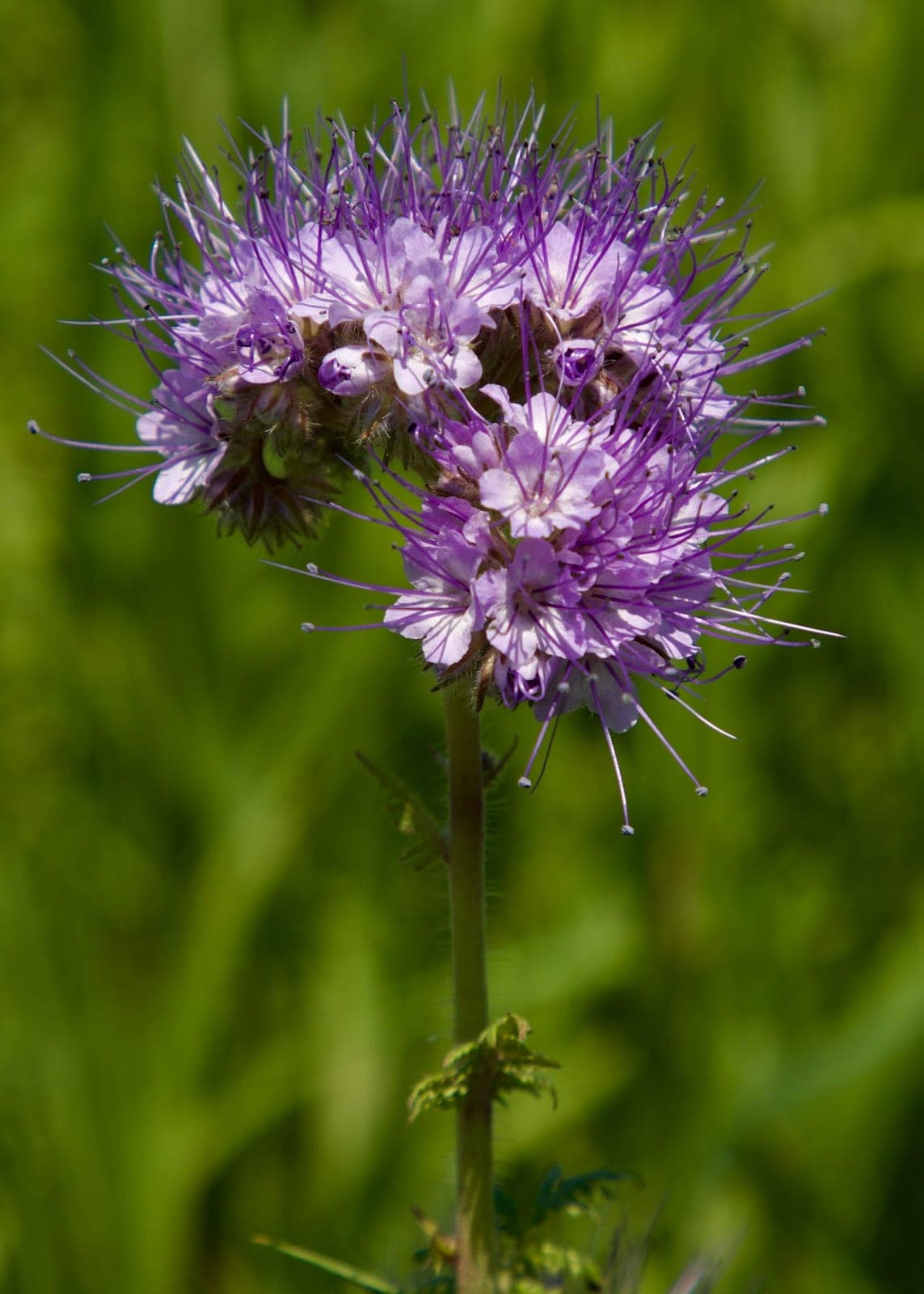
Phacelia tanacetifolia is a fast-growing cool-season annual native to the southwestern United States and northern Mexico. Its finely cut, ferny foliage and coiled clusters of violet-blue flowers make it one of the most reliably effective pollinator plants available to home gardeners, and it has long been cultivated by beekeepers across Europe and North America for its abundant, easily accessed nectar.
Seeds germinate readily in cool soil between 40 and 65°F and seedlings tolerate light frost, making it one of the earliest plants that can go into the ground each spring. It performs best in full sun with average to lean, well-drained soil; rich, fertile soil tends to produce excessive foliage at the expense of flowers. Plants self-sow prolifically where conditions suit them. In hot climates it finishes quickly as temperatures climb, and successive sowings extend the display into early summer. It also functions as a cover crop and green manure, suppressing weeds and adding organic matter when turned under before seed set.
Beyond honeybees and bumblebees, lacy phacelia draws hoverflies in significant numbers. Hoverfly larvae are effective aphid predators, and European agroecology research has documented its value as a farmland wildflower strip plant for biological pest suppression. Planting it near brassicas, beans, or other aphid-prone crops translates that ecological role into a practical garden benefit.
Ecoregions:Northwestern Forested MountainsNorth American DesertsMediterranean California
Damping Off
Seedlings collapse at the soil line with thin, water-soaked stems; seeds may fail to emerge or rot before sprouting.
Sow in well-draining mix, avoid overwatering, and ensure good airflow. Remove affected seedlings and let the surface dry between waterings.
Powdery mildew
White or grey powdery coating on leaves - usually starting on older growth in humid conditions or when nights cool.
Improve air circulation by thinning plants. Apply neem oil or potassium bicarbonate spray at first sign. Avoid overhead watering.
Root rot
Plants wilt, yellow, and stunt even in moist soil; lower stems and roots turn brown, soft, and mushy and the plant may collapse. Most common in heavy, wet, or poorly drained ground.
Improve drainage and stop overwatering, and never plant too deep. Lift and destroy badly affected plants along with the soil around the roots. Grow in raised or free-draining beds to prevent it returning.