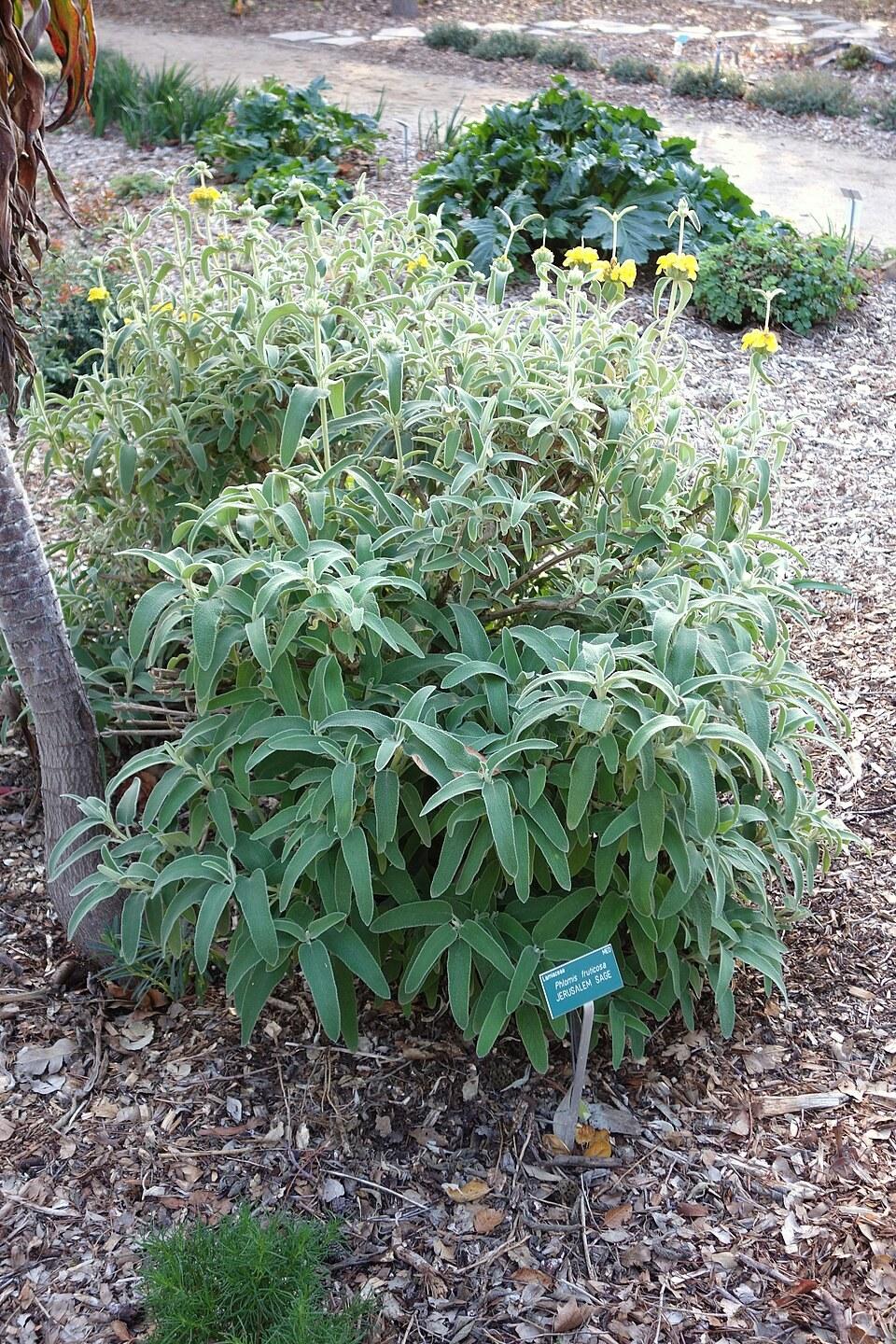
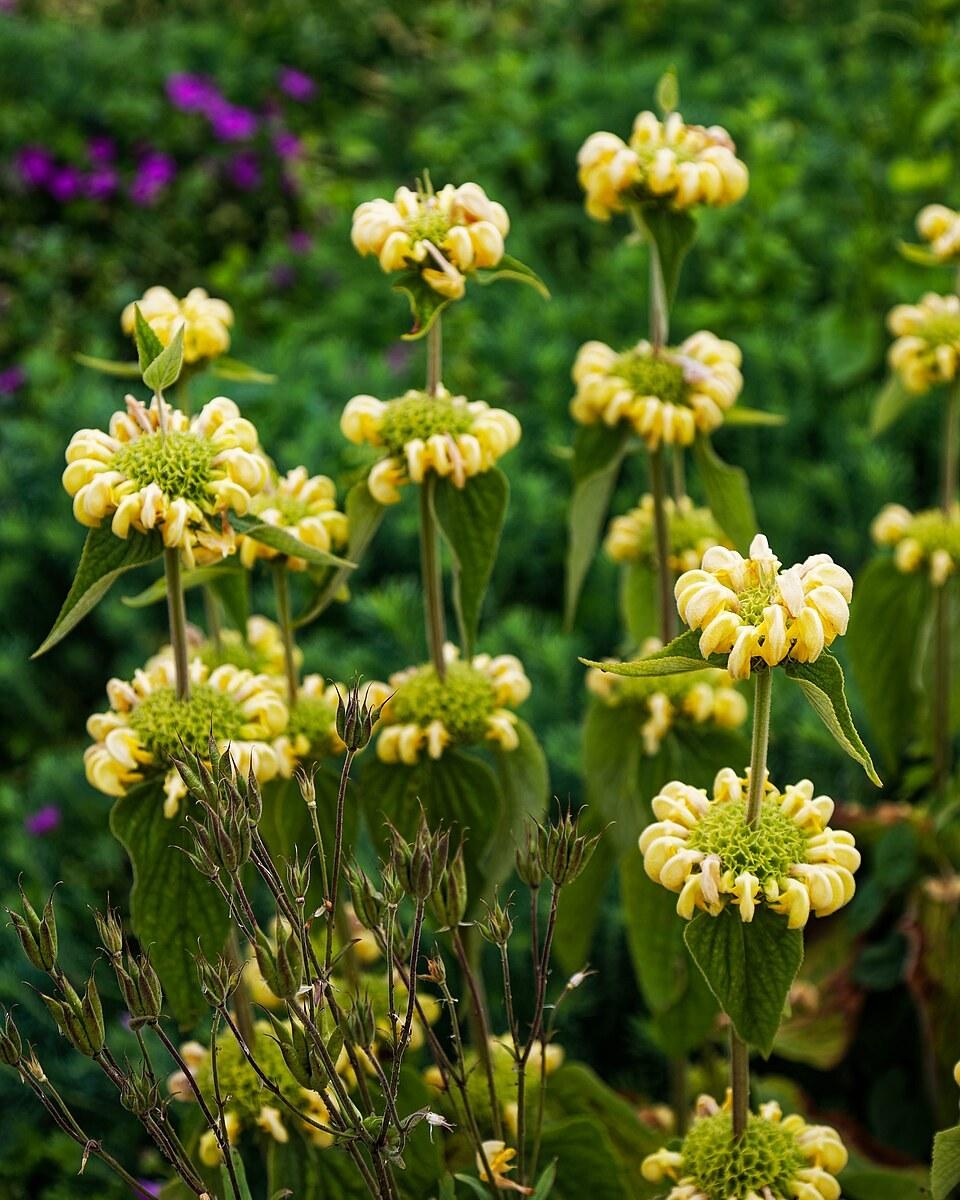
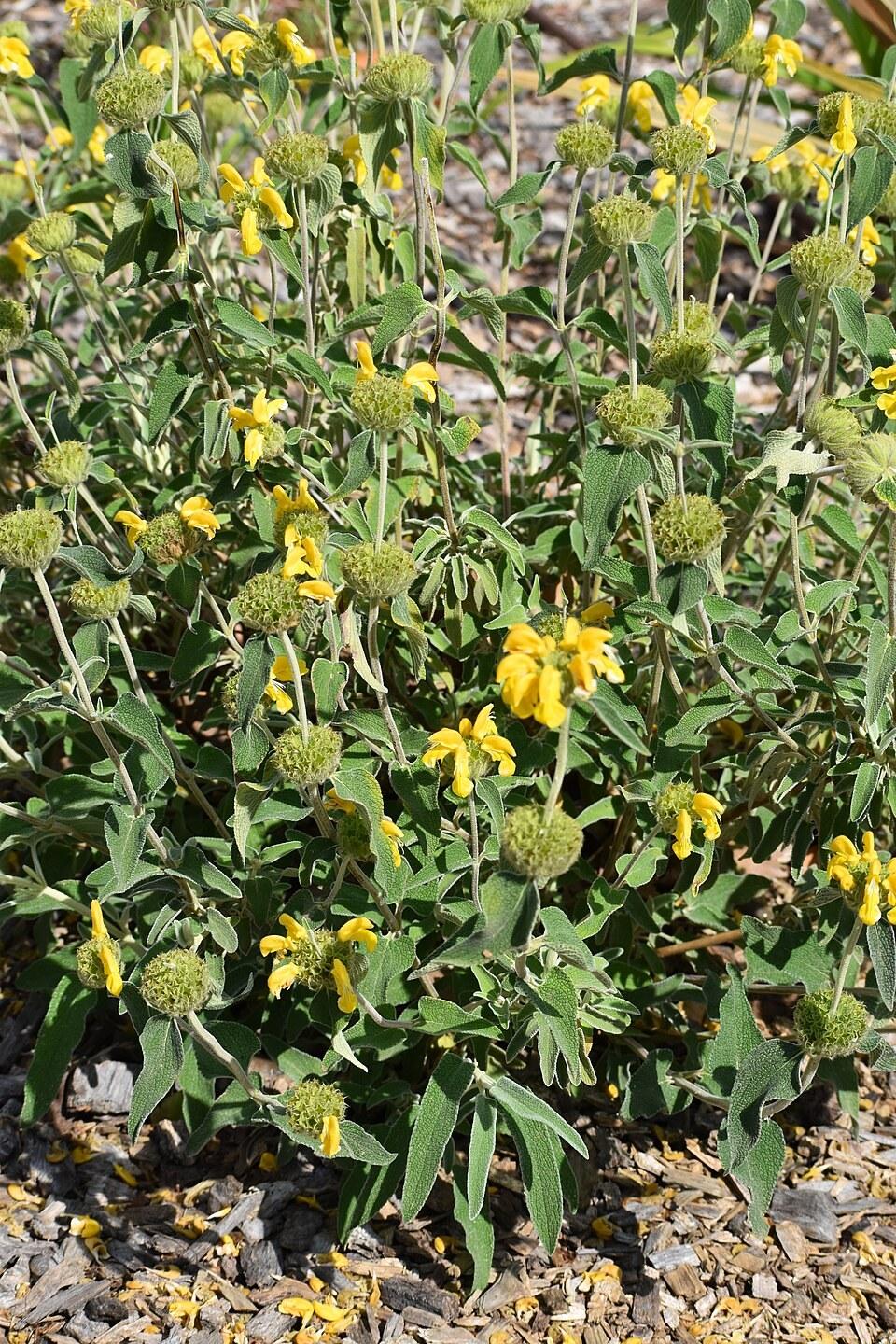
Jerusalem sage (Phlomis fruticosa) is a rounded evergreen shrub from the eastern Mediterranean, grown as much for its foliage as its flowers. The leaves are sage-like, grey-green and wrinkled above and felted white beneath, so the whole plant reads as a soft silver mound through the year. In early summer the stems carry stacked whorls of hooded, butter-yellow flowers, and the dried whorls stay on as seed heads well into winter.
It is a signature plant of gravel and dry gardens, where it gives bulk and evergreen structure among calamint, sedum, santolina, catmint and fine grasses. Full sun and sharp drainage matter more than soil quality: it thrives in poor, stony ground and suffers in rich, wet soil, especially over winter. Once established it needs little or no watering. The woolly leaves are left alone by deer and rabbits.
It is hardy to roughly 5 to 10°F and can be cut back by a hard winter, but it regrows from older wood once the weather warms. Trim lightly after flowering to keep it dense, and replace plants that turn woody and open after eight to ten years. In colder zones, the herbaceous Turkish sage (Phlomis russeliana) gives the same whorled flowers on a hardier plant. Do not confuse it with culinary sage; it is not used in cooking.
These dates are for Zone 6b. Enter your ZIP to time every job to your own frost dates.
- buy · Jan 30 - Feb 13Order plants - about two months before planting
- cut · Apr 10 - May 1Cut frost-damaged stems back to live wood once new growth shows where the damage ends.
- plant · Apr 10 - May 8Plant container-grown shrubs 3-4 ft apart in full sun and sharply drained soil; do not enrich the planting hole.
- cut · Any time in summerTrim lightly after flowering to keep the mound dense, or leave the whorled seed heads standing for winter structure.
- watch · Any time in summerWater only in prolonged drought once established; yellowing lower leaves in wet soil point to root rot.
Problems & troubleshooting
Common problems
Root rot
Plants wilt, yellow, and stunt even in moist soil; lower stems and roots turn brown, soft, and mushy and the plant may collapse. Most common in heavy, wet, or poorly drained ground.
Improve drainage and stop overwatering, and never plant too deep. Lift and destroy badly affected plants along with the soil around the roots. Grow in raised or free-draining beds to prevent it returning.