
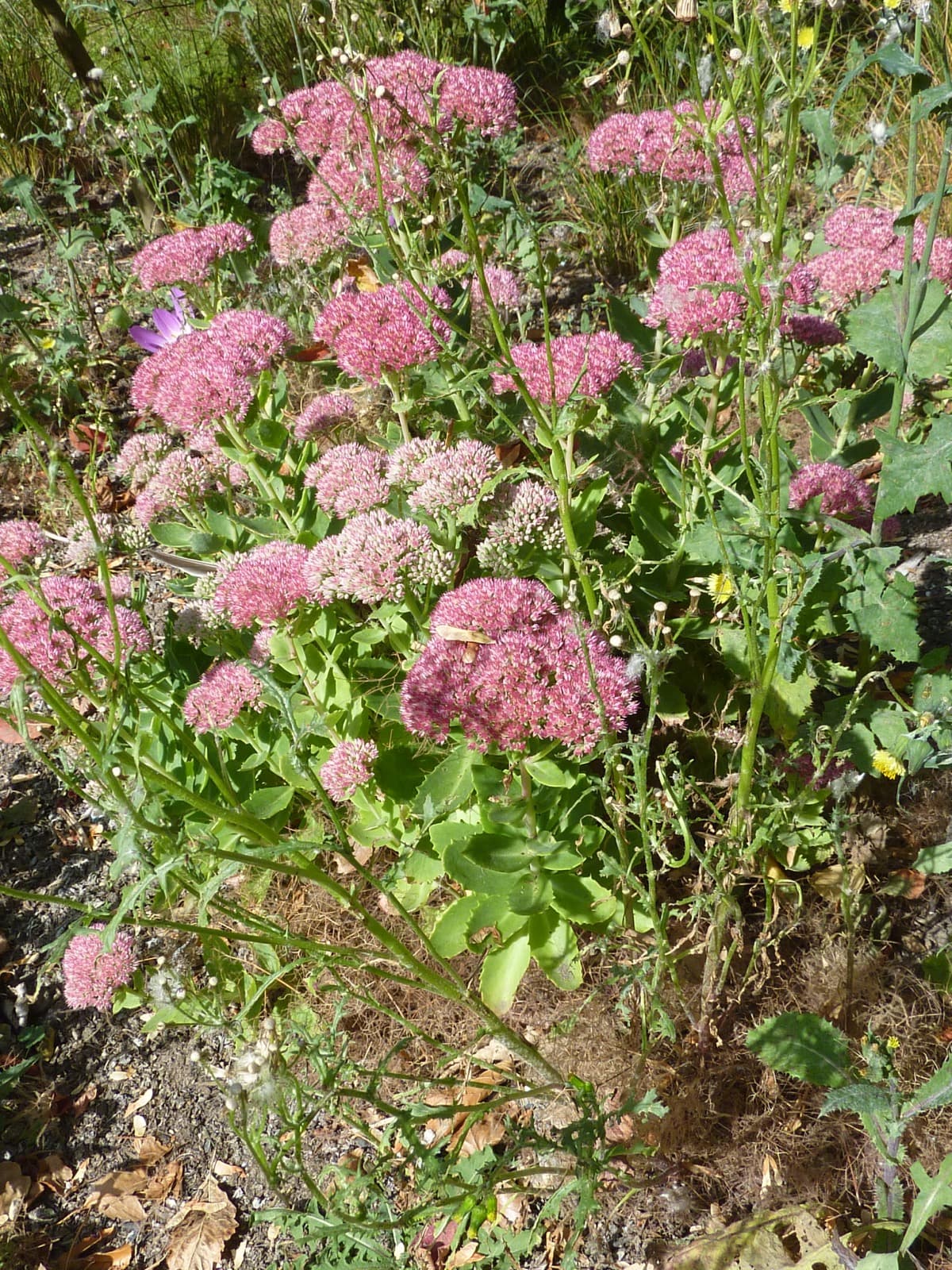
Hylotelephium 'Herbstfreude', widely sold as Sedum 'Autumn Joy', is a clump-forming succulent perennial valued for its long season of interest. Flat-topped clusters open in late summer as dusty pink, deepen through rose and copper into fall, then dry to russet-bronze seed heads that persist through winter. The plant draws monarch butterflies and native bees during a period when few other garden plants are at peak interest.
Full sun and sharply drained soil are non-negotiable. In fertile, moist ground or partial shade, stems elongate and collapse outward - a very common problem that dividing the clump every three to four years helps prevent. Use grit rather than organic mulch near the crown; winter wet is the primary cause of plant loss. Cold-hardy to zone 3a when drainage is adequate.
Leaves of the closely related Hylotelephium telephium carry a long European folk record as a poultice for minor wounds, burns, and skin inflammation. The genus also appears in traditional Chinese medicine for comparable external applications.
Crown Rot
Lower leaves yellow and wilt; the base of the rosette turns brown and soft, sometimes with white fungal threads at the soil line. Plants collapse in wet conditions.
Remove and destroy affected plants. Improve drainage and avoid overhead watering. Do not mulch directly against the crown. Space plants for airflow and avoid replanting in the same wet spot.
Root rot
Plants wilt, yellow, and stunt even in moist soil; lower stems and roots turn brown, soft, and mushy and the plant may collapse. Most common in heavy, wet, or poorly drained ground.
Improve drainage and stop overwatering, and never plant too deep. Lift and destroy badly affected plants along with the soil around the roots. Grow in raised or free-draining beds to prevent it returning.
Powdery mildew
White or grey powdery coating on leaves - usually starting on older growth in humid conditions or when nights cool.
Improve air circulation by thinning plants. Apply neem oil or potassium bicarbonate spray at first sign. Avoid overhead watering.
Fungal leaf spot
Brown or purplish spots on the leaves, often ringed with a yellow halo, that spread and merge in warm, humid, or wet weather; heavily spotted leaves yellow and drop early.
Pick off spotted leaves and clear fallen debris to remove overwintering spores. Improve air circulation by thinning, and water at the base so foliage dries quickly. If it persists, apply a copper- or sulfur-based fungicide at the first sign.