
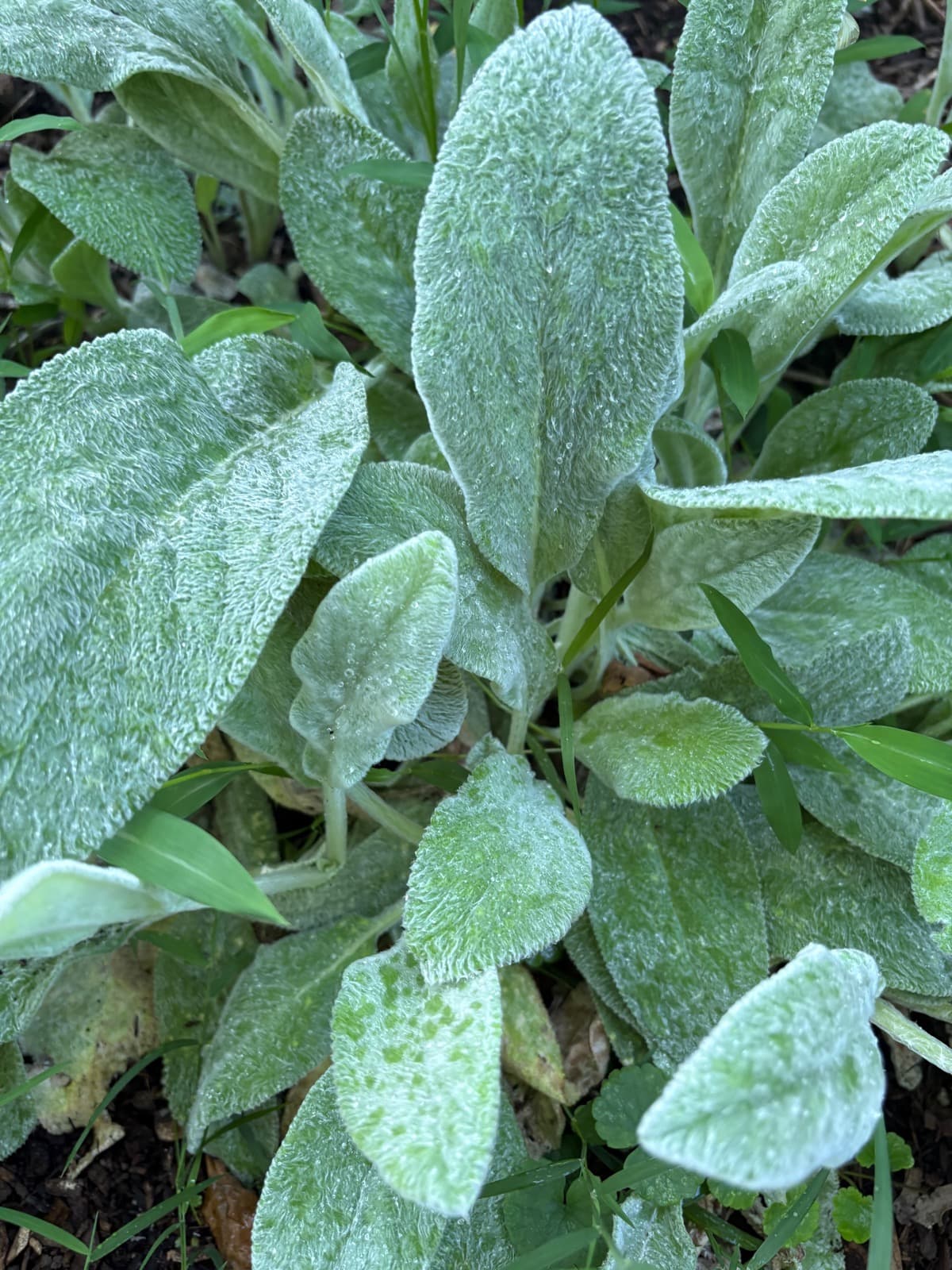
Stachys byzantina is a low-growing perennial in the mint family, native to Armenia, Iran, and Turkey. It is grown almost entirely for its densely woolly, silver-white leaves, which form spreading mats and bring strong textural contrast to borders, edges, and dry gardens.
It thrives in full sun and sharply drained, lean soil. Excess moisture - especially during humid summers or on poorly drained sites - causes rapid crown rot and foliar collapse. The plant spreads by stolons and self-seeds modestly; dividing clumps every two to three years keeps growth vigorous and prevents center die-out. The cultivar 'Silver Carpet' produces little to no flower spikes and is preferred where a purely foliage effect is wanted. Prefers a soil pH of 6.0–7.0 and performs well in alkaline conditions that would stress many ornamentals.
Leaves were used historically as field wound dressings - the soft, absorbent texture suitable for covering minor cuts and abrasions. The plant contains tannins with mild astringent properties that support this traditional use.
Crown Rot
Lower leaves yellow and wilt; the base of the rosette turns brown and soft, sometimes with white fungal threads at the soil line. Plants collapse in wet conditions.
Remove and destroy affected plants. Improve drainage and avoid overhead watering. Do not mulch directly against the crown. Space plants for airflow and avoid replanting in the same wet spot.
Botrytis (grey mould)
Grey fuzzy mould on petals and stems, worst in cool wet conditions.
Remove affected parts immediately. Improve air circulation. Avoid overhead watering. Apply copper fungicide if severe.
Powdery mildew
White or grey powdery coating on leaves - usually starting on older growth in humid conditions or when nights cool.
Improve air circulation by thinning plants. Apply neem oil or potassium bicarbonate spray at first sign. Avoid overhead watering.
Fungal leaf spot
Brown or purplish spots on the leaves, often ringed with a yellow halo, that spread and merge in warm, humid, or wet weather; heavily spotted leaves yellow and drop early.
Pick off spotted leaves and clear fallen debris to remove overwintering spores. Improve air circulation by thinning, and water at the base so foliage dries quickly. If it persists, apply a copper- or sulfur-based fungicide at the first sign.