
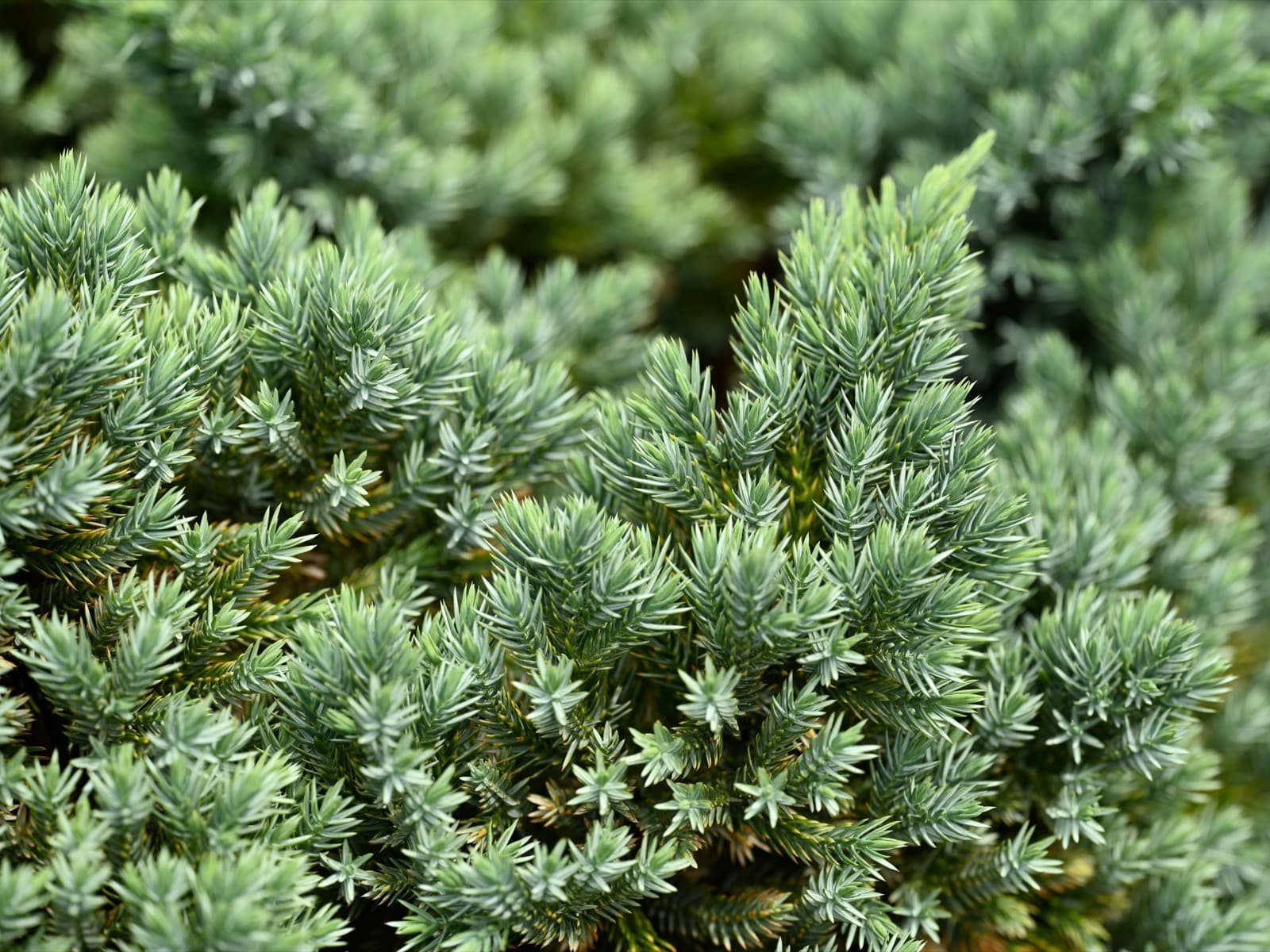
Blue Star Juniper is a dwarf, mounding cultivar of Himalayan juniper (Juniperus squamata) selected for its dense, sharply-pointed, steel-blue needles. Growth is extremely slow, typically reaching 2–3 ft tall and wide over a decade. The blue color holds through winter, giving it dependable four-season presence in the landscape.
The species originates from rocky, high-elevation terrain across Central and East Asia. In cultivation it demands full sun and sharp drainage above all else; standing water or heavy clay is the primary cause of failure. Once established it tolerates drought, lean soil, and hard cold well. It needs minimal pruning; remove only dead or diseased stems in early spring. Effective in rock gardens, raised beds, slopes, and mixed conifer compositions where year-round structure and color contrast are priorities.
Phomopsis Blight
Irregular brown lesions on leaves, stems, and fruit. Stem lesions can girdle the plant, causing wilting above the infection point. Fruit develops sunken, dark, water-soaked spots that expand and rot rapidly in warm, wet conditions. Small black fruiting bodies may be visible inside older lesions.
Remove and destroy all infected tissue. Avoid overhead irrigation and improve air circulation through adequate spacing. Apply copper-based fungicide at first symptoms and repeat every 7–10 days during wet weather. Rotate out of the nightshade family for at least 3 years and start with certified disease-free transplants.
Kabatina Twig Blight
Tips of one-year-old shoots turn yellow then straw-brown, most visibly from late winter through early spring. Tiny black pycnidia appear at the boundary of dead and living tissue. Unlike Phomopsis blight, which kills current-season shoots in summer, Kabatina affects previous-year wood and symptoms are most prominent at or before bud break.
Prune affected shoots 2–3 inches below visible symptoms during dry weather; disinfect cutting tools between each cut with 70% isopropyl alcohol. Avoid overhead irrigation. Apply a preventive copper-based or thiophanate-methyl fungicide in early fall before temperatures drop. Thin dense interior foliage to improve air circulation.
Root rot
Plants wilt, yellow, and stunt even in moist soil; lower stems and roots turn brown, soft, and mushy and the plant may collapse. Most common in heavy, wet, or poorly drained ground.
Improve drainage and stop overwatering, and never plant too deep. Lift and destroy badly affected plants along with the soil around the roots. Grow in raised or free-draining beds to prevent it returning.