
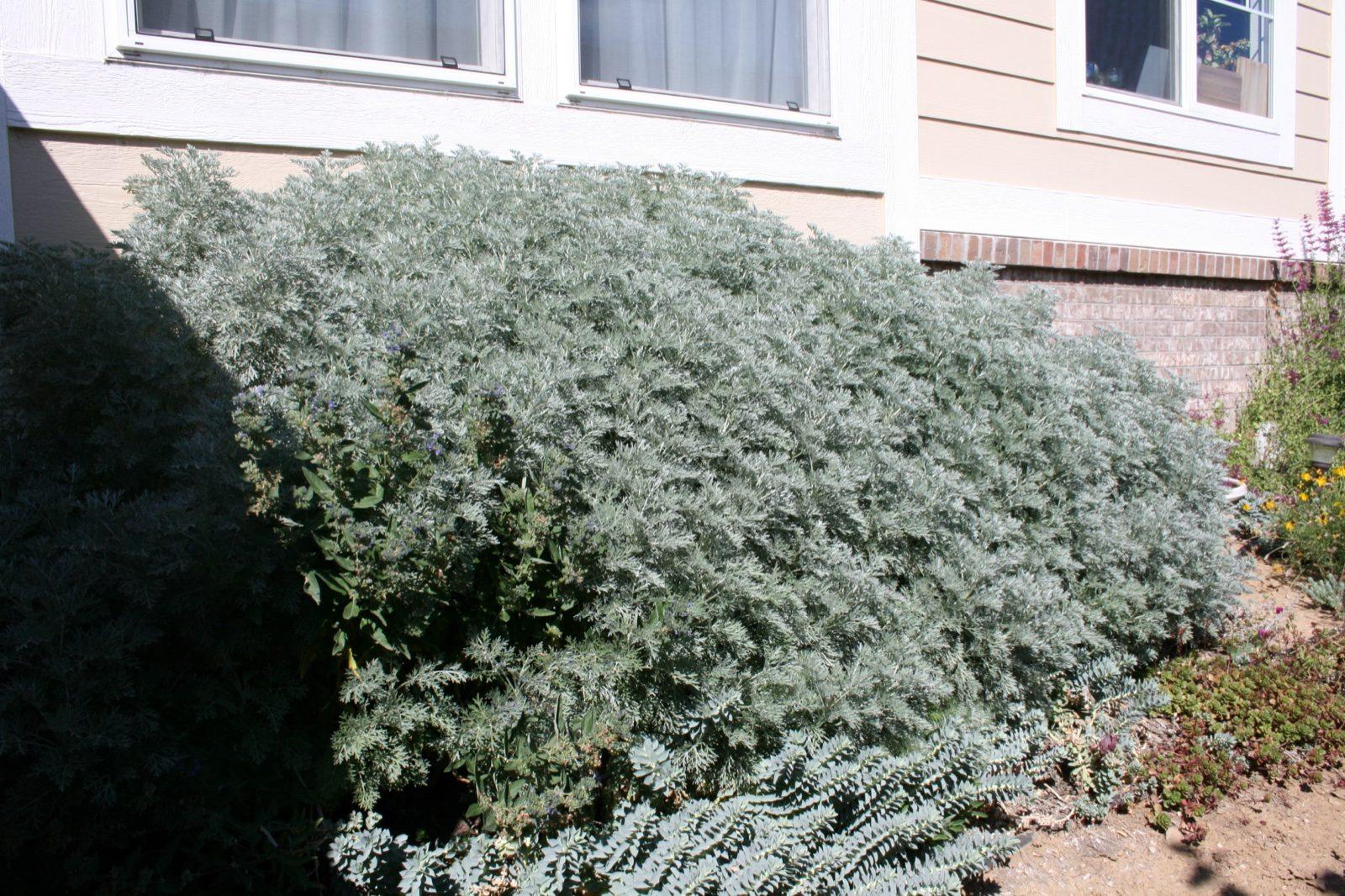
Powis Castle artemisia is a sterile hybrid subshrub, most likely a cross between Artemisia arborescens and A. absinthium, grown for its intensely silver, finely dissected aromatic foliage. It forms a dense mound and functions as a textural contrast plant in dry borders, gravel gardens, and mixed plantings where reliable silver foliage is needed from spring through frost.
Sharp drainage is the single most critical requirement. Wet or clay soil, particularly in winter, causes rapid root and crown rot in plants that otherwise tolerate prolonged heat and drought. In heavier soils, plant on a raised bed or mound and apply gravel mulch at the crown. Cut back hard in early spring before new growth breaks to prevent plants from becoming woody and open-centered. Because the cultivar is sterile, propagation is by stem cuttings taken in midsummer, which root readily in well-drained propagation mix.
The foliage contains aromatic volatile oils typical of the genus, including camphor and thujone-related compounds, which release when leaves are brushed. These compounds give the plant a traditional reputation as an insect deterrent when planted near paths or seating.
These dates are for Zone 6b. Enter your ZIP to time every job to your own frost dates.
- buy · Feb 13 - Feb 27Buy plants - about two months before planting out
- cut · Apr 10 - Apr 24Cut back to 6 in once new silver growth shows on the lower stems; never cut back hard before winter, which can kill the plant
- plant · Apr 24 - May 8Plant nursery stock once the soil has warmed, in the leanest, best-drained spot you have
- watch · Any time in springCheck the crown after heavy rain; standing water rots it quickly
- cut · Any time in summerIf the mound opens up in humid heat, shear it back by a third to tighten it
Problems & troubleshooting
Common problems
Root rot
Plants wilt, yellow, and stunt even in moist soil; lower stems and roots turn brown, soft, and mushy and the plant may collapse. Most common in heavy, wet, or poorly drained ground.
Improve drainage and stop overwatering, and never plant too deep. Lift and destroy badly affected plants along with the soil around the roots. Grow in raised or free-draining beds to prevent it returning.
Crown Rot
Lower leaves yellow and wilt; the base of the rosette turns brown and soft, sometimes with white fungal threads at the soil line. Plants collapse in wet conditions.
Remove and destroy affected plants. Improve drainage and avoid overhead watering. Do not mulch directly against the crown. Space plants for airflow and avoid replanting in the same wet spot.
Botrytis (grey mould)
Grey fuzzy mould on petals and stems, worst in cool wet conditions.
Remove affected parts immediately. Improve air circulation. Avoid overhead watering. Apply copper fungicide if severe.