
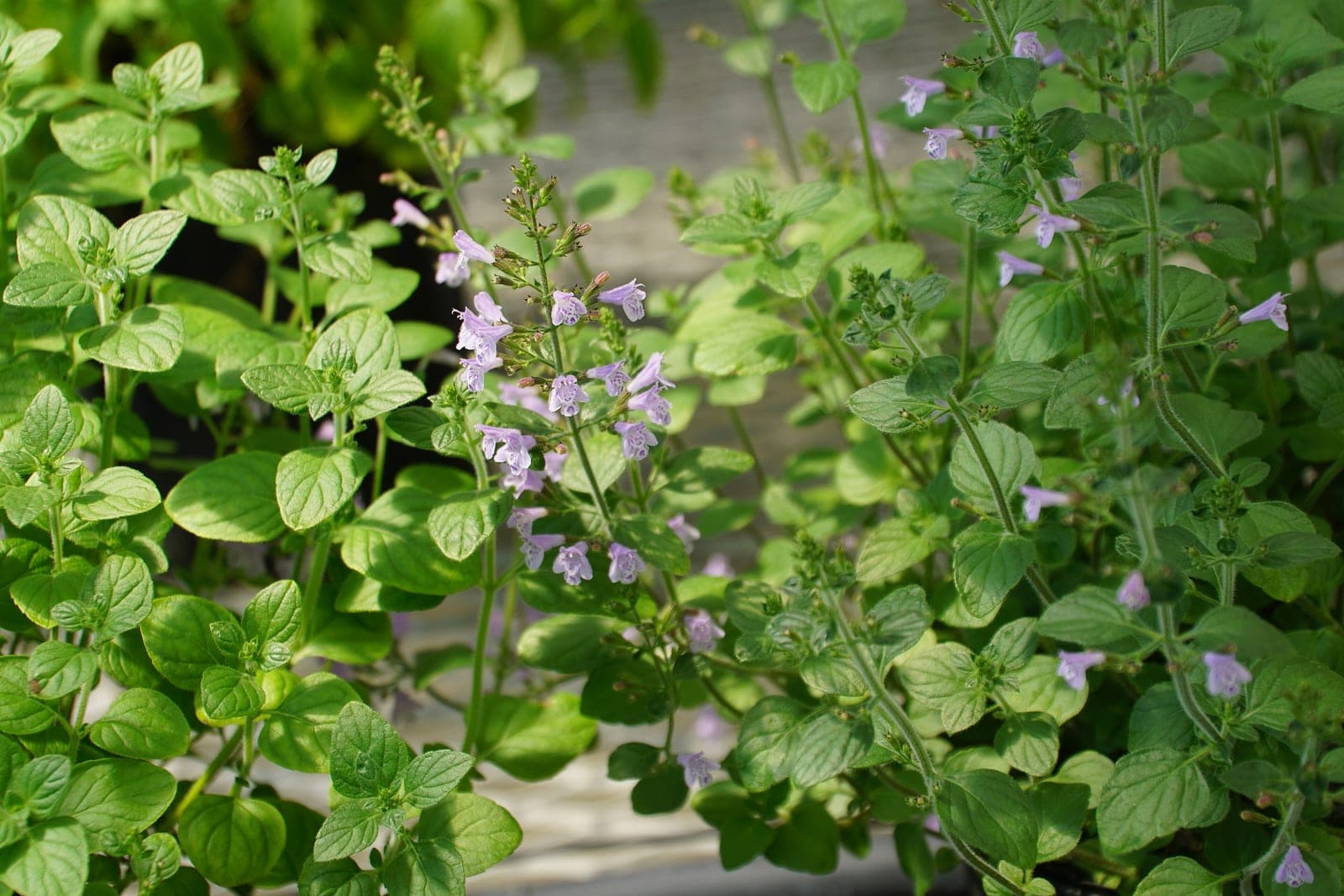
Lesser calamint forms a low, billowing mound of small, mint-scented leaves that all but disappears under a cloud of tiny white-to-pale-lavender flowers from midsummer clear through to frost - one of the longest, most reliable bloom windows of any hardy perennial, and a constant hum of bees the entire time. Native to the Mediterranean and naturalized across much of Europe, it's a low-maintenance edging or front-of-border plant that thrives in the same lean, sharply drained conditions as lavender and thyme.
Drought tolerant once established and largely untroubled by deer and rabbits thanks to its aromatic foliage. It self-seeds modestly but not aggressively, and a light shear midseason keeps the mound tidy and encourages fresh growth. Its long season and airy texture make it a workhorse filler between larger, more structural border plants.
Root rot
Plants wilt, yellow, and stunt even in moist soil; lower stems and roots turn brown, soft, and mushy and the plant may collapse. Most common in heavy, wet, or poorly drained ground.
Improve drainage and stop overwatering, and never plant too deep. Lift and destroy badly affected plants along with the soil around the roots. Grow in raised or free-draining beds to prevent it returning.