
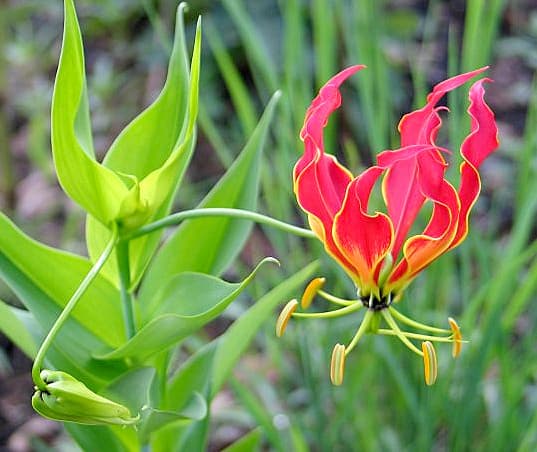
Gloriosa superba, the flame lily or gloriosa lily, is a tropical tuberous vine from Africa and Asia grown for its extraordinary reflexed flowers - crimson-and-yellow petals swept backward like flames, carried on wiry stems that climb by tendrils at the leaf tips rather than by twining. Given a trellis, netting, or shrub to scramble through, a single brittle L-shaped tuber can cover several feet of support in a season.
Every part of the plant is highly toxic if ingested - it contains colchicine, the same alkaloid that makes autumn crocus dangerous, and the tuber in particular has been mistaken for a yam with fatal results. Handle tubers with gloves, and keep the plant well away from children, pets, and edible plantings. That same toxicity is put to legitimate use commercially: Gloriosa superba tubers are a major pharmaceutical source of colchicine, used to treat gout and familial Mediterranean fever. Outside its hardiness range, grow it exactly like a dahlia - plant the tuber horizontally after the soil has warmed, and lift it before the ground freezes.
Root rot
Plants wilt, yellow, and stunt even in moist soil; lower stems and roots turn brown, soft, and mushy and the plant may collapse. Most common in heavy, wet, or poorly drained ground.
Improve drainage and stop overwatering, and never plant too deep. Lift and destroy badly affected plants along with the soil around the roots. Grow in raised or free-draining beds to prevent it returning.
Botrytis (grey mould)
Grey fuzzy mould on petals and stems, worst in cool wet conditions.
Remove affected parts immediately. Improve air circulation. Avoid overhead watering. Apply copper fungicide if severe.
Aphids
Aphididae →Clusters of small soft insects on new growth and flower buds.
Knock off with a strong jet of water. Ladybirds and lacewings are natural predators. Insecticidal soap as last resort.
Spider Mites
Tetranychus urticae →Fine stippling or bronzing on leaves, faint webbing on undersides, foliage drying out during hot, dry weather.
Spray foliage with a strong jet of water to dislodge mites. Apply insecticidal soap or horticultural oil to leaf undersides; repeat every 5–7 days as needed.