
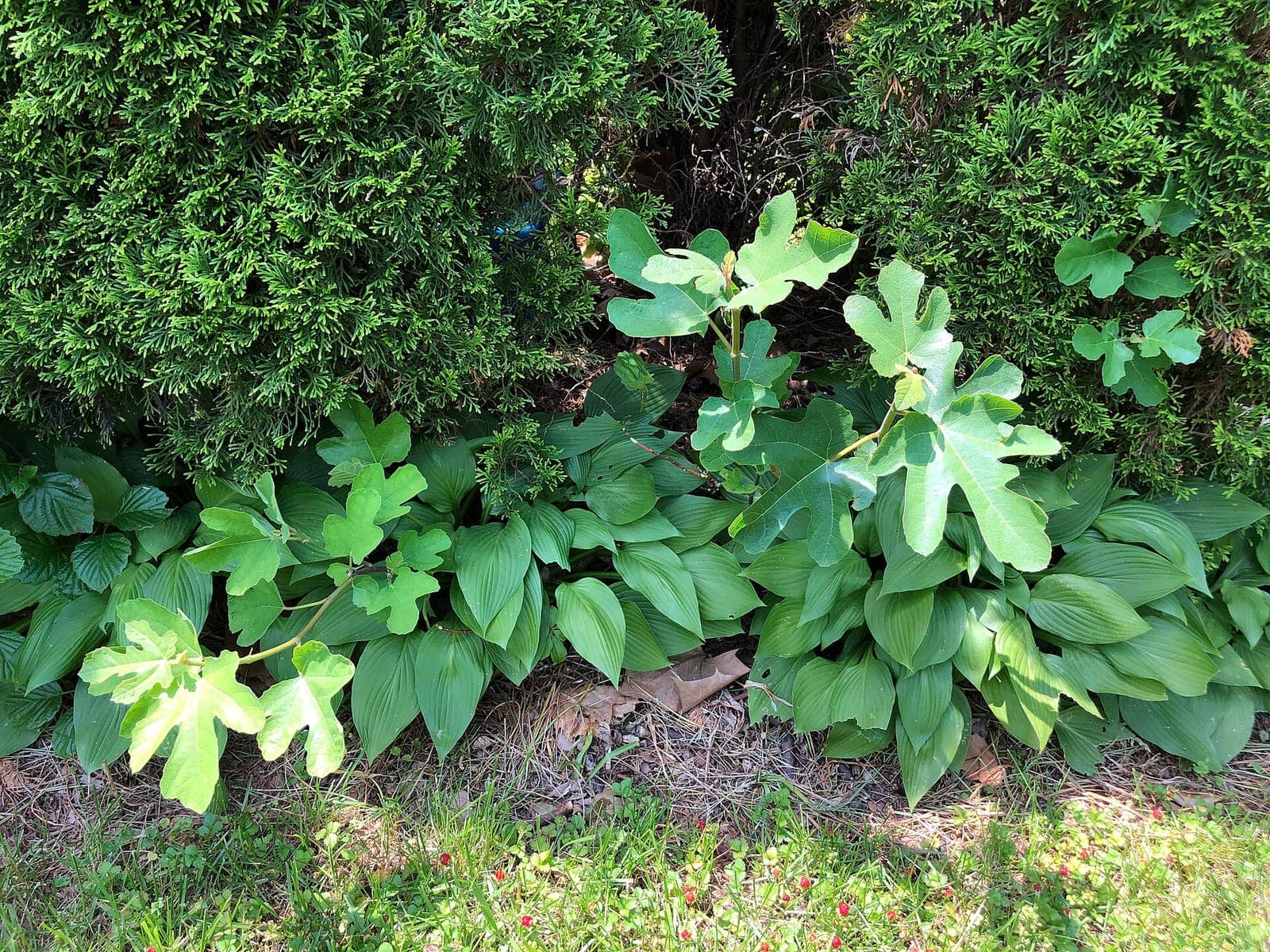
Chicago Hardy is a cold-tolerant selection of common fig (Ficus carica) that extends reliable fruiting into USDA zone 5, well beyond the range of most cultivated fig varieties. It bears medium-sized, brownish-purple fruit with sweet, strawberry-red flesh that ripens in a main crop from late summer through fall. The plant is self-fertile and requires no pollinator.
In zones 5–6, top growth often dies to the ground in severe winters, but the root system survives and pushes vigorous new growth in spring. In zones 7 and warmer, it matures into a small multi-stemmed tree reaching 10–20 ft. Siting the plant against a south-facing masonry wall improves cold hardiness by storing and radiating heat; a deep mulch over the root crown before the first hard freeze is critical at the northern edge of its range. Overly fertile or waterlogged soil encourages rank vegetative growth at the expense of fruit production and increases cold injury risk. Preferred soil pH is 6.0–7.0, though figs tolerate mild alkalinity.
Ripe fig fruit is a mild laxative with a documented history of use for digestive complaints and sore throats. The milky latex from cut stems has been applied topically to warts in traditional medicine; ficin and furocoumarins present in the latex exhibit keratolytic activity.
Growing figs? Read the fig guide - which type to buy, pruning and picking, winter protection for zones 7 and below, and growing in a pot, timed to your frost dates.Rust
Orange to brown raised pustules on the undersides of leaves, with yellow spotting on the upper surface. Heavy infections cause leaves to yellow and drop.
Remove and destroy infected leaves. Avoid overhead watering and improve air circulation. Apply a sulfur or copper-based fungicide if it spreads. Clear plant debris in fall.
Mosaic virus
Yellowing, mottled, or distorted leaves. No cure - spread by aphids.
Remove and destroy infected plants. Control aphid populations to prevent spread. Do not propagate from infected tubers.
Root-Knot Nematode
Swollen galls on roots, poor vigor, wilting in heat, and reduced fruiting. Containers and sandy soils are more prone.
Use clean potting mix in containers. Avoid replanting in infested soil. Maintain plant vigor with mulch and steady watering. Solarize affected garden soil.
Botrytis (grey mould)
Grey fuzzy mould on petals and stems, worst in cool wet conditions.
Remove affected parts immediately. Improve air circulation. Avoid overhead watering. Apply copper fungicide if severe.
Pepper Anthracnose Fruit Rot
Sunken, circular lesions on ripening fruit with concentric rings and pink or black spore masses in the center. Spreads quickly in warm, wet weather.
Remove and destroy infected fruit. Avoid overhead watering and improve airflow with proper spacing. Rotate away from peppers and tomatoes for 2–3 years. Use disease-free seed and apply copper-based fungicide preventively in wet seasons.
Fig Endosepsis
Internal browning, softening, and souring of the fruit with little to no external sign in early stages. Cut fruit reveals a darkened, fermented, or foul-smelling interior. Caused by Fusarium moniliforme entering through the fruit's ostiole.
Remove and destroy all affected fruit immediately; do not compost. Harvest promptly as soon as fruit reaches full ripeness. Clear dropped fruit from beneath the tree regularly. The primary vector is the fig wasp, which is largely absent in zones 5–7, reducing transmission risk for northern plantings.