
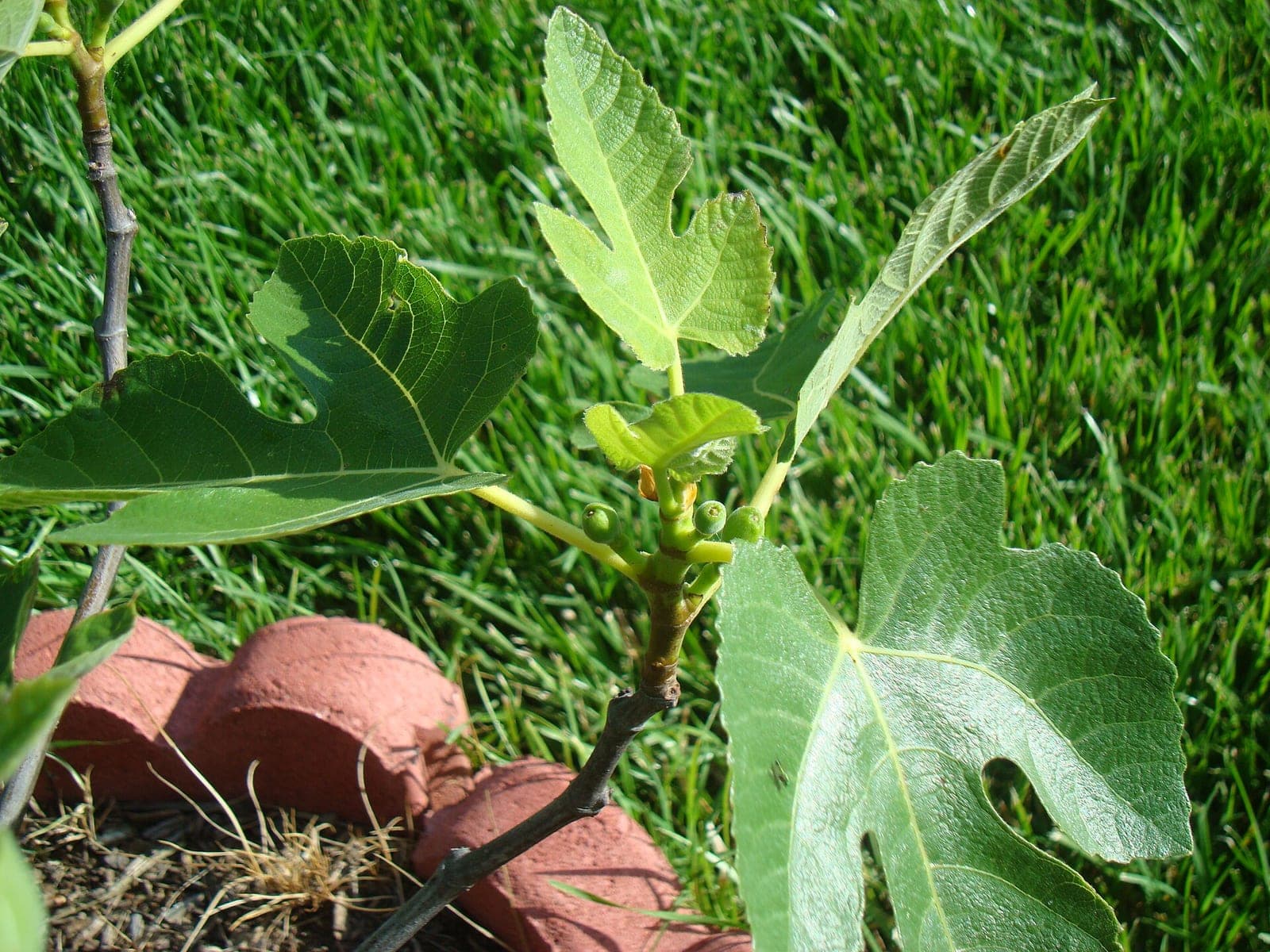
'Celeste' is a cultivar of common fig (Ficus carica) widely grown across the southeastern United States and valued for its cold hardiness among fig cultivars. It bears small to medium brownish-violet fruit with dense, honey-sweet amber flesh. The ostiole - the small opening at the fruit tip - is tightly closed, which blocks dried fruit beetles and the pathogen behind fig endosepsis, making 'Celeste' a reliable performer in humid climates where open-eye types often fail.
Deciduous and self-fertile, 'Celeste' typically produces one main crop ripening from July through September, earlier near the Gulf Coast and later in zone 6. It grows naturally as a multi-stemmed large shrub and can be trained to a single trunk. Root systems often survive winters that kill top growth entirely; planting against a south-facing masonry wall and mounding 6–8 inches of organic mulch over the root zone each fall substantially improves cold survival in zones 6–7. It tolerates a wide pH range but performs best between 6.0 and 6.5. Basal suckering is common and should be managed regularly to maintain form.
Fig leaves and unripe fruit latex have a documented history of traditional medicinal use. Leaf preparations are associated with blood sugar management in folk medicine and have shown hypoglycemic activity in animal studies. The milky latex from stems and unripe fruit is a traditional topical treatment for warts and minor skin conditions. Ripe figs are a long-standing dietary remedy for constipation.
Growing figs? Read the fig guide - which type to buy, pruning and picking, winter protection for zones 7 and below, and growing in a pot, timed to your frost dates.Fig Endosepsis
Internal browning, softening, and souring of the fruit with little to no external sign in early stages. Cut fruit reveals a darkened, fermented, or foul-smelling interior. Caused by Fusarium moniliforme entering through the fruit's ostiole.
Remove and destroy all affected fruit immediately; do not compost. Harvest promptly as soon as fruit reaches full ripeness. Clear dropped fruit from beneath the tree regularly. The primary vector is the fig wasp, which is largely absent in zones 5–7, reducing transmission risk for northern plantings.
Rust
Orange to brown raised pustules on the undersides of leaves, with yellow spotting on the upper surface. Heavy infections cause leaves to yellow and drop.
Remove and destroy infected leaves. Avoid overhead watering and improve air circulation. Apply a sulfur or copper-based fungicide if it spreads. Clear plant debris in fall.
Root-Knot Nematode
Swollen galls on roots, poor vigor, wilting in heat, and reduced fruiting. Containers and sandy soils are more prone.
Use clean potting mix in containers. Avoid replanting in infested soil. Maintain plant vigor with mulch and steady watering. Solarize affected garden soil.
Mosaic virus
Yellowing, mottled, or distorted leaves. No cure - spread by aphids.
Remove and destroy infected plants. Control aphid populations to prevent spread. Do not propagate from infected tubers.