
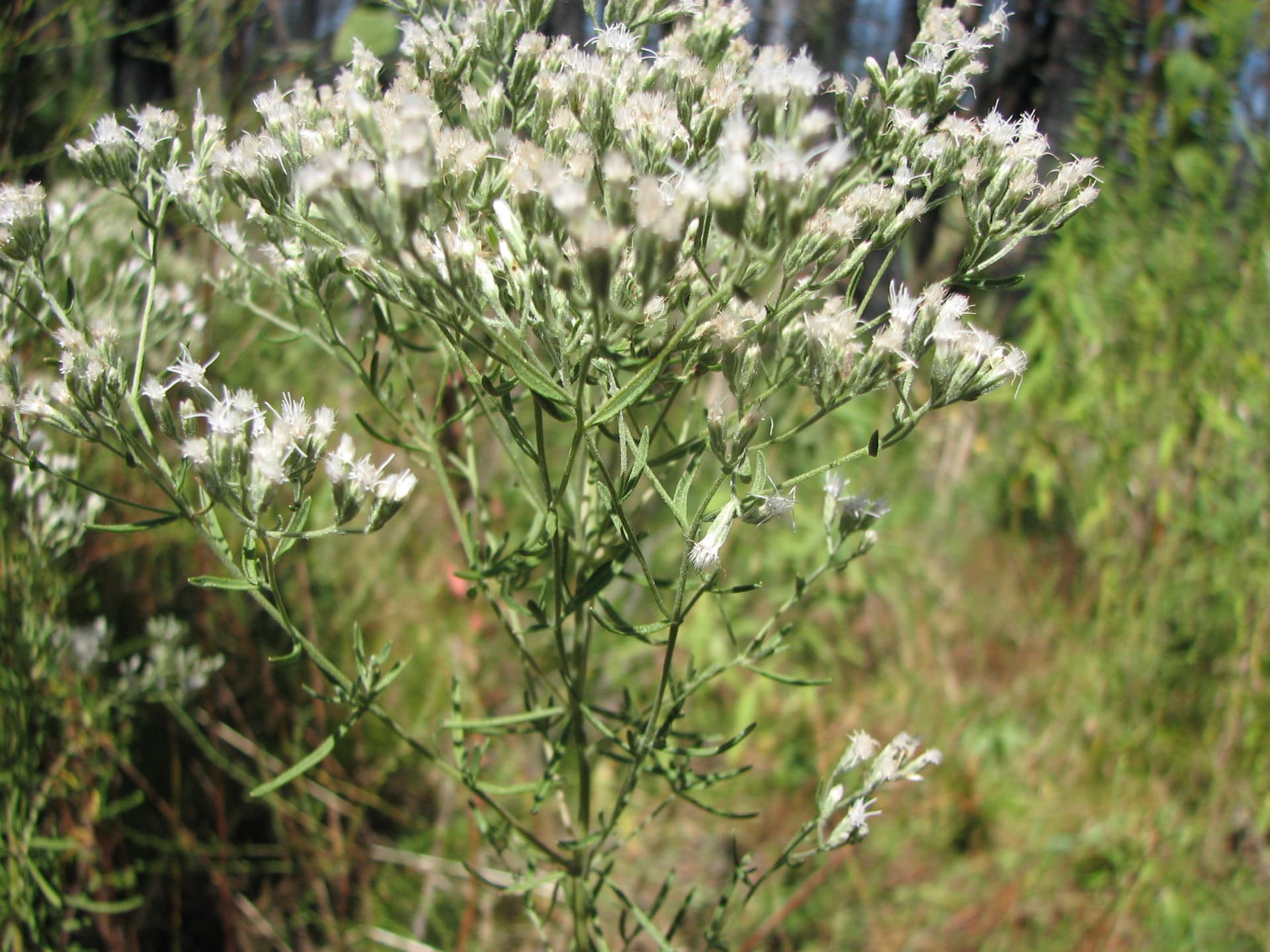
Native to dry, sandy fields and open woods across the eastern and central US, hyssop-leaved thoroughwort is a clumping wildflower with narrow, needle-like leaves in whorls along wiry stems, topped by flat-topped clusters of small white flowers from late summer well into fall. It's smaller and better-behaved in a border than most of its Eupatorium relatives, staying under 3 feet without spreading aggressively.
It thrives in exactly the lean, dry, sandy soil most perennials find inhospitable, and needs no supplemental water once established. Bees, wasps, and butterflies visit the flowers heavily late in the season when fewer other natives are blooming, and deer and rabbits leave the foliage alone.
Ecoregions:Eastern Temperate ForestsGreat Plains
Powdery mildew
White or grey powdery coating on leaves - usually starting on older growth in humid conditions or when nights cool.
Improve air circulation by thinning plants. Apply neem oil or potassium bicarbonate spray at first sign. Avoid overhead watering.