
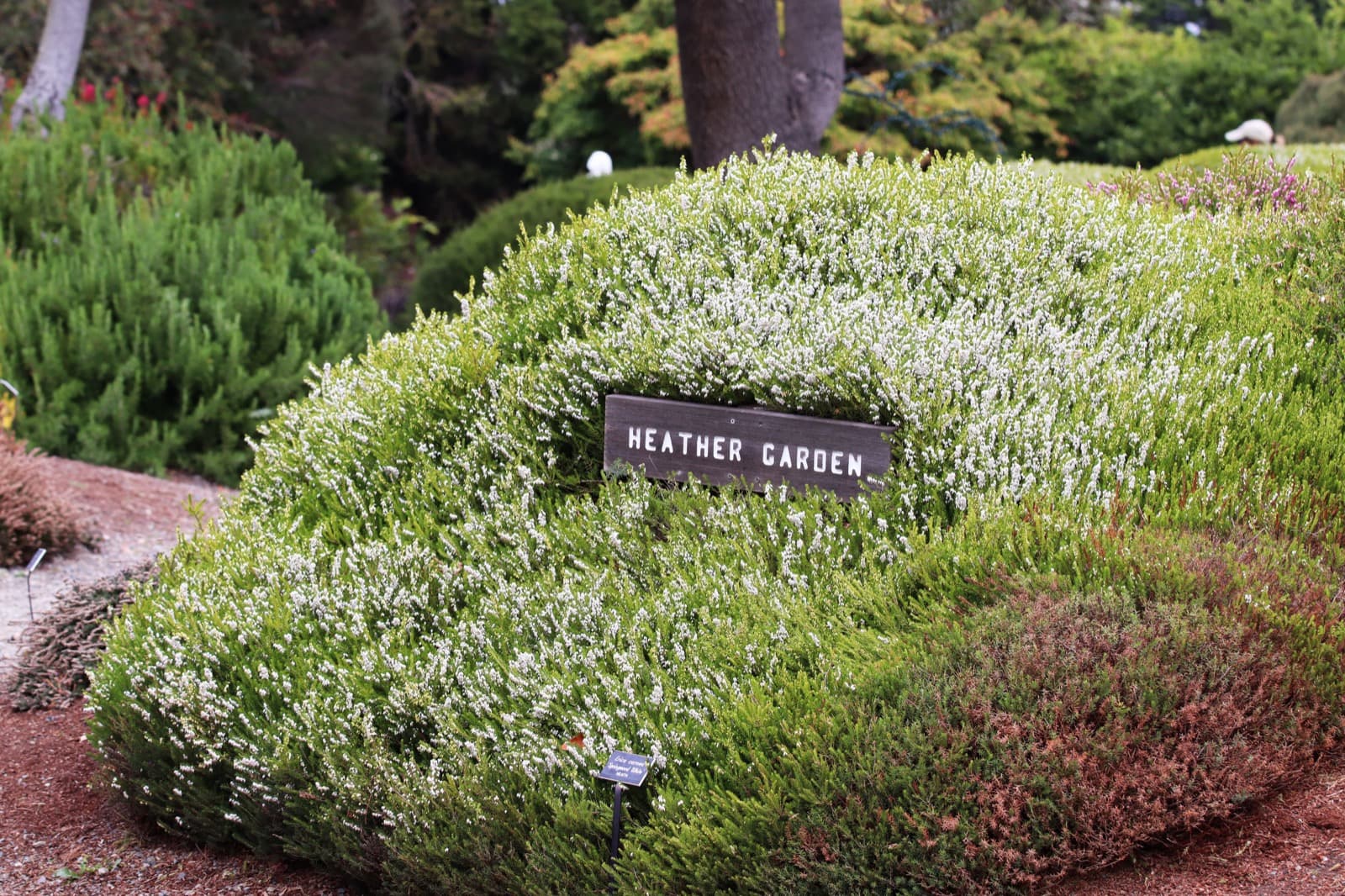
Erica carnea 'Springwood White' is a mat-forming evergreen subshrub that covers itself in white, tubular flowers from mid-winter through early spring. It is one of the most floriferous white cultivars of winter heath and is reliable in climates where few plants offer winter color.
Unlike most heaths and heathers, E. carnea tolerates neutral to mildly alkaline soils as well as acidic ones, making it far more versatile for mixed garden use. It spreads steadily to form dense, weed-suppressing groundcover on slopes and in rock garden settings. Cold-hardiness extends to zone 5a provided drainage is sharp; prolonged wet soil at the crown is the primary cause of plant loss. After flowering, trim lightly with shears but avoid cutting into old, leafless wood. A loose layer of coarse grit around the crown in colder zones helps prevent frost heave without trapping moisture.
The mid-winter flowers are a significant early nectar source for bumblebees and other pollinators before most garden plants break dormancy.
Phytophthora Root Rot
Wilting despite moist soil, yellowing leaves, stunted growth, and dark, decayed roots and crown tissue. Vines may collapse during hot weather.
Plant in well-draining soil and avoid waterlogging. Remove and destroy affected vines. Improve drainage with raised beds or amended soil and avoid overwatering.
Botrytis (grey mould)
Grey fuzzy mould on petals and stems, worst in cool wet conditions.
Remove affected parts immediately. Improve air circulation. Avoid overhead watering. Apply copper fungicide if severe.