
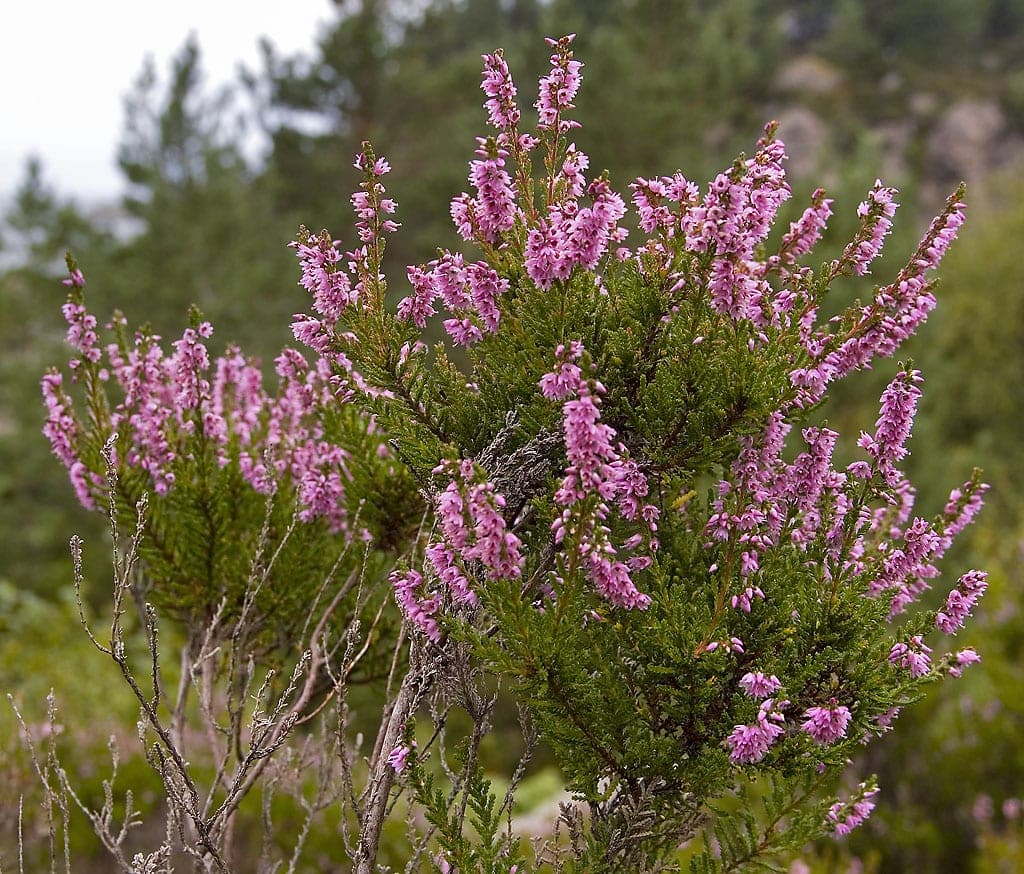
Calluna vulgaris is the sole species in its genus, a low-growing evergreen shrub native to the heathlands and moorlands of Europe and Asia Minor. In the garden it delivers late-season color when most woody plants have finished, with small flowers in shades of pink, purple, or white appearing mid-summer through fall. Hundreds of cultivars extend the range to gold, silver, and bronze foliage, giving the plant a second season of interest through winter.
Heather thrives in acidic, lean, well-drained soil and tolerates wind exposure well. It declines quickly in fertile, neutral, or alkaline conditions - high fertility promotes floppy growth and shortens plant life. An annual light trim in early spring before new growth begins keeps plants compact; cutting into bare old wood must be avoided because heather does not regenerate from leafless stems. Pine-needle mulch helps maintain soil acidity, moderates temperature, and reduces moisture loss in exposed sites. A soil pH of 4.5–6.0 is the effective target range.
Heather is a major nectar source for bees across European moorlands, and heather honey is a commercially significant product with a characteristic gel-set texture. The plant contains arbutin, a compound with documented antimicrobial activity relevant to urinary tract health. Heather ale, brewed from the flowering tips, has been a traditional drink in Scotland for thousands of years.
Phytophthora Root Rot
Wilting despite moist soil, yellowing leaves, stunted growth, and dark, decayed roots and crown tissue. Vines may collapse during hot weather.
Plant in well-draining soil and avoid waterlogging. Remove and destroy affected vines. Improve drainage with raised beds or amended soil and avoid overwatering.
Botrytis (grey mould)
Grey fuzzy mould on petals and stems, worst in cool wet conditions.
Remove affected parts immediately. Improve air circulation. Avoid overhead watering. Apply copper fungicide if severe.