
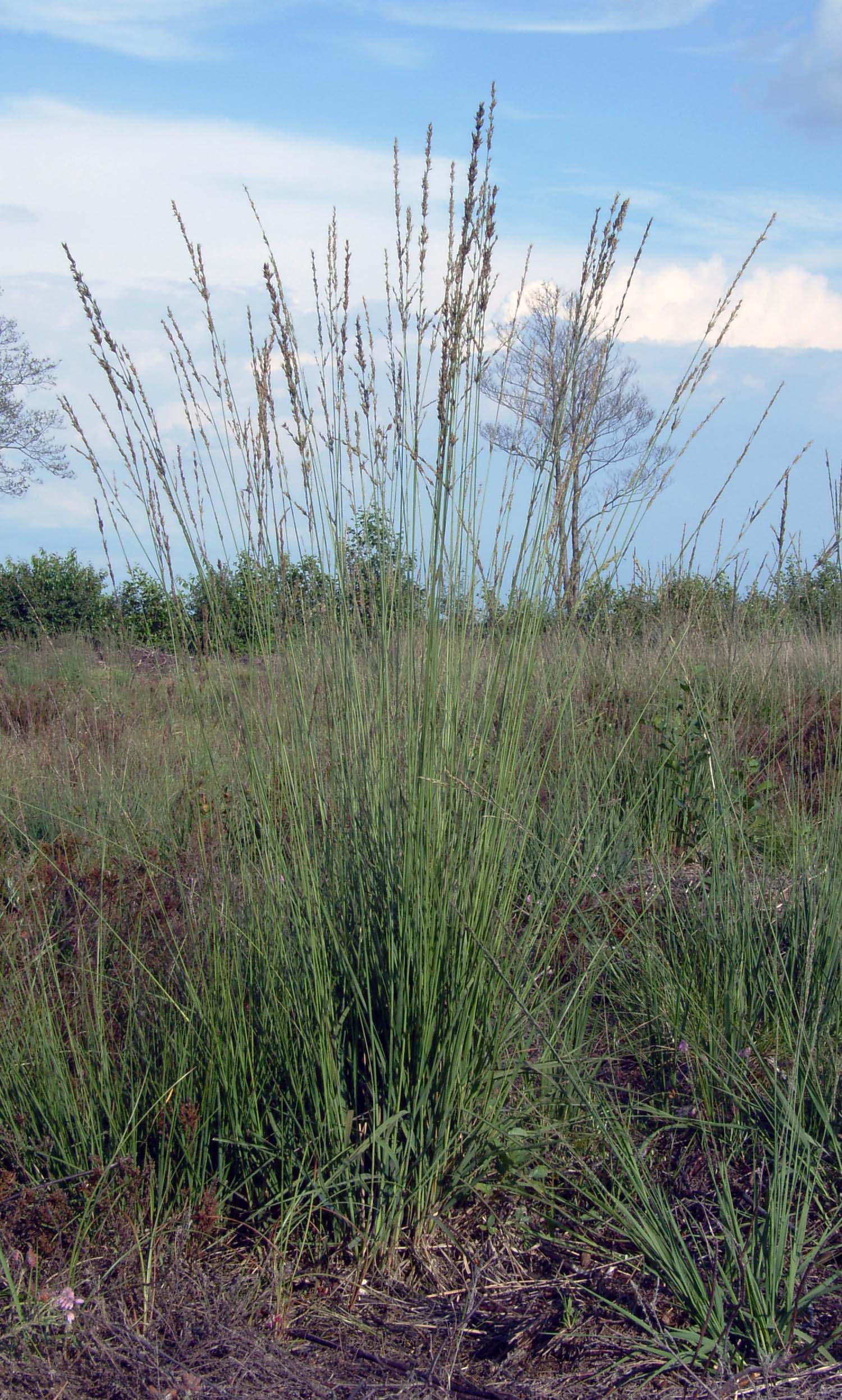
Molinia caerulea is a clump-forming deciduous grass native to European moorlands, bogs, and heathlands. It performs reliably in moist, acidic soils that defeat most ornamental grasses, and carries a purple cast on its stems through summer before shifting to warm gold in fall.
This grass prefers a soil pH of 3.5–5 and tolerates boggy ground as well as consistently moist sites at higher elevations. Its most distinctive habit is full seasonal dieback: the entire above-ground shoot structure detaches and disperses in winter, leaving the crown clean without any cutting. Division is easiest in spring once new growth is underway. Topping the soil with pine bark or composted leaf litter helps sustain the acidity the plant needs over time.
In its native Atlantic heathland and moorland, Molinia forms dominant stands that support ground-nesting birds and specialist acid-heath invertebrates. In parts of rural Europe, the stiff, dried stems were traditionally gathered for thatching, basket weaving, and broom-making.
Rust
Orange to brown raised pustules on the undersides of leaves, with yellow spotting on the upper surface. Heavy infections cause leaves to yellow and drop.
Remove and destroy infected leaves. Avoid overhead watering and improve air circulation. Apply a sulfur or copper-based fungicide if it spreads. Clear plant debris in fall.
Fungal leaf spot
Brown or purplish spots on the leaves, often ringed with a yellow halo, that spread and merge in warm, humid, or wet weather; heavily spotted leaves yellow and drop early.
Pick off spotted leaves and clear fallen debris to remove overwintering spores. Improve air circulation by thinning, and water at the base so foliage dries quickly. If it persists, apply a copper- or sulfur-based fungicide at the first sign.