
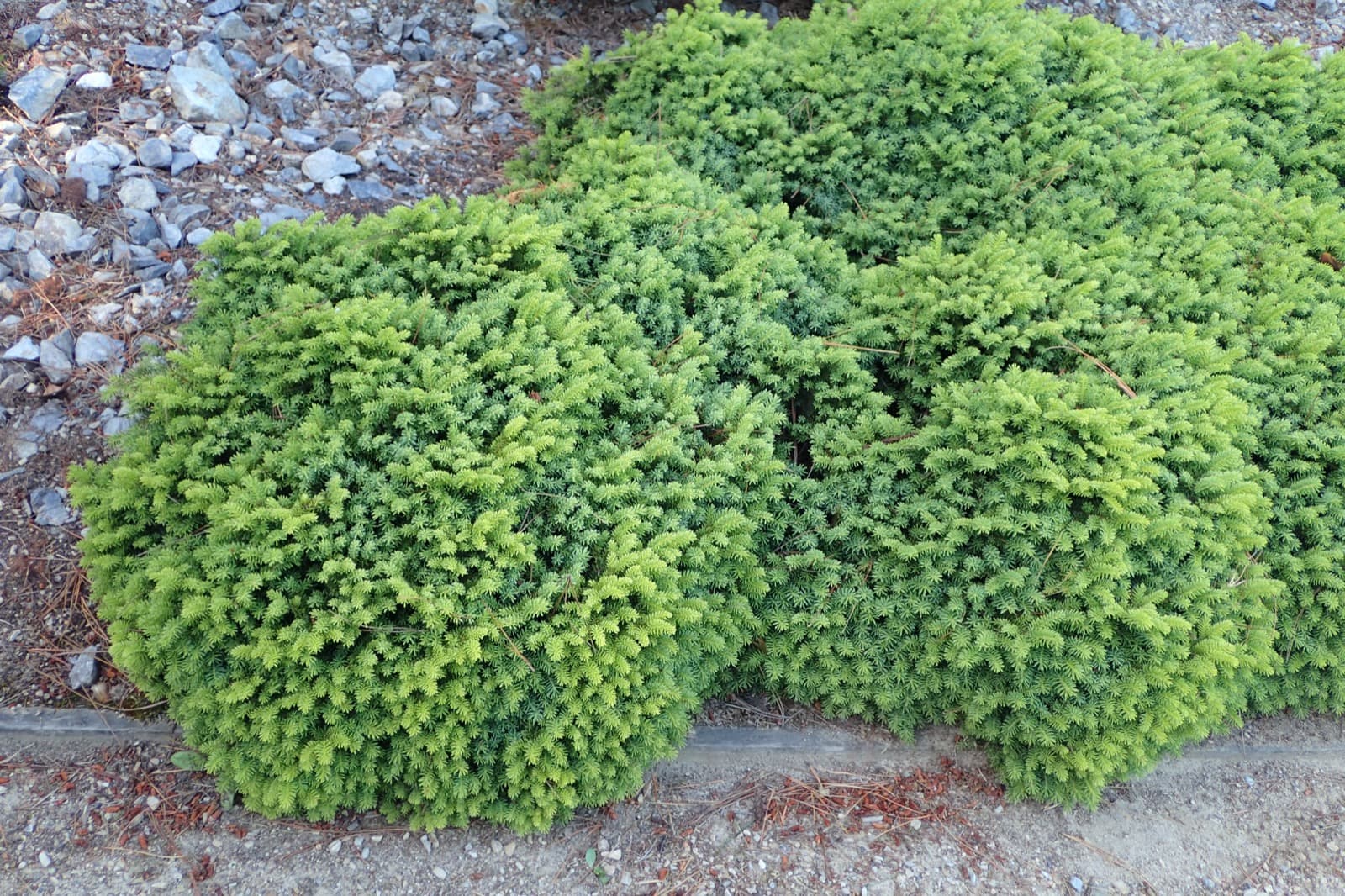
Little Gem Norway Spruce (Picea abies 'Little Gem') is a dwarf, nest-forming cultivar of Norway Spruce selected for its extremely compact, rounded shape. It grows very slowly, typically reaching 2–3 feet tall and wide in 10 years and rarely exceeding 4 feet at maturity, making it well suited to rock gardens, troughs, small-scale foundation beds, and mixed evergreen plantings where a miniature conifer anchors the composition year-round.
The plant performs best in full sun with consistently moist, well-drained, slightly acidic soil. It is cold-hardy to zone 3 but declines in the sustained heat and humidity of zones warmer than 7. Mulching to conserve soil moisture and moderate root temperature helps establishment. Little pruning is needed; the form is naturally tidy. Spruce spider mites are the primary pest concern, becoming problematic during hot, dry stretches and causing inner-needle stippling and drop. Adequate air circulation reduces fungal disease pressure.
Rhizosphaera Needle Cast
Needles on inner and lower branches turn purple-brown in their second year and drop prematurely, leaving progressively bare branch sections that work upward through the canopy over multiple seasons. Rows of small black fungal fruiting bodies (pycnidia) are visible along needle undersides under a hand lens.
Apply chlorothalonil or copper-based fungicide when new needles reach half their final length; repeat 3–4 weeks later. Rake and remove fallen needles beneath the tree. Maintain adequate spacing for air circulation. Treat for 2–3 consecutive springs on heavily infected trees before evaluating recovery.
Cytospora Canker
White or blue-white pitch masses ooze from bark on lower branches and the trunk. Affected branches die back progressively from the tip inward; bark beneath the resin is discolored brown and may have a resinous, sunken appearance.
Prune infected branches well below the canker margin into healthy wood and destroy all cuttings. Sterilize pruning tools with 70% isopropyl alcohol between each cut. No effective fungicide is available; prevent recurrence by avoiding drought stress, soil compaction, and mechanical bark injury.
Sirococcus Shoot Blight
Newly elongating shoot tips wilt and turn brown in late spring. Infected needles and stems develop small black pycnidia. Affected shoots may curl into a shepherd's crook shape. Current-year growth is killed and the disease can spread further during prolonged wet periods.
Prune and destroy infected shoot tips as soon as symptoms appear. Apply copper-based fungicide or chlorothalonil at bud break, repeating every two weeks during wet springs. Plant at adequate spacing to maximize air circulation and avoid overhead irrigation.
Phytophthora Root Rot
Wilting despite moist soil, yellowing leaves, stunted growth, and dark, decayed roots and crown tissue. Vines may collapse during hot weather.
Plant in well-draining soil and avoid waterlogging. Remove and destroy affected vines. Improve drainage with raised beds or amended soil and avoid overwatering.