
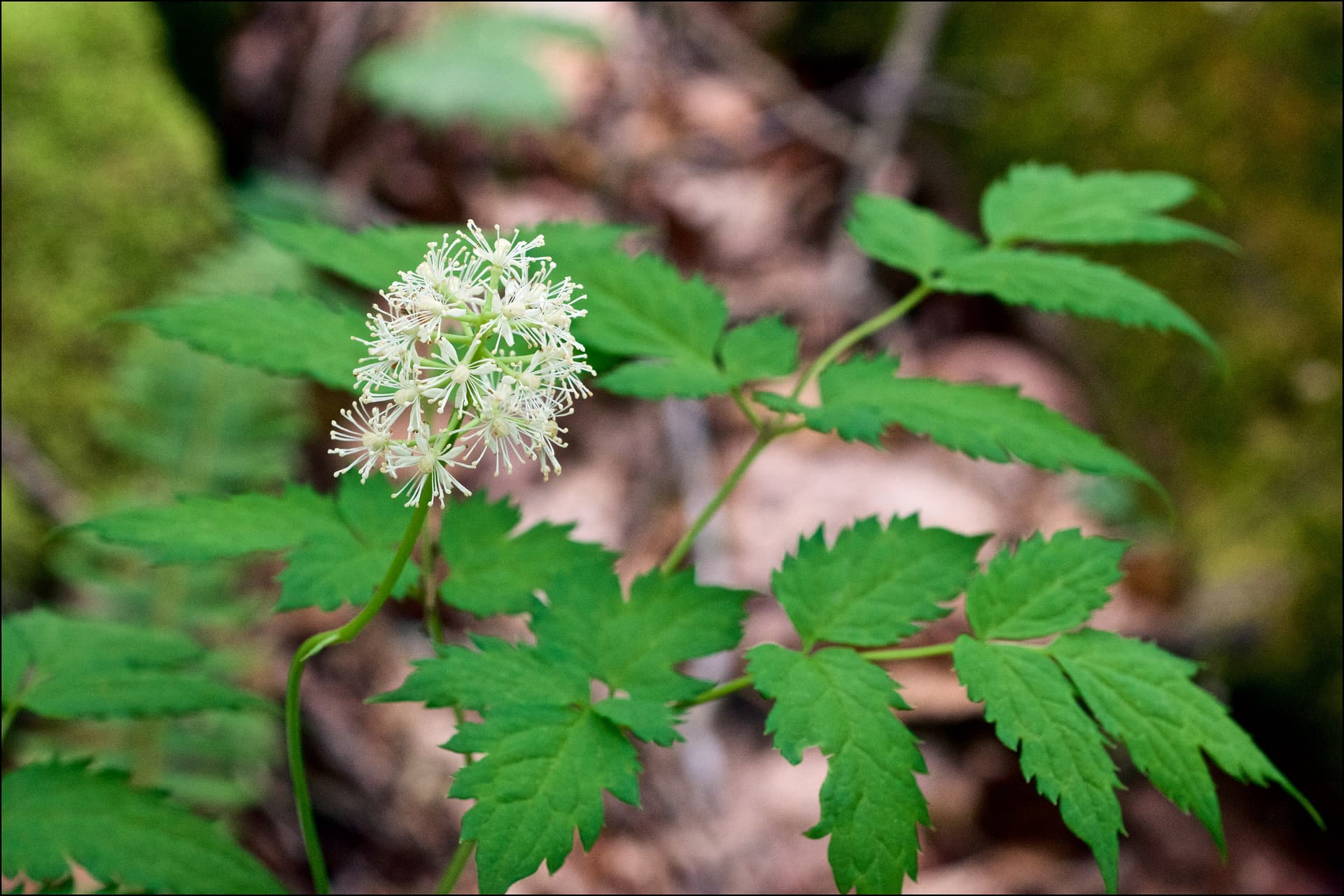
Actaea pachypoda is a native woodland perennial of eastern North America, occurring naturally in rich, moist deciduous forests from southern Canada to the Gulf Coast. It bears small white flowers on branched stems in late spring, but its primary garden interest is the clusters of white berries - each marked with a dark spot on thick scarlet stalks - that ripen by late summer and hold well into fall.
This plant performs best in part shade to full shade with consistently moist, humus-rich soil. It fits naturally into woodland plantings alongside trilliums, ferns, and Solomon's seal. Seeds require two cold-moist stratification periods and typically germinate in the second spring after sowing; sowing fresh seed outdoors in fall is the most reliable method. Plants spread slowly by rhizome and modest self-seeding. Maintaining a 2–3 inch leaf-mulch layer year-round replicates forest-floor conditions and suppresses weeds. Slightly acidic soil in the pH 5.5–6.5 range suits it best.
All parts are toxic to humans and most mammals, containing cardiogenic glycosides. Birds eat the berries freely and serve as primary seed dispersers, making the plant genuinely valuable in wildlife-oriented plantings. Cherokee, Iroquois, and other Native American nations used root preparations as an emetic and for gynecological conditions.
Ecoregions:Northern ForestsEastern Temperate Forests
Fungal leaf spot
Brown or purplish spots on the leaves, often ringed with a yellow halo, that spread and merge in warm, humid, or wet weather; heavily spotted leaves yellow and drop early.
Pick off spotted leaves and clear fallen debris to remove overwintering spores. Improve air circulation by thinning, and water at the base so foliage dries quickly. If it persists, apply a copper- or sulfur-based fungicide at the first sign.
Botrytis (grey mould)
Grey fuzzy mould on petals and stems, worst in cool wet conditions.
Remove affected parts immediately. Improve air circulation. Avoid overhead watering. Apply copper fungicide if severe.
Root rot
Plants wilt, yellow, and stunt even in moist soil; lower stems and roots turn brown, soft, and mushy and the plant may collapse. Most common in heavy, wet, or poorly drained ground.
Improve drainage and stop overwatering, and never plant too deep. Lift and destroy badly affected plants along with the soil around the roots. Grow in raised or free-draining beds to prevent it returning.
Powdery mildew
White or grey powdery coating on leaves - usually starting on older growth in humid conditions or when nights cool.
Improve air circulation by thinning plants. Apply neem oil or potassium bicarbonate spray at first sign. Avoid overhead watering.