
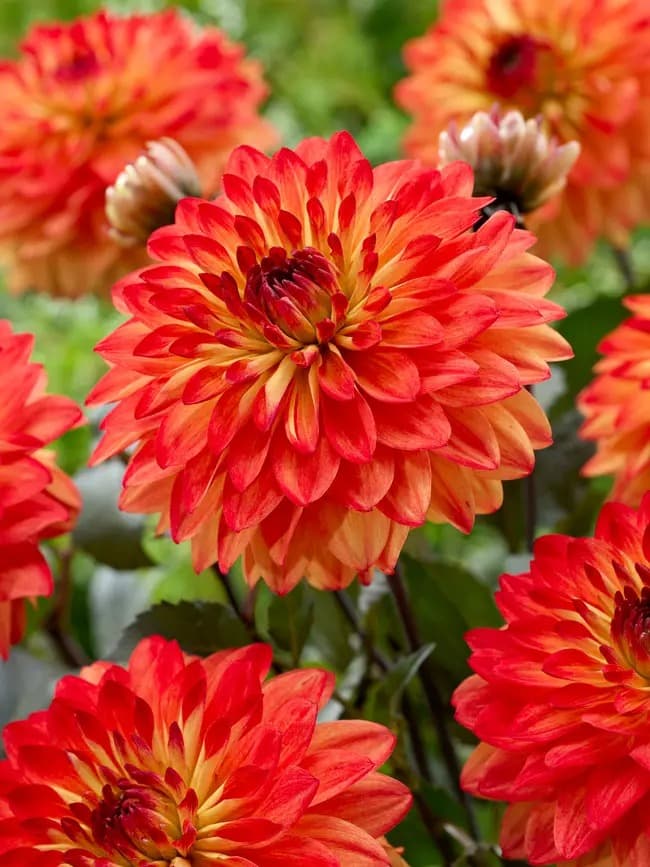
Dahlia 'Candlelight Amberglow' is a tuberous herbaceous perennial bearing warm amber and golden-orange blooms from midsummer until the first killing frost. A member of the Asteraceae family alongside sunflowers and zinnias, it delivers sustained late-season color and produces long-stemmed cuts with good vase life.
Plant tubers in full sun after soil has warmed past 60°F. Rich, well-drained soil amended with compost produces the strongest stems. In zones 8a and warmer, tubers can remain in the ground under a mulch layer through winter. In colder regions, lift and store tubers after frost kills the foliage. Pinching the central shoot at 12 inches encourages branching and a heavier stem count; install stakes at planting time before plants become top-heavy. Consistent moisture and a low-nitrogen fertilizer once growth is established support prolonged flowering.
Dahlia tubers were cultivated as a food crop by indigenous peoples of Mexico well before the genus reached European gardens as an ornamental. Tubers contain inulin, a prebiotic dietary fiber, and were eaten boiled or roasted.
Growing dahlias? Read the Dahlia Growing Guide - pinching and disbudding for more stems, the flower forms, and the winter tuber storage method, timed to your frost dates.Powdery mildew
White or grey powdery coating on leaves - usually starting on older growth in humid conditions or when nights cool.
Improve air circulation by thinning plants. Apply neem oil or potassium bicarbonate spray at first sign. Avoid overhead watering.
Botrytis (grey mould)
Grey fuzzy mould on petals and stems, worst in cool wet conditions.
Remove affected parts immediately. Improve air circulation. Avoid overhead watering. Apply copper fungicide if severe.
Mosaic virus
Yellowing, mottled, or distorted leaves. No cure - spread by aphids.
Remove and destroy infected plants. Control aphid populations to prevent spread. Do not propagate from infected tubers.
Tuber Rot
Stored or in-ground tubers turn soft, brown, and mushy, often with mold growth. Affected tubers fail to sprout in spring.
Lift tubers only after foliage dies back, cure them in a dry airy spot before storage, and store in a cool dry location with breathable packing. Discard damaged or soft tubers and avoid waterlogged soil during the growing season.
Fusarium wilt
Sudden wilting, brown streaks in stems, yellowing leaves. Affects sweet basil varieties most.
No cure. Remove and destroy plants. Do not replant in the same spot for 3+ years. Choose resistant varieties.
Root rot
Plants wilt, yellow, and stunt even in moist soil; lower stems and roots turn brown, soft, and mushy and the plant may collapse. Most common in heavy, wet, or poorly drained ground.
Improve drainage and stop overwatering, and never plant too deep. Lift and destroy badly affected plants along with the soil around the roots. Grow in raised or free-draining beds to prevent it returning.
Fungal leaf spot
Brown or purplish spots on the leaves, often ringed with a yellow halo, that spread and merge in warm, humid, or wet weather; heavily spotted leaves yellow and drop early.
Pick off spotted leaves and clear fallen debris to remove overwintering spores. Improve air circulation by thinning, and water at the base so foliage dries quickly. If it persists, apply a copper- or sulfur-based fungicide at the first sign.