
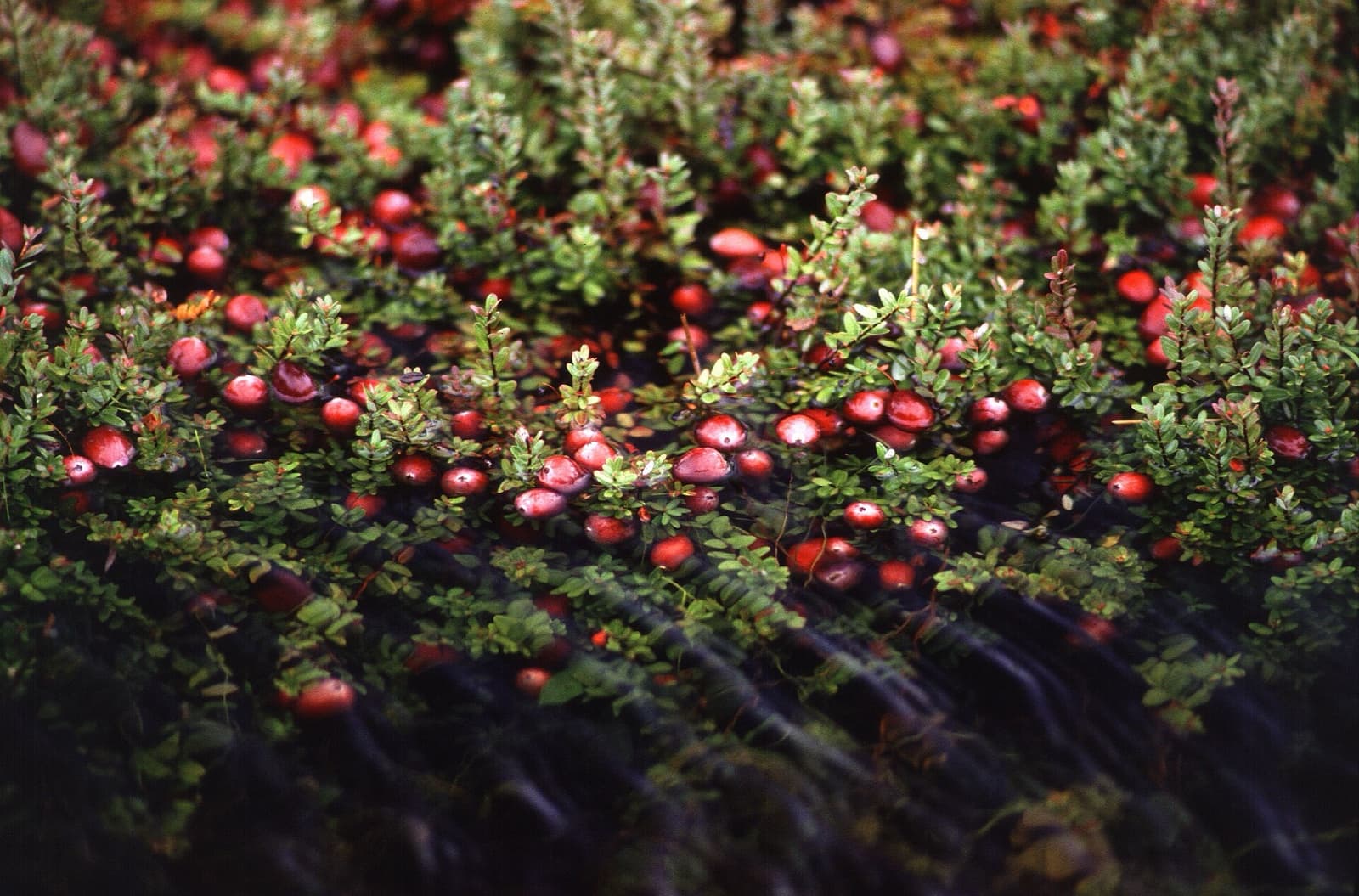
Cranberry is a native evergreen groundcover of the bogs and wet sandy shores of northeastern North America and the Great Lakes, and one of the few fruit crops native to the continent. It is a low, trailing shrub only a few inches tall, spreading by runners that root as they go and send up short upright shoots. Small nodding pink flowers appear in early summer, followed by glossy red berries that ripen in autumn. The leaves turn bronze-purple over the cold months.
You do not need a flooded bog to grow it. A home bed needs full sun, steady moisture and very acidic, sandy or peaty soil, around pH 4.5 to 5.5: dig out the native soil and fill with a mix of peat and sand, or grow it in a lined bed that holds water. Plant rooted cuttings 12 inches apart and keep them evenly moist while they spread. Every few years, top-dress with a thin layer of sand to bury the runners and encourage new fruiting uprights. Beds fruit in about the third year.
Commercial growers flood their bogs to harvest and to protect the plants from cold; at home, hand-pick the ripe berries and cover the bed with pine needles once the ground freezes. Cranberry belongs to the same genus as blueberry and wants the same acidic conditions.
Ecoregions:Northern ForestsEastern Temperate Forests
These dates are for Zone 6b. Enter your ZIP to time every job to your own frost dates.
- buy · Jan 30 - Feb 13Order rooted cuttings or plugs - about two months before planting
- watch · Jan 30 - Mar 13Test and acidify the soil: The single most important job, and the one done too late by everyone who fails with blueberries.
- cut · Feb 13 - Mar 20The main prune: Prune while the bush is still dormant.
- watch · Mar 20 - Apr 10First feed at bud break: As the buds swell, give the first feed of an acidifying fertiliser formulated for blueberries, rhododendrons, or azaleas.
- watch · Mar 27Top-dress with a thin layer of sand every few years to bury the runners and push up new fruiting uprights
- overwinter · Mar 27 - May 1Bloom - protect the flowers: Small white bell flowers open and feed early pollinators.
- overwinter · Apr 3 - May 8Mulch the root zone: Lay a thick 2–4 inch mulch of pine bark, pine needles, or sawdust over the shallow roots.
- plant · Apr 10 - Apr 24Plant rooted cuttings or plugs 12 in apart into moist, acidic sand or peat once the soil can be worked
- cut · May 15 - Jul 3Net before the berries colour: The moment the first berries start to turn, the birds start counting - they will strip a bush within days of ripening.
- watch · May 22 - Jun 12Second feed after fruit set: Split the season's feeding in two: a second, lighter dose of acidifying fertiliser about six weeks after the first supports the ripening crop and next year's buds without one heavy hit.
- cut · Jun 5 - Aug 28Harvest in succession: Early, mid, and late cultivars ripen in turn, so a good mix crops over a long stretch rather than all at once (see the ripening order below).
- watch · Any time in summerKeep the bed evenly moist - the runners root as they spread and dry out fast in sandy soil
- watch · Sep 4 - Sep 18Stop feeding to harden off: Cut off feeding six to eight weeks before your first frost.
- cut · Oct 9 - Oct 30Hand-pick berries once deep red and glossy, before a hard freeze; a home bed needs no flooding
- overwinter · Nov 13 - Dec 25Fall colour and winter mulch: The foliage turns brilliant scarlet and orange - this is a four-season shrub, not just a crop.