
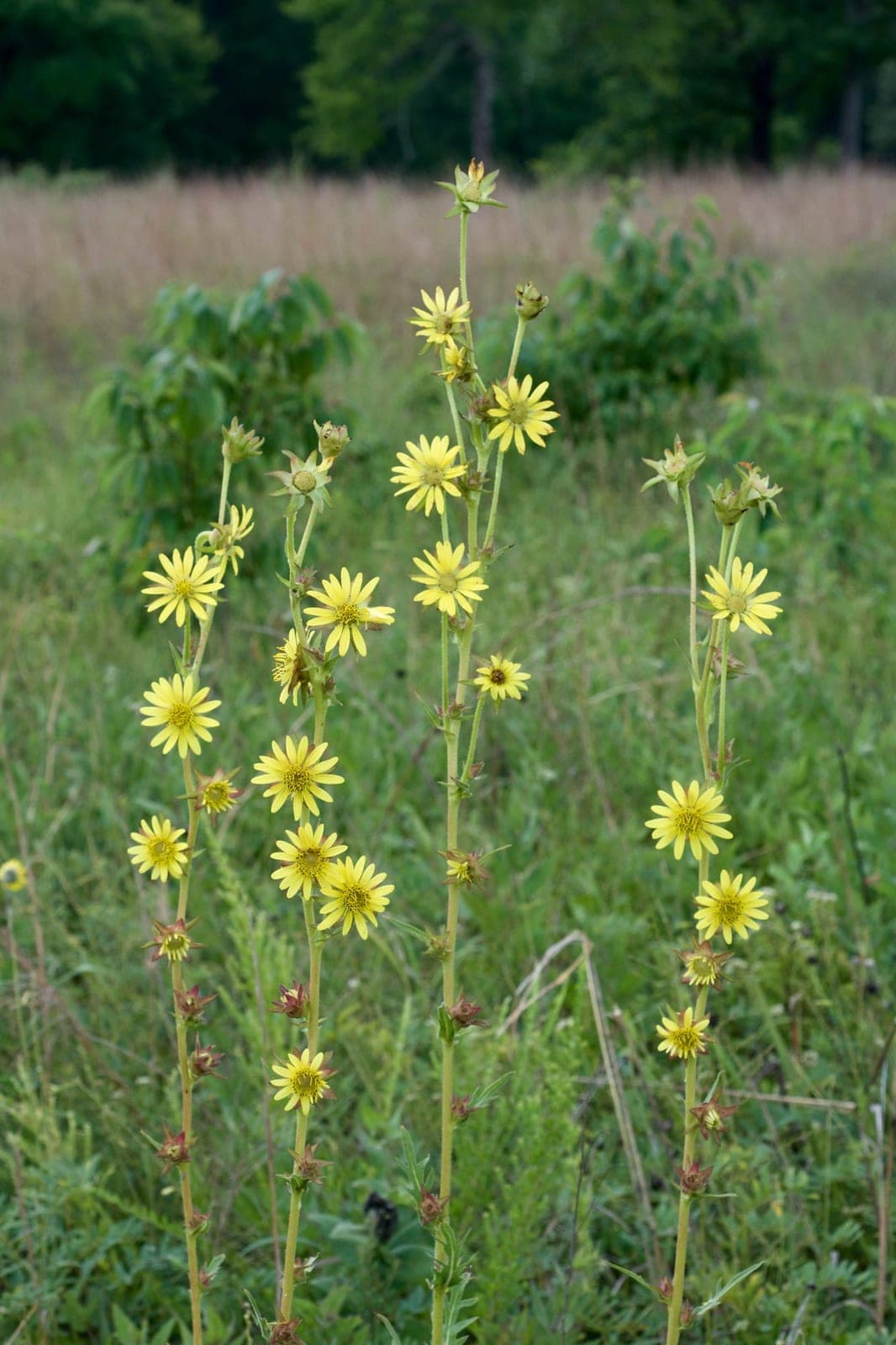
Compass plant is a tall native prairie forb with large, deeply pinnate-lobed leaves that orient north-south along the stem, an adaptation that reduces midday heat load and water loss - the trait that earned it its common name. Yellow ray flowers appear on branching upper stems from midsummer into early fall, drawing bumblebees, long-horned bees, and other native pollinators. Goldfinches work the seed heads through fall and winter. As a structural element in prairie-style plantings it has few equals at its scale.
The plant develops a taproot that can exceed 15 feet, making it drought-tolerant once established and effectively impossible to transplant after the first growing season. Above-ground growth is slow for the first two years while the root system builds; by year three the plant grows rapidly. Direct sowing in fall is the standard method, allowing seeds to cold-stratify naturally in place. Well-drained loam or sandy soil is essential; wet or compacted ground prevents taproot development and causes crown rot. Plants established in appropriate soils are extremely long-lived.
Native Americans chewed the dried plant resin as gum and used preparations of the plant in traditional medicine. Hollow stems left standing through winter provide nesting sites for cavity-nesting native bees.
Ecoregions:Eastern Temperate ForestsGreat Plains
Fungal leaf spot
Brown or purplish spots on the leaves, often ringed with a yellow halo, that spread and merge in warm, humid, or wet weather; heavily spotted leaves yellow and drop early.
Pick off spotted leaves and clear fallen debris to remove overwintering spores. Improve air circulation by thinning, and water at the base so foliage dries quickly. If it persists, apply a copper- or sulfur-based fungicide at the first sign.
Powdery mildew
White or grey powdery coating on leaves - usually starting on older growth in humid conditions or when nights cool.
Improve air circulation by thinning plants. Apply neem oil or potassium bicarbonate spray at first sign. Avoid overhead watering.
Root rot
Plants wilt, yellow, and stunt even in moist soil; lower stems and roots turn brown, soft, and mushy and the plant may collapse. Most common in heavy, wet, or poorly drained ground.
Improve drainage and stop overwatering, and never plant too deep. Lift and destroy badly affected plants along with the soil around the roots. Grow in raised or free-draining beds to prevent it returning.