
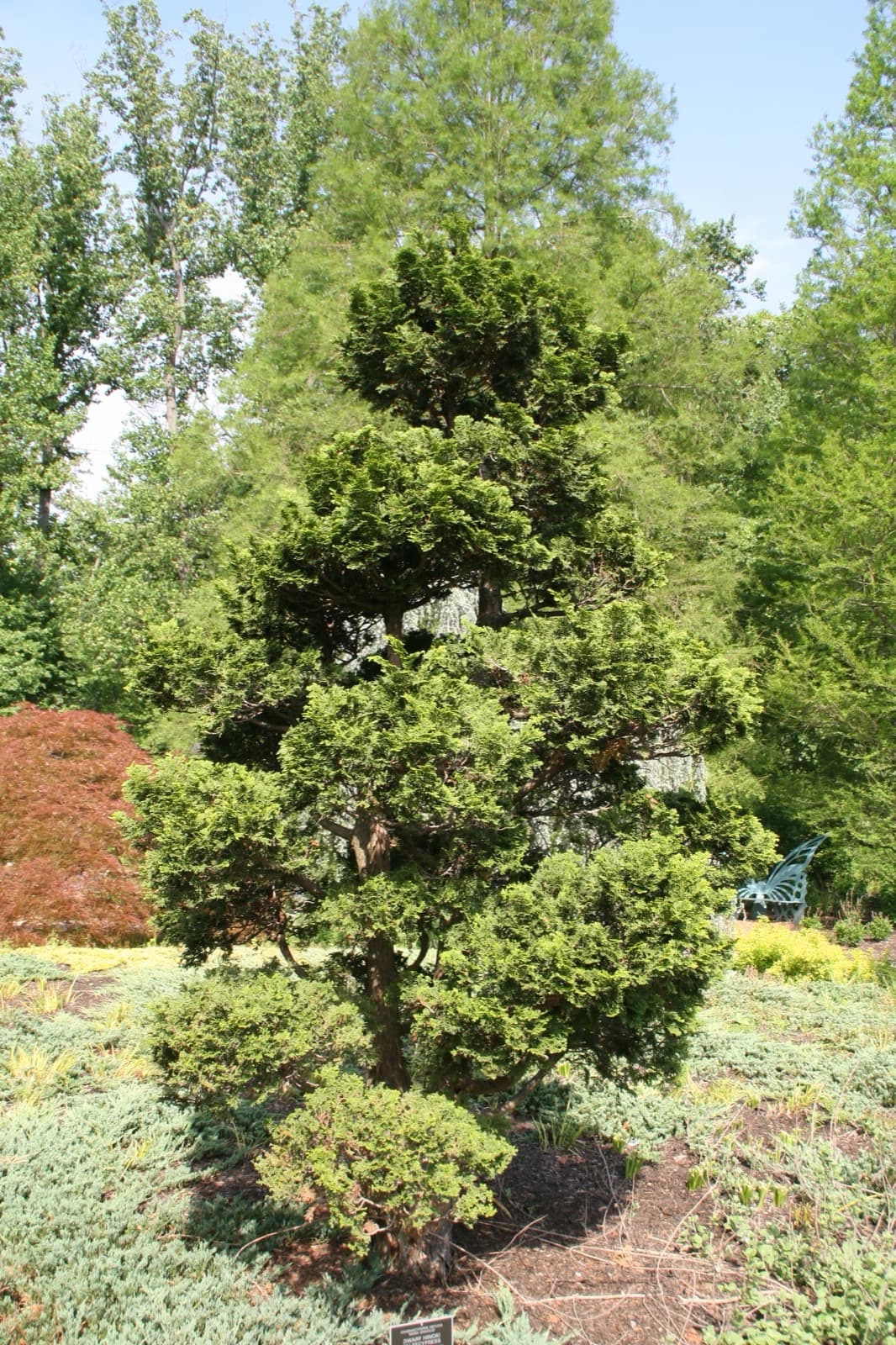
Dwarf Hinoki Cypress is a slow-growing evergreen conifer with cupped, shell-like sprays of dark glossy green foliage arranged in tiered, layered fans. A cultivar of Hinoki Cypress native to the forests of Japan, 'Nana Gracilis' gains roughly 3–6 inches per year and reaches 6–10 ft tall and 4–5 ft wide over several decades. Its refined texture and strong year-round structure make it one of the most useful small conifers for formal borders, rock gardens, Japanese-style landscapes, and foundation beds.
Plant in slightly acidic, consistently moist but well-drained soil; waterlogged conditions cause rapid root decline. In zones 7–8, afternoon shade reduces foliage browning under intense summer heat. In zones 4–6, full sun produces the densest, most compact growth. A 2–3 in layer of mulch over the root zone helps maintain moisture and moderate temperature swings. No regular pruning is required. Any shaping should be limited to light trimming of the outer canopy in early spring before new growth hardens; cutting back into bare, leafless interior wood leaves permanent dead zones. Young plants benefit from windbreak protection during their first winter in zones 4–5.
Phytophthora Root Rot
Wilting despite moist soil, yellowing leaves, stunted growth, and dark, decayed roots and crown tissue. Vines may collapse during hot weather.
Plant in well-draining soil and avoid waterlogging. Remove and destroy affected vines. Improve drainage with raised beds or amended soil and avoid overwatering.
Kabatina Twig Blight
Tips of one-year-old shoots turn yellow then straw-brown, most visibly from late winter through early spring. Tiny black pycnidia appear at the boundary of dead and living tissue. Unlike Phomopsis blight, which kills current-season shoots in summer, Kabatina affects previous-year wood and symptoms are most prominent at or before bud break.
Prune affected shoots 2–3 inches below visible symptoms during dry weather; disinfect cutting tools between each cut with 70% isopropyl alcohol. Avoid overhead irrigation. Apply a preventive copper-based or thiophanate-methyl fungicide in early fall before temperatures drop. Thin dense interior foliage to improve air circulation.
Phomopsis Blight
Irregular brown lesions on leaves, stems, and fruit. Stem lesions can girdle the plant, causing wilting above the infection point. Fruit develops sunken, dark, water-soaked spots that expand and rot rapidly in warm, wet conditions. Small black fruiting bodies may be visible inside older lesions.
Remove and destroy all infected tissue. Avoid overhead irrigation and improve air circulation through adequate spacing. Apply copper-based fungicide at first symptoms and repeat every 7–10 days during wet weather. Rotate out of the nightshade family for at least 3 years and start with certified disease-free transplants.