
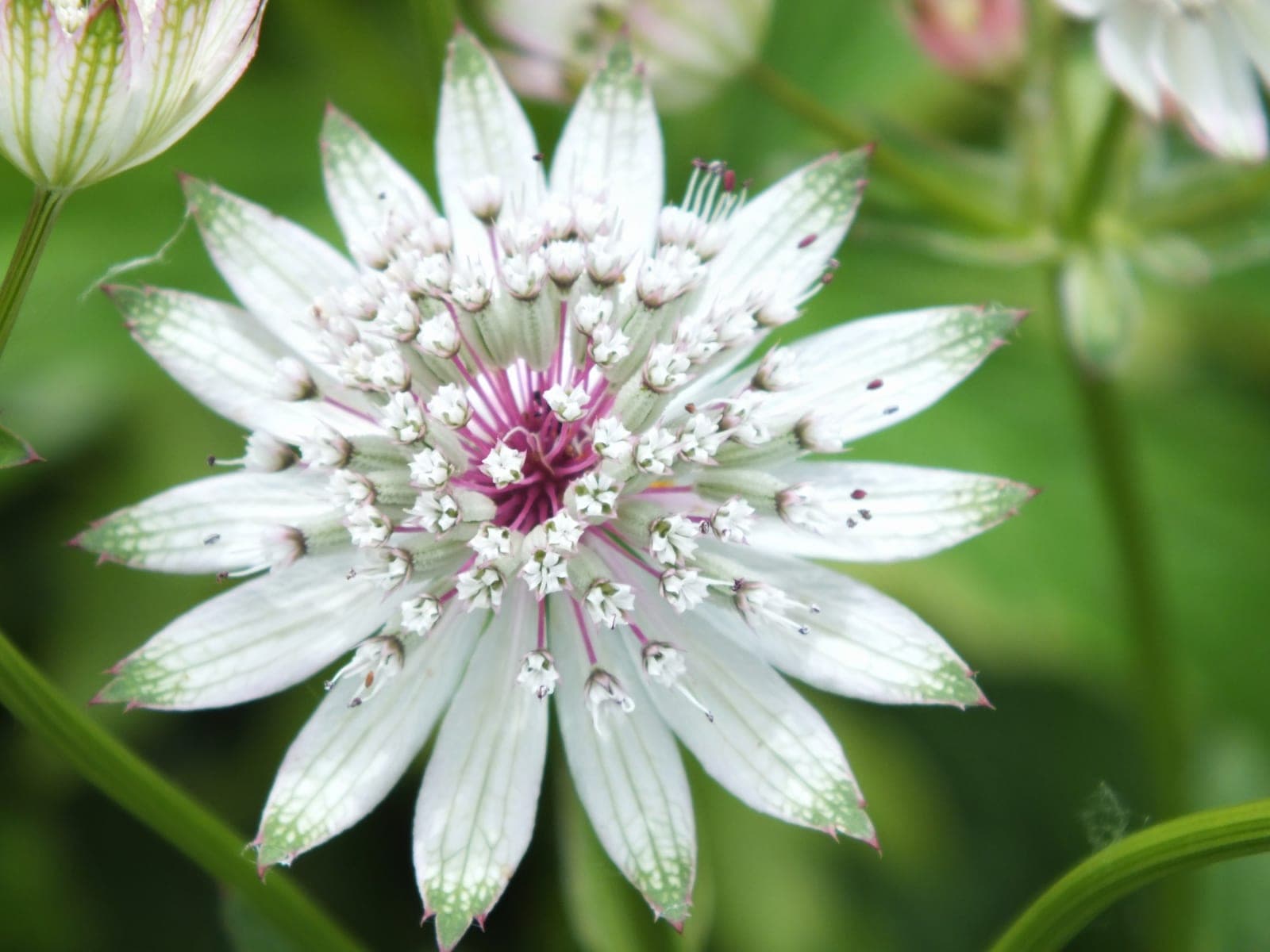
Astrantia major is a clump-forming herbaceous perennial native to mountain meadows and woodland edges across central and eastern Europe. It produces distinctive pincushion-like clusters of tiny flowers ringed by stiff, star-shaped papery bracts in white, pink, and deep red. Long-blooming and reliably perennial, it suits cottage gardens, woodland borders, and the cutting garden.
It performs best in moist, humus-rich soil with partial shade, though it tolerates full sun where the ground stays reliably moist. Mulching helps retain the consistent moisture it needs, particularly toward the warmer edge of its range. Plants self-seed freely; removing spent stems after the first flush limits spreading and can prompt a second flush of stems later in summer. Seeds require cold stratification to germinate well, making fall outdoor sowing the most reliable approach. Divide established clumps every three to four years to maintain vigor.
The root has a documented history in Central European folk medicine as a digestive tonic. Young leaves were historically gathered as a pot herb in parts of its native range.
Powdery mildew
White or grey powdery coating on leaves - usually starting on older growth in humid conditions or when nights cool.
Improve air circulation by thinning plants. Apply neem oil or potassium bicarbonate spray at first sign. Avoid overhead watering.
Botrytis (grey mould)
Grey fuzzy mould on petals and stems, worst in cool wet conditions.
Remove affected parts immediately. Improve air circulation. Avoid overhead watering. Apply copper fungicide if severe.
Fungal leaf spot
Brown or purplish spots on the leaves, often ringed with a yellow halo, that spread and merge in warm, humid, or wet weather; heavily spotted leaves yellow and drop early.
Pick off spotted leaves and clear fallen debris to remove overwintering spores. Improve air circulation by thinning, and water at the base so foliage dries quickly. If it persists, apply a copper- or sulfur-based fungicide at the first sign.
Root rot
Plants wilt, yellow, and stunt even in moist soil; lower stems and roots turn brown, soft, and mushy and the plant may collapse. Most common in heavy, wet, or poorly drained ground.
Improve drainage and stop overwatering, and never plant too deep. Lift and destroy badly affected plants along with the soil around the roots. Grow in raised or free-draining beds to prevent it returning.