
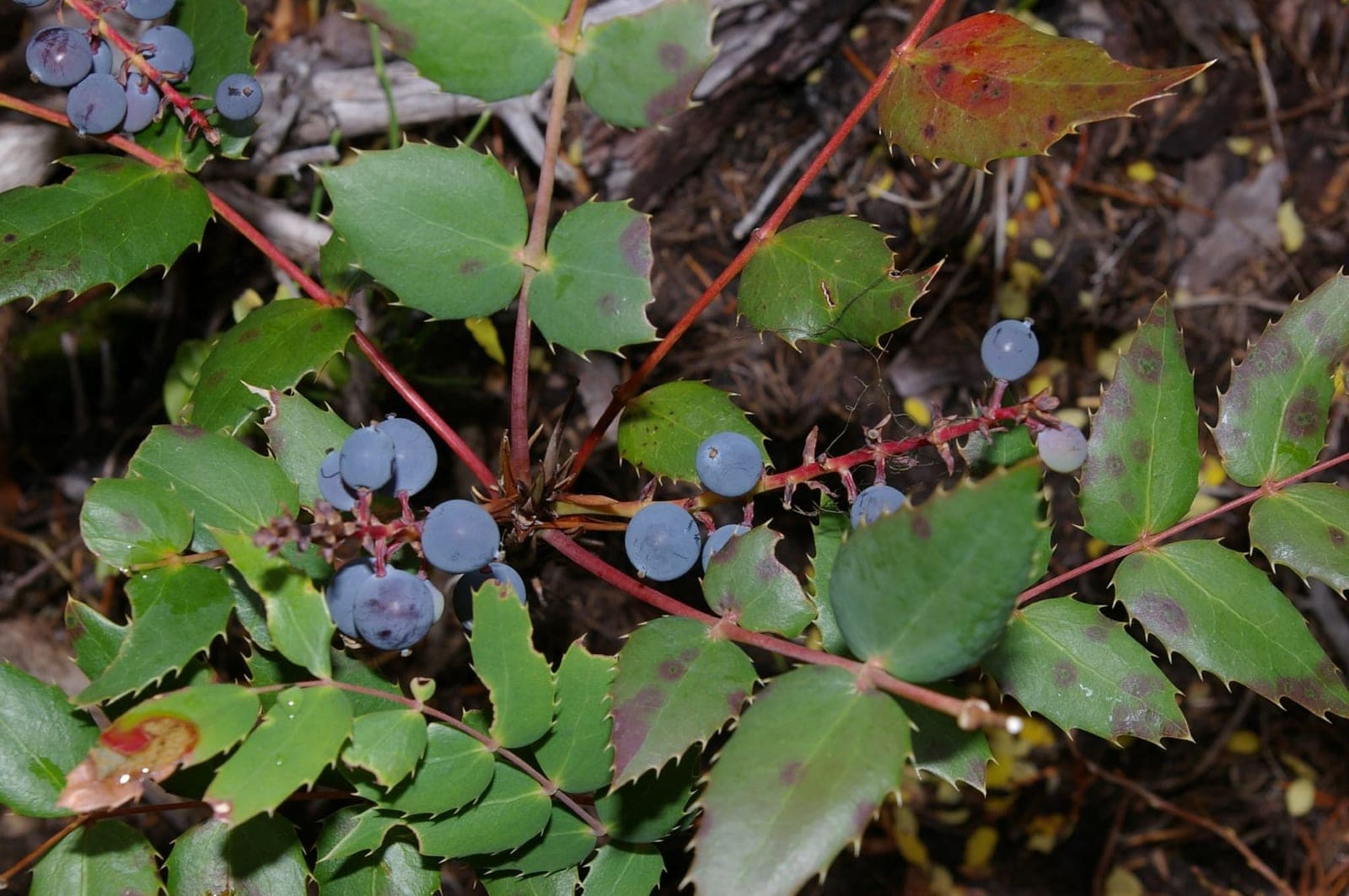
Berberis nervosa is a low-growing evergreen shrub native to Pacific Coast coniferous forests, ranging from British Columbia to northern California. It forms spreading clumps typically 1–2 feet tall, with long pinnate leaves composed of leathery, spine-tipped leaflets that often flush bronze to burgundy in winter sun and cold. Few evergreen shrubs tolerate deep shade as reliably, making it well suited to north-facing slopes, planting under conifers, and woodland garden edges.
Racemes of yellow flowers appear in early spring, followed by clusters of blue-black berries that persist into fall and are taken by waxwings, thrushes, and other birds. The plant spreads slowly by rhizomes and, once established, is drought tolerant under the closed canopy for which it evolved. It performs best in acidic, well-drained soil with moderate organic matter; consistent moisture aids establishment, but mature plants west of the Cascades rarely need supplemental irrigation. Avoid exposed sites with full afternoon sun, which causes leaf scorch and foliage bleaching.
The tart berries have been consumed fresh and dried by Pacific Northwest indigenous peoples and are used in jams and juice. Roots and inner bark contain berberine, an alkaloid with documented antimicrobial and anti-inflammatory activity. Indigenous medicinal traditions across the region include bark preparations for digestive complaints, fever, and skin infections.
Ecoregions:Northwestern Forested MountainsMarine West Coast Forest
Rust
Orange to brown raised pustules on the undersides of leaves, with yellow spotting on the upper surface. Heavy infections cause leaves to yellow and drop.
Remove and destroy infected leaves. Avoid overhead watering and improve air circulation. Apply a sulfur or copper-based fungicide if it spreads. Clear plant debris in fall.
Fungal leaf spot
Brown or purplish spots on the leaves, often ringed with a yellow halo, that spread and merge in warm, humid, or wet weather; heavily spotted leaves yellow and drop early.
Pick off spotted leaves and clear fallen debris to remove overwintering spores. Improve air circulation by thinning, and water at the base so foliage dries quickly. If it persists, apply a copper- or sulfur-based fungicide at the first sign.
Root rot
Plants wilt, yellow, and stunt even in moist soil; lower stems and roots turn brown, soft, and mushy and the plant may collapse. Most common in heavy, wet, or poorly drained ground.
Improve drainage and stop overwatering, and never plant too deep. Lift and destroy badly affected plants along with the soil around the roots. Grow in raised or free-draining beds to prevent it returning.