
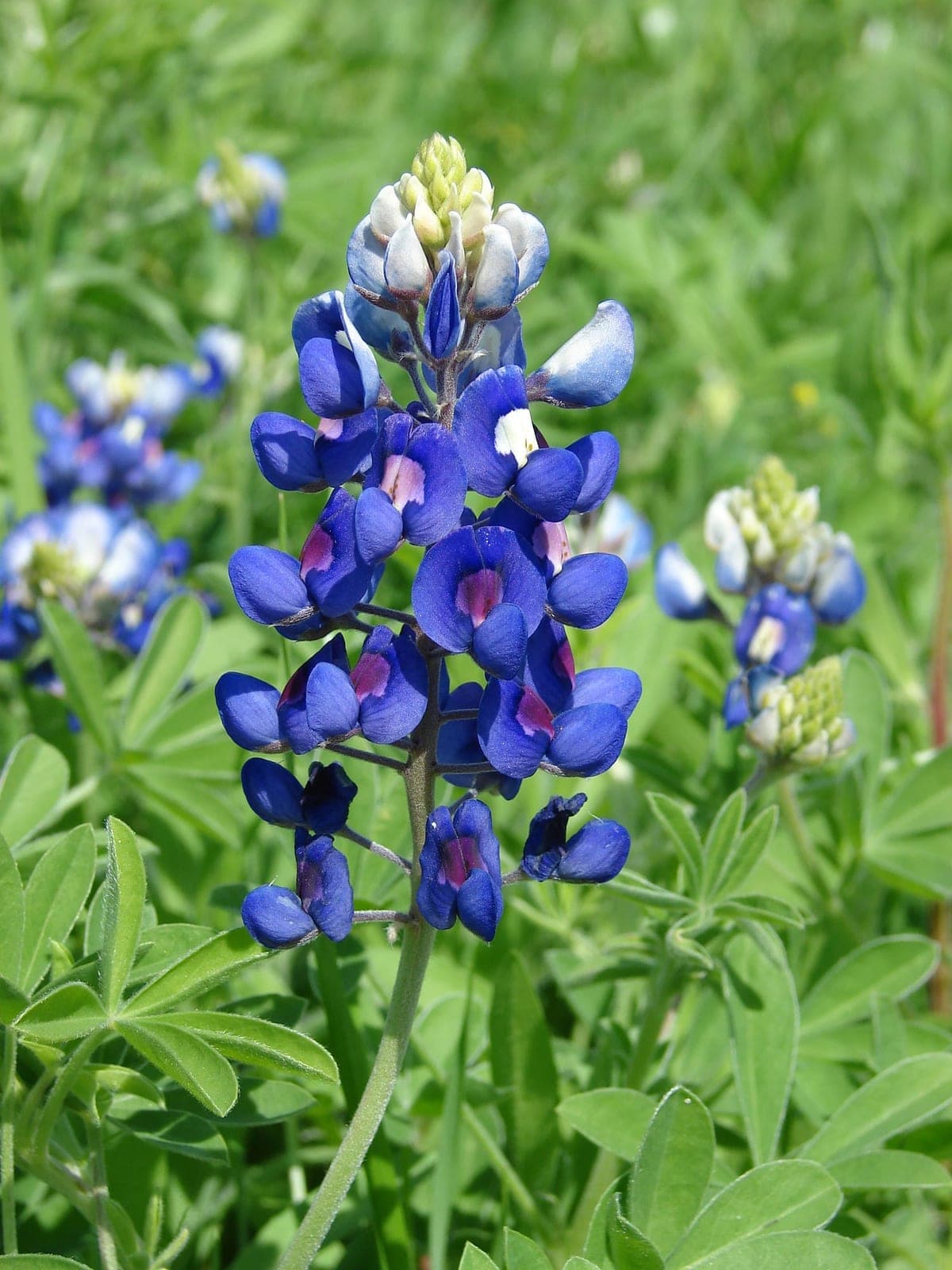
Texas bluebonnet is the state flower of Texas and one of the most recognized wildflowers in North America. A cool-season annual legume, it grows natively on thin, rocky, alkaline soils across central Texas and blooms in March and April before setting seed and dying as temperatures rise.
Seeds have a hard coat that must be broken before they will germinate. Scarify each seed lightly with sandpaper or nick the coat with a knife, then direct sow in fall into lean, well-drained soil. Plants emerge in autumn, overwinter as low basal rosettes, then bolt and bloom the following spring. As a legume, bluebonnet fixes atmospheric nitrogen through root nodules, gradually improving soil fertility. It self-sows reliably in open, undisturbed ground and does not transplant successfully; sow it where it is to grow. Rich or amended soil promotes leafy foliage at the expense of flowering.
The Texas Department of Transportation has seeded bluebonnets along state highways for decades as part of a formal wildflower program. Early spring blooms provide nectar for native bees and bumblebees emerging before most other wildflowers open. Alkaloids in the foliage and seeds make the plant unpalatable to deer and rabbits, and the nitrogen-fixing habit benefits neighboring wildflowers in low-fertility soils.
Ecoregions:Eastern Temperate ForestsGreat Plains
Lupin Anthracnose
Twisted, bending stems with sunken brown lesions; leaves develop dark spots and may collapse. Pink spore masses can appear on infected tissue in wet weather.
Remove and destroy infected plants. Use clean, treated seed and avoid overhead watering. Space plants for airflow and rotate planting sites to reduce spore buildup.
Damping Off
Seedlings collapse at the soil line with thin, water-soaked stems; seeds may fail to emerge or rot before sprouting.
Sow in well-draining mix, avoid overwatering, and ensure good airflow. Remove affected seedlings and let the surface dry between waterings.
Powdery mildew
White or grey powdery coating on leaves - usually starting on older growth in humid conditions or when nights cool.
Improve air circulation by thinning plants. Apply neem oil or potassium bicarbonate spray at first sign. Avoid overhead watering.
Root rot
Plants wilt, yellow, and stunt even in moist soil; lower stems and roots turn brown, soft, and mushy and the plant may collapse. Most common in heavy, wet, or poorly drained ground.
Improve drainage and stop overwatering, and never plant too deep. Lift and destroy badly affected plants along with the soil around the roots. Grow in raised or free-draining beds to prevent it returning.