
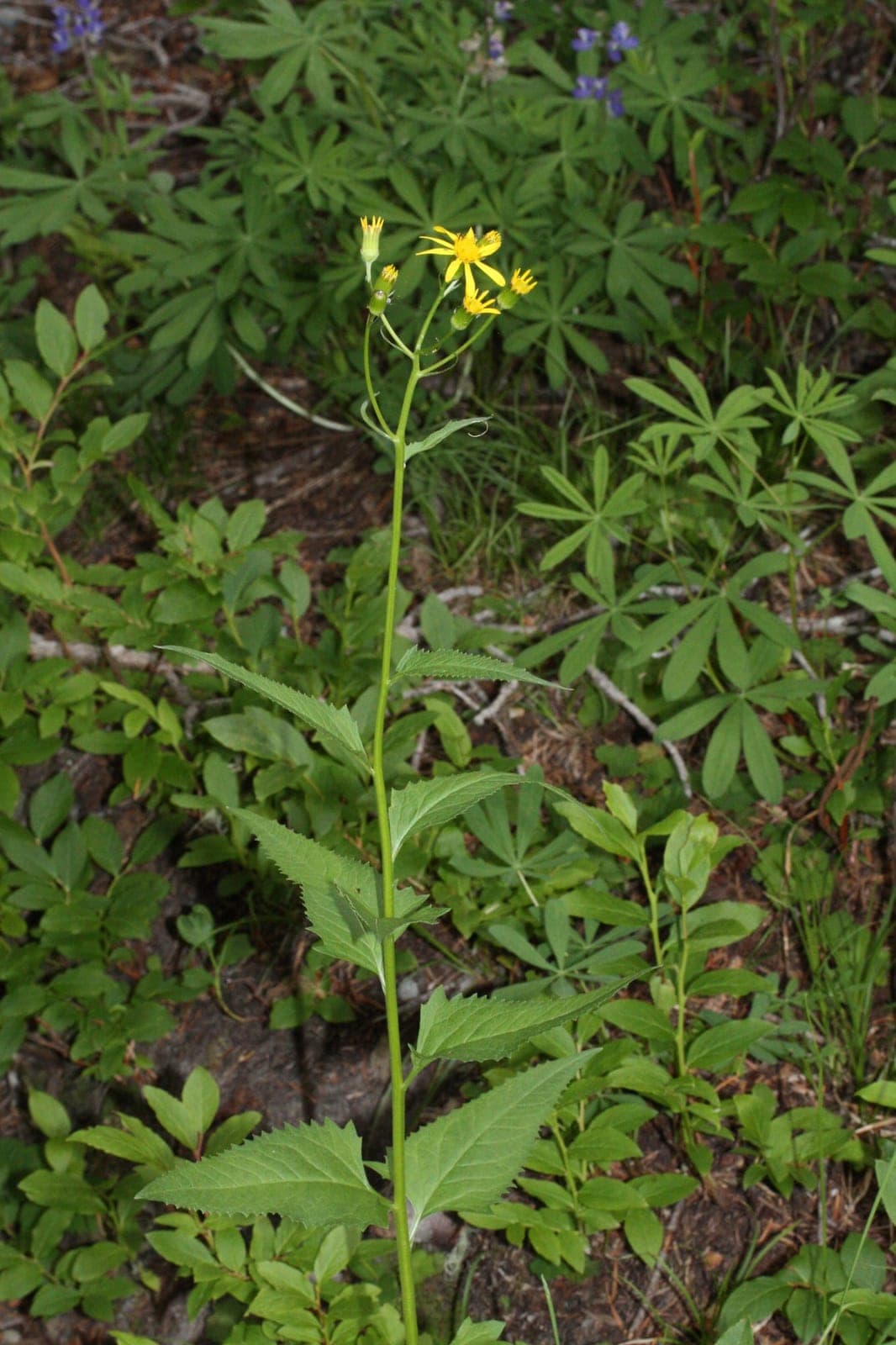
Senecio triangularis is a native western North American perennial found naturally along streambanks, seeps, and wet mountain meadows from Alaska to California and east through the Rockies. It produces bold, arrowhead-shaped leaves and loose clusters of yellow, daisy-like flower heads on stems reaching two to five feet. In the garden it fills a niche few ornamentals can: a tall, bold-leaved plant that tolerates or requires consistently wet soil.
The plant spreads slowly by rhizomes and reseeds moderately; in naturalistic rain gardens or streamside plantings it forms colonies over time. It performs best in part shade to full sun when soil stays reliably moist, mimicking its native streamside habitat. Heavy mulch helps maintain root-zone moisture during dry summers. Plants die back fully to ground level each winter and re-emerge reliably in spring.
Like other Senecio species, arrowleaf ragwort contains pyrrolizidine alkaloids that are hepatotoxic to livestock if consumed in quantity. Deer generally avoid it, an advantage where browsing pressure is high. Flowers attract native bees, wasps, and generalist pollinators through midsummer into fall.
Ecoregions:Northwestern Forested MountainsMarine West Coast ForestNorth American DesertsMediterranean California
Rust
Orange to brown raised pustules on the undersides of leaves, with yellow spotting on the upper surface. Heavy infections cause leaves to yellow and drop.
Remove and destroy infected leaves. Avoid overhead watering and improve air circulation. Apply a sulfur or copper-based fungicide if it spreads. Clear plant debris in fall.
Botrytis (grey mould)
Grey fuzzy mould on petals and stems, worst in cool wet conditions.
Remove affected parts immediately. Improve air circulation. Avoid overhead watering. Apply copper fungicide if severe.
Powdery mildew
White or grey powdery coating on leaves - usually starting on older growth in humid conditions or when nights cool.
Improve air circulation by thinning plants. Apply neem oil or potassium bicarbonate spray at first sign. Avoid overhead watering.
Fungal leaf spot
Brown or purplish spots on the leaves, often ringed with a yellow halo, that spread and merge in warm, humid, or wet weather; heavily spotted leaves yellow and drop early.
Pick off spotted leaves and clear fallen debris to remove overwintering spores. Improve air circulation by thinning, and water at the base so foliage dries quickly. If it persists, apply a copper- or sulfur-based fungicide at the first sign.