
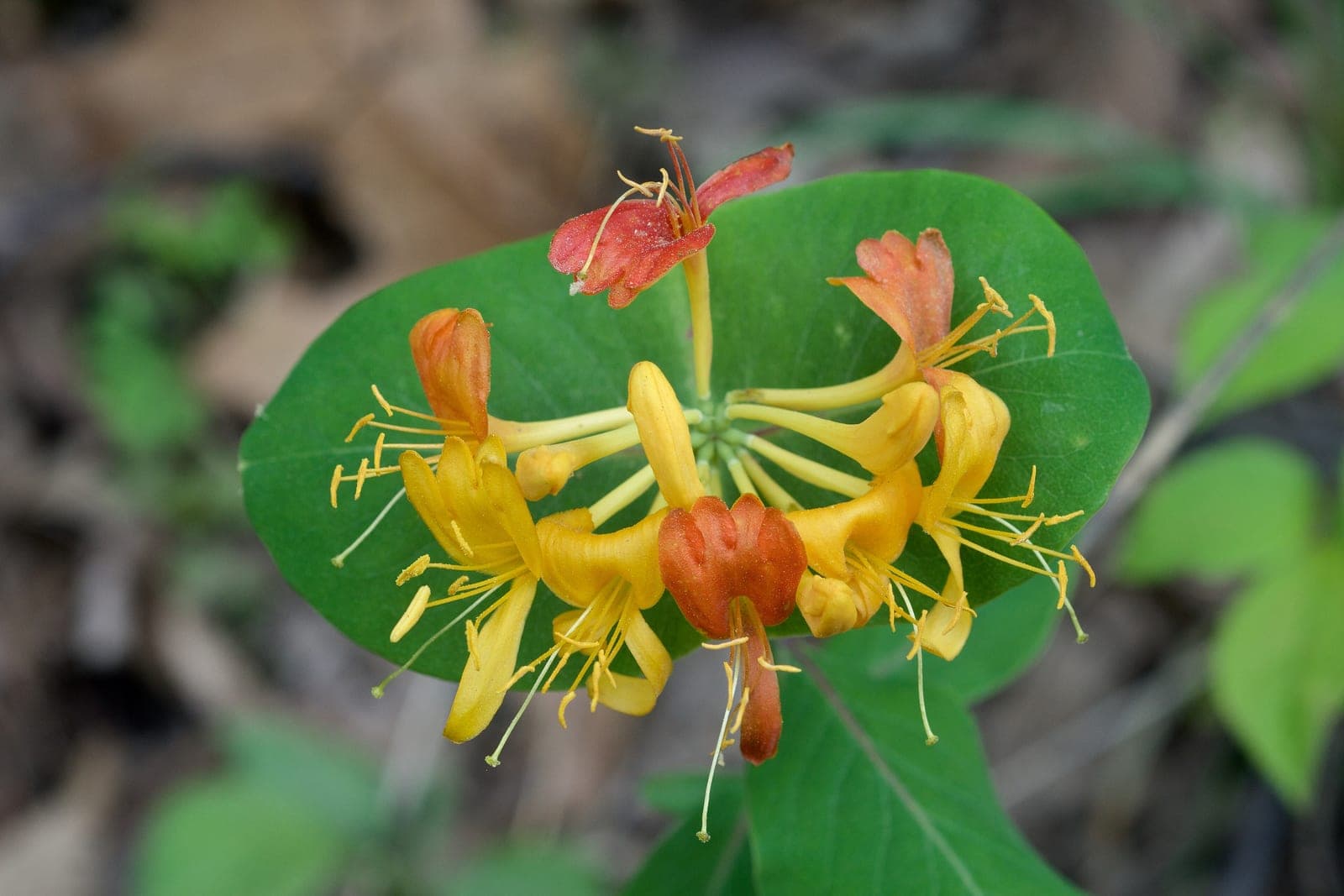
Lonicera flava is a native deciduous woody vine of the central and eastern United States, producing clusters of tubular yellow-orange, slightly fragrant flowers in mid to late spring. It is a sound native alternative to invasive Japanese honeysuckle and fits naturally into trellised garden beds, woodland edges, and naturalized slopes.
The vine twines and requires a wire, lattice, or shrub frame for support rather than clinging independently. It typically reaches 10–15 feet and often opens its flowers before or alongside leaf emergence. Small red berries ripen in late summer and are taken by birds. Plants tolerate a range of well-drained soils and appreciate some afternoon shade at the warmer end of their zone range. Cold-hardiness is reliable through zone 5b with minimal winter protection.
The tubular flowers are a consistent early nectar source for ruby-throated hummingbirds and long-tongued native bees. Including this vine in a planting supports early-season food webs and adds vertical structure without the invasive spread risk of non-native Lonicera species.
Ecoregions:Eastern Temperate Forests
Powdery mildew
White or grey powdery coating on leaves - usually starting on older growth in humid conditions or when nights cool.
Improve air circulation by thinning plants. Apply neem oil or potassium bicarbonate spray at first sign. Avoid overhead watering.
Honeysuckle Leaf Blight
Brown or black spots on leaves that enlarge and merge, followed by curling, browning, and early leaf drop, often worse in wet seasons.
Remove and destroy infected leaves, thin growth to improve airflow, avoid overhead watering, and apply a copper-based fungicide if the problem recurs.