
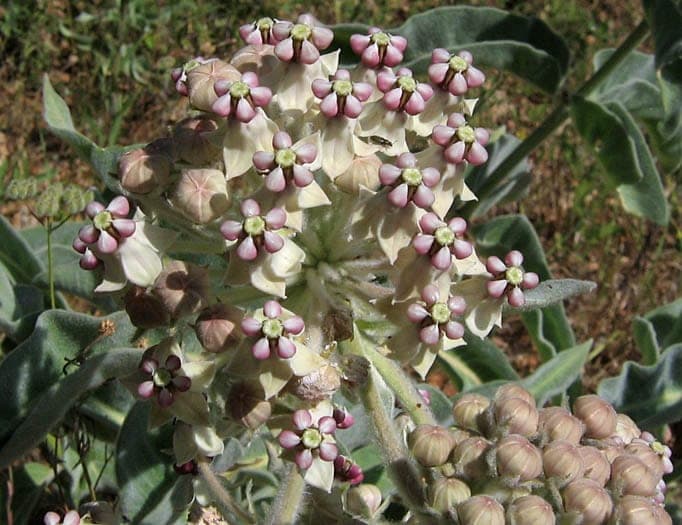
Woolly milkweed is a California-native perennial forb of dry slopes, foothill chaparral, oak woodland margins, and rocky grasslands from the Sierra Nevada foothills through the South Coast Ranges into Baja California. Plants reach 2–4 feet with broad, opposite leaves and stems densely covered in white wool. Clusters of white to cream flowers with pale pink-purple hoods appear late spring through midsummer, followed by large, distinctively fuzzy pods that split to release silky-plumed seeds.
Established plants are strongly drought tolerant and spread slowly by rhizomes and seed. Fast-draining, rocky or sandy soil is essential; clay soils or summer overhead irrigation sharply increase crown and root rot risk. Plants die back to ground after frost and can be slow to re-emerge in spring - do not remove crowns until new growth is confirmed. Woolly milkweed is a documented larval host for monarch butterflies and supports native bees, milkweed beetles, and milkweed bugs.
Kawaiisu and other California Native peoples collected tender young shoots in spring and cooked them as a vegetable. Seed pod floss was used for insulation, padding, and fiber cordage.
Ecoregions:Northwestern Forested MountainsMediterranean California
Root rot
Plants wilt, yellow, and stunt even in moist soil; lower stems and roots turn brown, soft, and mushy and the plant may collapse. Most common in heavy, wet, or poorly drained ground.
Improve drainage and stop overwatering, and never plant too deep. Lift and destroy badly affected plants along with the soil around the roots. Grow in raised or free-draining beds to prevent it returning.
Fungal leaf spot
Brown or purplish spots on the leaves, often ringed with a yellow halo, that spread and merge in warm, humid, or wet weather; heavily spotted leaves yellow and drop early.
Pick off spotted leaves and clear fallen debris to remove overwintering spores. Improve air circulation by thinning, and water at the base so foliage dries quickly. If it persists, apply a copper- or sulfur-based fungicide at the first sign.
Powdery mildew
White or grey powdery coating on leaves - usually starting on older growth in humid conditions or when nights cool.
Improve air circulation by thinning plants. Apply neem oil or potassium bicarbonate spray at first sign. Avoid overhead watering.