
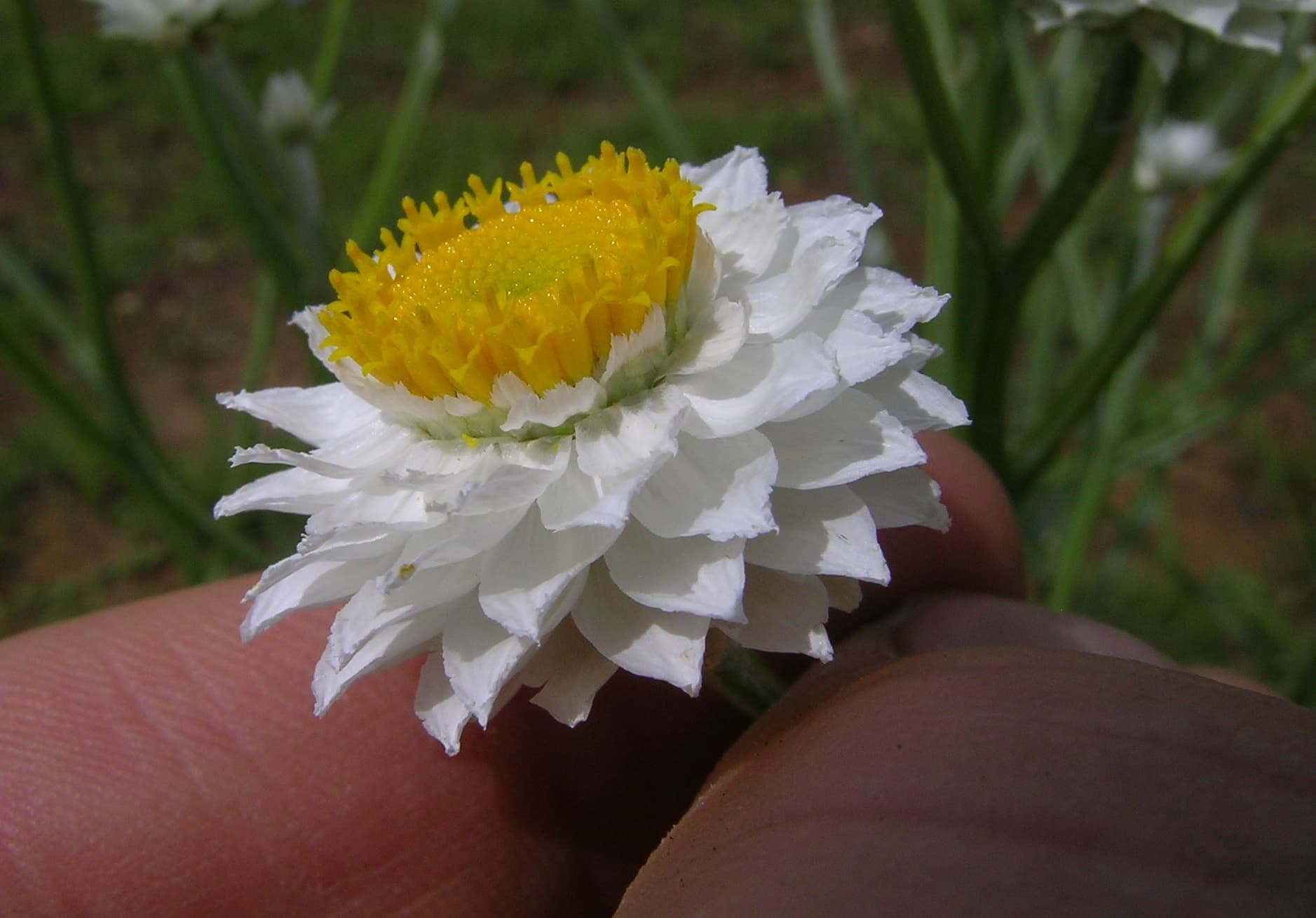
Winged everlasting (Ammobium alatum) is an Australian native in the daisy family, grown as an annual in most climates for its bright white papery bracts surrounding small yellow centers. It holds color and form exceptionally well when dried, making it a reliable plant for both fresh-cut and everlasting arrangements.
The plant produces prominently winged stems rising from a basal rosette of leaves, branching freely and remaining in flower from early summer through fall. It thrives in well-drained, sandy or gravelly soil of low to moderate fertility and tolerates drought once established. In zones 8 and warmer it can persist as a short-lived perennial; in colder zones it behaves as an annual but self-seeds readily where soil is left disturbed and open. Harvest for drying when the outer bracts are fully spread but before the yellow disk center expands fully - at that point color is preserved longest. Hang in small bunches upside down in a dark, well-ventilated space.
Damping Off
Seedlings collapse at the soil line with thin, water-soaked stems; seeds may fail to emerge or rot before sprouting.
Sow in well-draining mix, avoid overwatering, and ensure good airflow. Remove affected seedlings and let the surface dry between waterings.
Powdery mildew
White or grey powdery coating on leaves - usually starting on older growth in humid conditions or when nights cool.
Improve air circulation by thinning plants. Apply neem oil or potassium bicarbonate spray at first sign. Avoid overhead watering.
Botrytis (grey mould)
Grey fuzzy mould on petals and stems, worst in cool wet conditions.
Remove affected parts immediately. Improve air circulation. Avoid overhead watering. Apply copper fungicide if severe.
Fungal leaf spot
Brown or purplish spots on the leaves, often ringed with a yellow halo, that spread and merge in warm, humid, or wet weather; heavily spotted leaves yellow and drop early.
Pick off spotted leaves and clear fallen debris to remove overwintering spores. Improve air circulation by thinning, and water at the base so foliage dries quickly. If it persists, apply a copper- or sulfur-based fungicide at the first sign.