
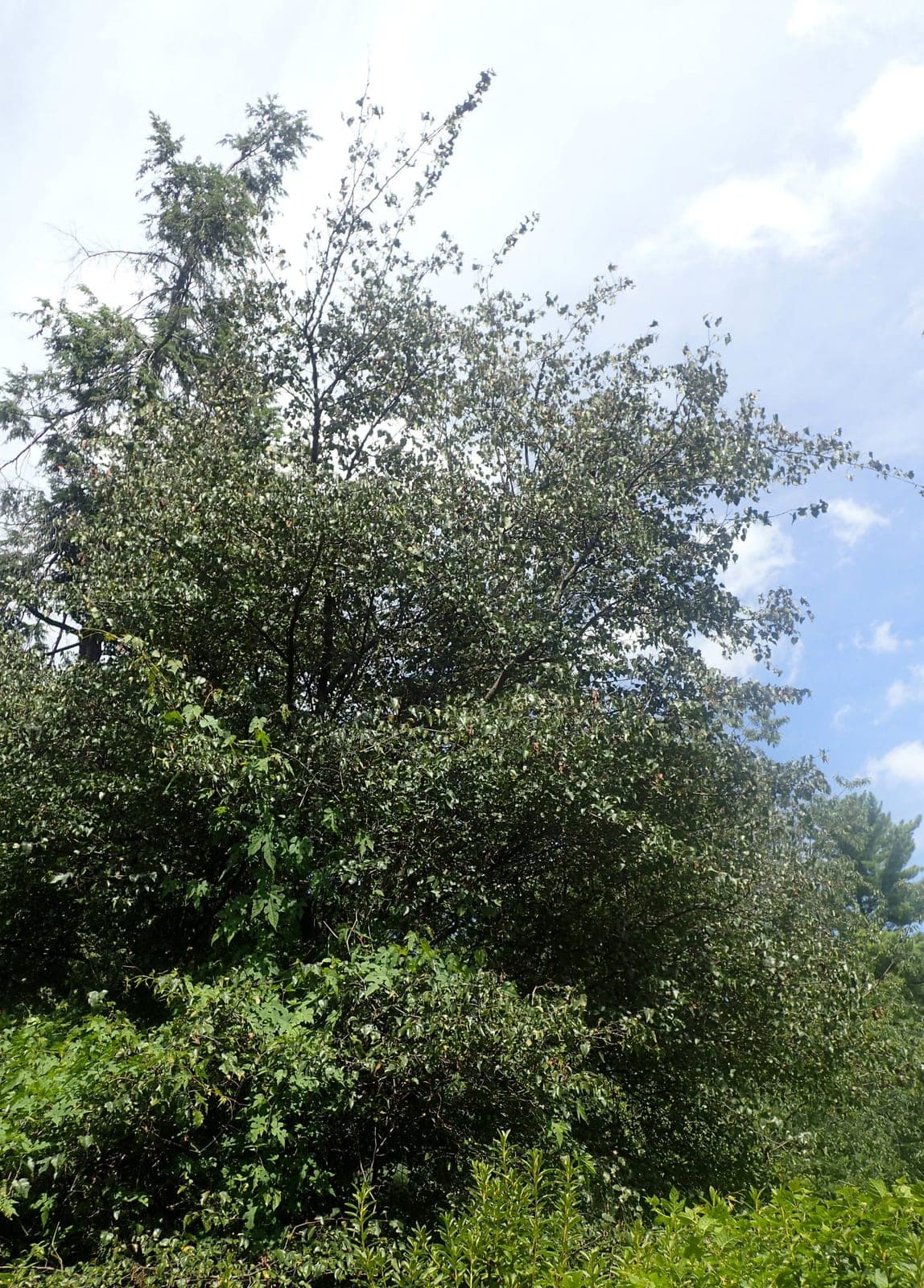
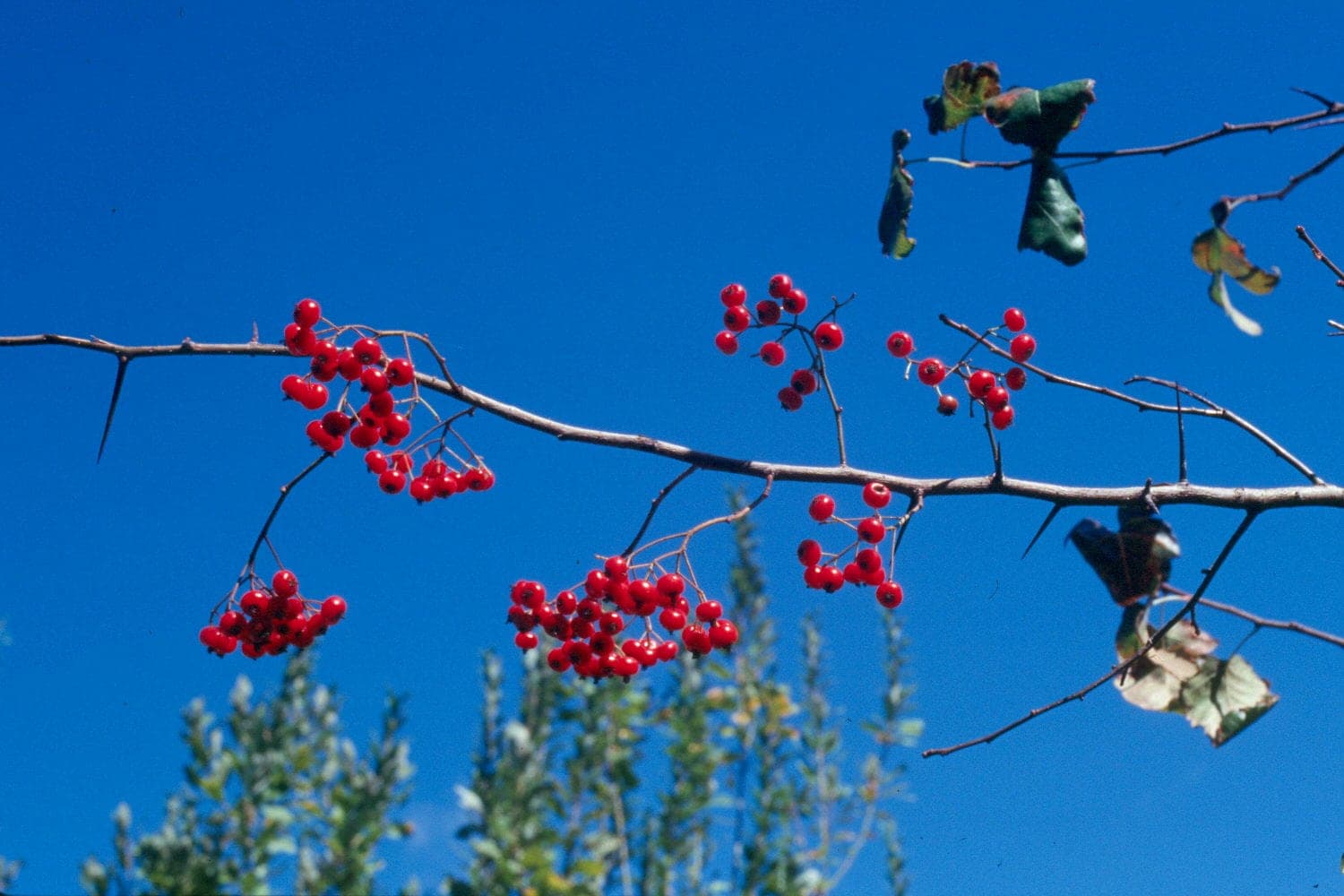
Washington hawthorn is a small deciduous tree native to the mid-Atlantic and southeastern United States, growing 20–30 ft tall with a dense, rounded crown and thorns up to 3 inches long. It delivers four seasons of interest: clusters of white flowers in late spring, glossy dark green foliage through summer, orange-red fall color, and dense clusters of small red fruit that persist well into winter. The thorny, interlocking branching makes it effective as a barrier hedge or security screen as well as a stand-alone specimen.
It adapts to clay, compacted urban soils, and loam alike, and tolerates air pollution and periodic drought once established. Full sun produces the best fruit set and tightest growth habit. Plant away from eastern red cedar and other junipers to reduce cedar-hawthorn rust pressure; that fungus requires both a Crataegus and a juniper host to complete its life cycle. A mulch ring extending to the drip line aids establishment and suppresses competing vegetation.
The small red fruit is edible with a mild flavor, suitable for eating raw or cooking into jellies and preserves. As with other Crataegus species, the berries contain oligomeric proanthocyanidins and flavonoids studied in clinical trials for mild cardiovascular support. The dense, hard wood has historically served for tool handles and similar implements.
Ecoregions:Northern ForestsEastern Temperate Forests
Fire Blight
Water-soaked, wilting blossoms and young stems that rapidly turn brown to black. Infected shoot tips curl into a characteristic shepherd's crook. Bark beneath the infection may show reddish-brown discoloration.
Prune infected wood 8–12 inches below visible symptoms during dry weather. Sterilize tools with 70% isopropyl alcohol or a 10% bleach solution between cuts. Avoid high-nitrogen fertilizers that produce soft, disease-susceptible growth. Copper-based bactericides applied at early flowering can reduce spread in high-pressure years.
Cedar-Hawthorn Rust
Bright orange to yellow spots on upper leaf surfaces in spring; raised, tube-like orange spore structures on corresponding leaf undersides. Young fruit and shoot tips may develop swollen orange lesions. Severe infection causes premature defoliation.
Remove or relocate eastern red cedars and other susceptible Juniperus species within several hundred feet where feasible, as they host the alternate fungal stage (Gymnosporangium globosum). Apply a preventive fungicide such as myclobutanil or propiconazole starting at bud break and repeating every 10–14 days during wet spring weather. Rake and destroy all fallen leaves in autumn. On high-pressure sites, select resistant cultivars at planting.
Powdery mildew
White or grey powdery coating on leaves - usually starting on older growth in humid conditions or when nights cool.
Improve air circulation by thinning plants. Apply neem oil or potassium bicarbonate spray at first sign. Avoid overhead watering.
Entomosporium Leaf Spot
Small circular red-purple spots on both leaf surfaces beginning in late spring, enlarging to lesions with gray or tan centers and red-purple margins. Heavy infection leads to early leaf drop by late summer.
Rake and dispose of fallen leaves each season. Prune selectively to improve air circulation. Avoid overhead irrigation. Fungicide applications - myclobutanil, chlorothalonil, or copper-based products - beginning at leaf emergence and repeated every 10–14 days during wet weather can limit disease spread.