
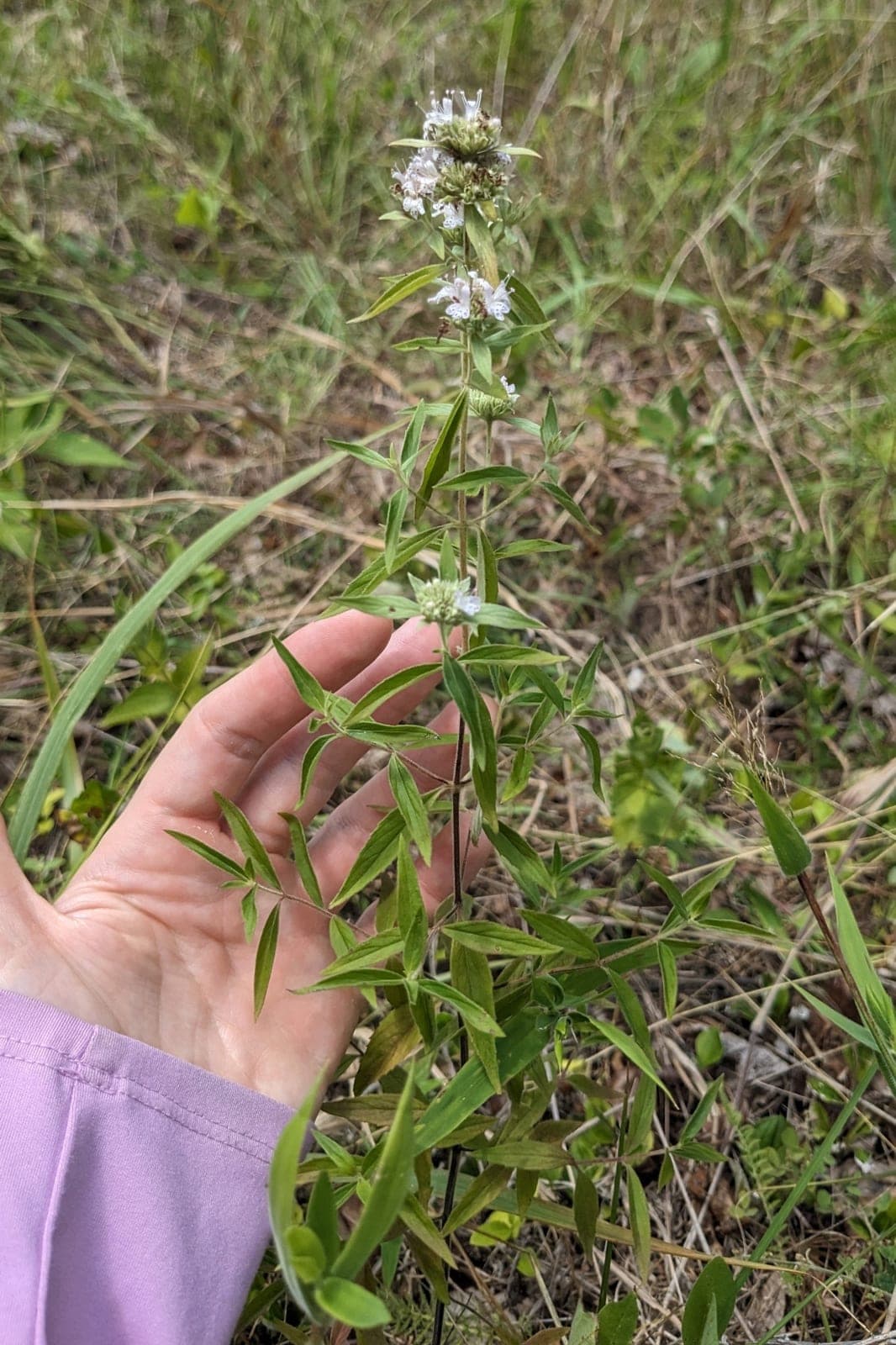
Torrey's mountain mint is a native perennial in the mint family found in open woods, meadows, and forest margins across the eastern United States. Its strongly aromatic foliage and dense clusters of small white flowers in mid to late summer draw exceptional numbers of native bees, wasps, beetles, and butterflies, placing it among the most ecologically productive herbaceous natives available to eastern gardeners.
Plants spread gradually by rhizomes, forming loose colonies over several seasons. Full sun produces the densest growth and highest pollinator activity; part shade is tolerated with some reduction in vigor. Average to moderately moist, well-drained soil suits it well, and it handles clay better than many mint-family herbs. A light mulch helps retain moisture and suppress weeds. Divide crowded clumps every three to four years in early spring to control spread and renew vigor.
Leaves are intensely aromatic and rich in volatile oils. Indigenous peoples and early settlers used Pycnanthemum species as a tea herb and as a remedy for fevers, headaches, and upper respiratory complaints, uses consistent with the antimicrobial and antispasmodic properties documented across the genus.
Ecoregions:Eastern Temperate Forests
Powdery mildew
White or grey powdery coating on leaves - usually starting on older growth in humid conditions or when nights cool.
Improve air circulation by thinning plants. Apply neem oil or potassium bicarbonate spray at first sign. Avoid overhead watering.
Root rot
Plants wilt, yellow, and stunt even in moist soil; lower stems and roots turn brown, soft, and mushy and the plant may collapse. Most common in heavy, wet, or poorly drained ground.
Improve drainage and stop overwatering, and never plant too deep. Lift and destroy badly affected plants along with the soil around the roots. Grow in raised or free-draining beds to prevent it returning.