
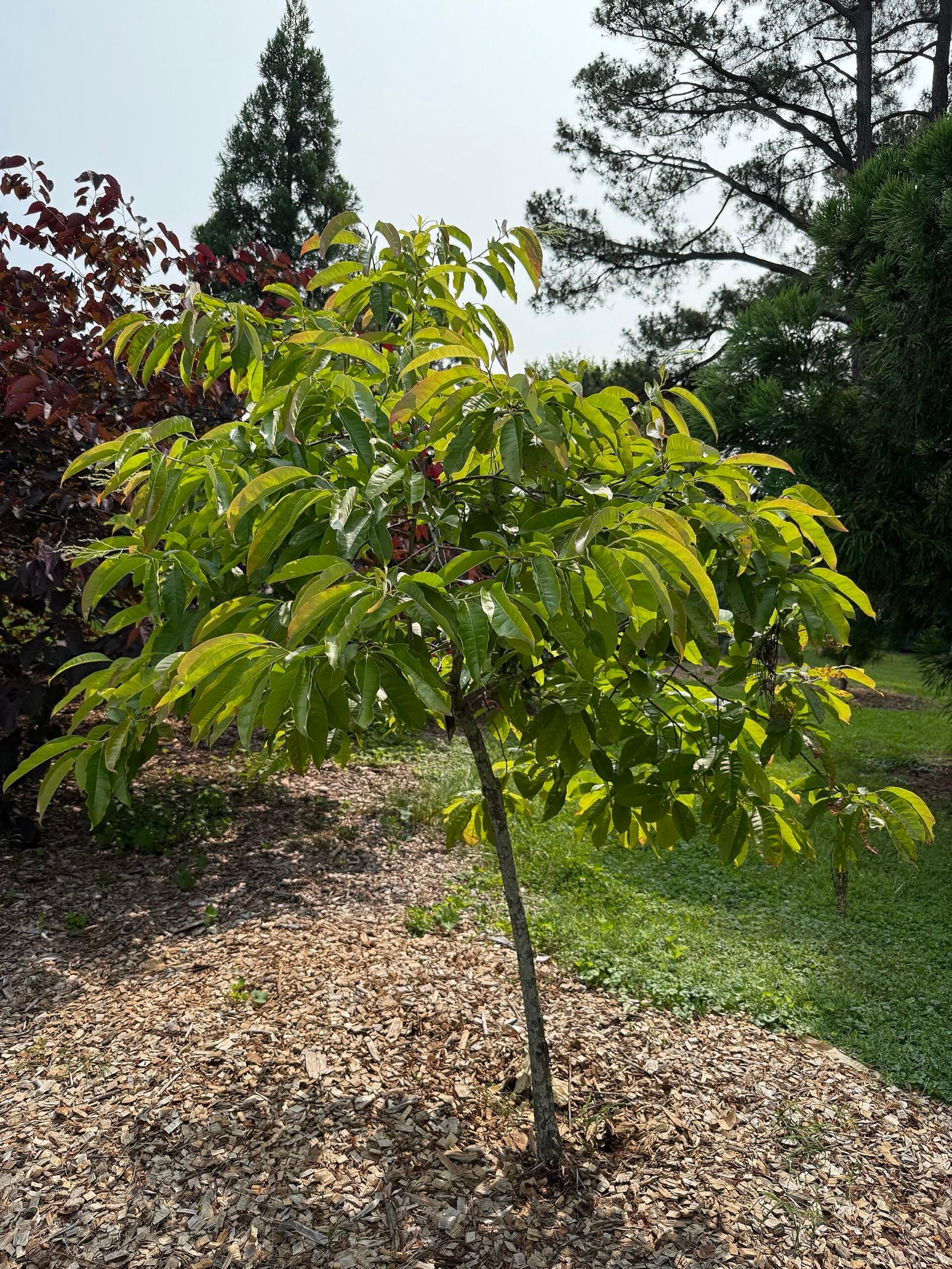
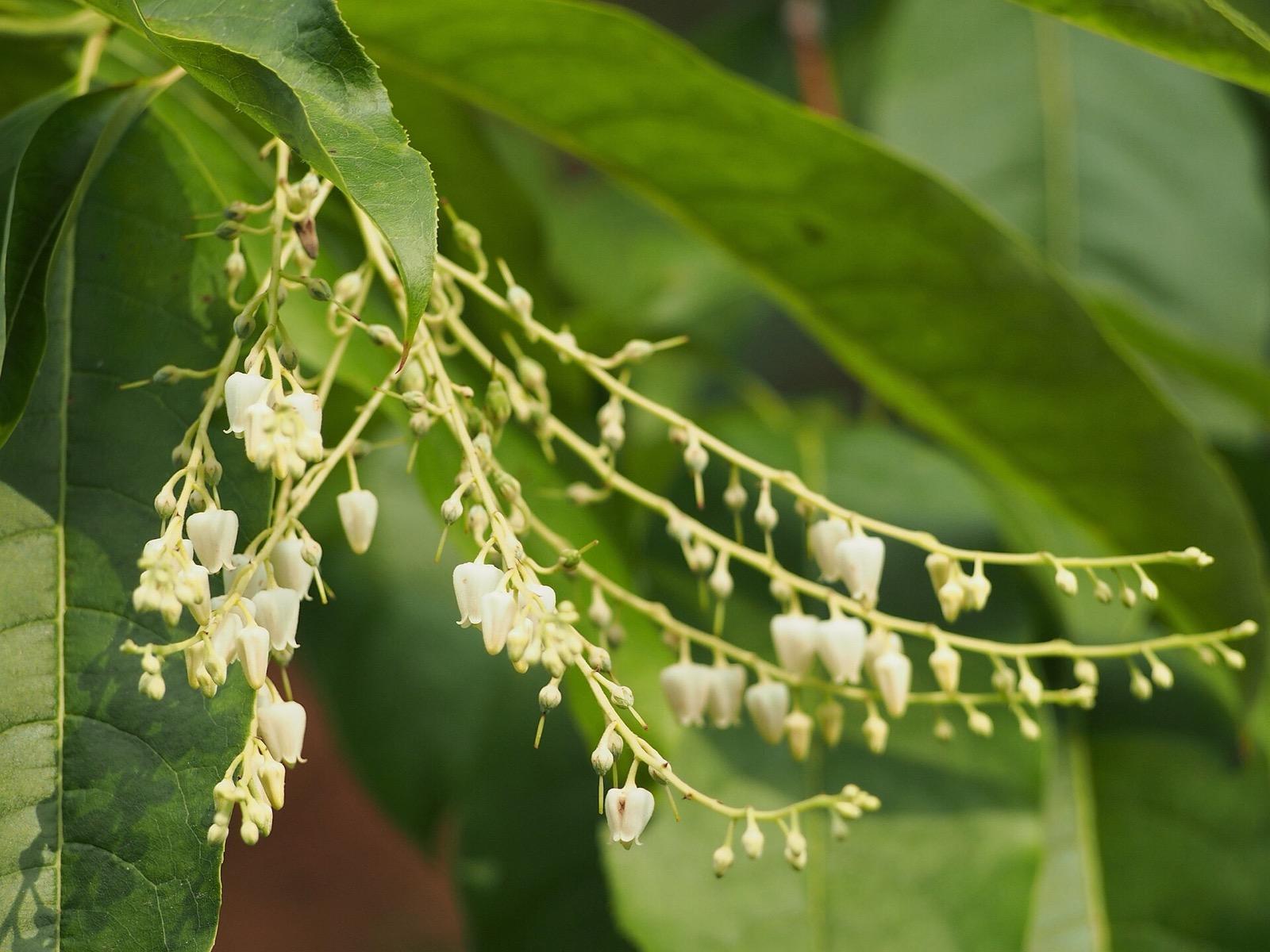
Sourwood is the only species in its genus and belongs to the heath family. Native to eastern North America and most abundant in the Appalachian Mountains, it delivers three-season value: drooping clusters of white, urn-shaped flowers in midsummer, then some of the most vivid scarlet-to-burgundy fall foliage of any native tree. It is a natural component of oak-heath forests and performs equally well as a specimen or woodland-edge tree.
Slow-growing and long-lived, sourwood requires acidic, well-drained soil to thrive. It reflects its ericaceous roots: alkaline or poorly drained soils cause rapid decline. Full sun produces the most intense fall color; part shade is tolerated. Mulching with pine bark or wood chips conserves moisture, suppresses competition, and maintains the low soil pH this tree demands. Cold-hardiness is reliable through zone 5a; heat and drought stress are the main cultural risks in the southern end of its range.
Sourwood honey, gathered by bees from the midsummer flowers, is widely considered one of the finest regional honeys in the eastern United States. Cherokee and other southeastern peoples used leaf and bark preparations to treat fever, diarrhea, and urinary complaints.
Ecoregions:Eastern Temperate Forests
These dates are for Zone 6b. Enter your ZIP to time every job to your own frost dates.
- buy · Jan 16 - Jan 30Buy a young container tree - about two months before planting out
- plant · Mar 27 - Apr 24Plant a small container tree in acidic soil away from root competition and paving; sourwood resents disturbance and transplants poorly once established
- watch · Any time in summerWater deeply in dry spells for the first three summers; drought-stressed young trees drop leaves early
Problems & troubleshooting
Common problems
Fungal leaf spot
Brown or purplish spots on the leaves, often ringed with a yellow halo, that spread and merge in warm, humid, or wet weather; heavily spotted leaves yellow and drop early.
Pick off spotted leaves and clear fallen debris to remove overwintering spores. Improve air circulation by thinning, and water at the base so foliage dries quickly. If it persists, apply a copper- or sulfur-based fungicide at the first sign.
Phytophthora Root Rot
Wilting despite moist soil, yellowing leaves, stunted growth, and dark, decayed roots and crown tissue. Vines may collapse during hot weather.
Plant in well-draining soil and avoid waterlogging. Remove and destroy affected vines. Improve drainage with raised beds or amended soil and avoid overwatering.