
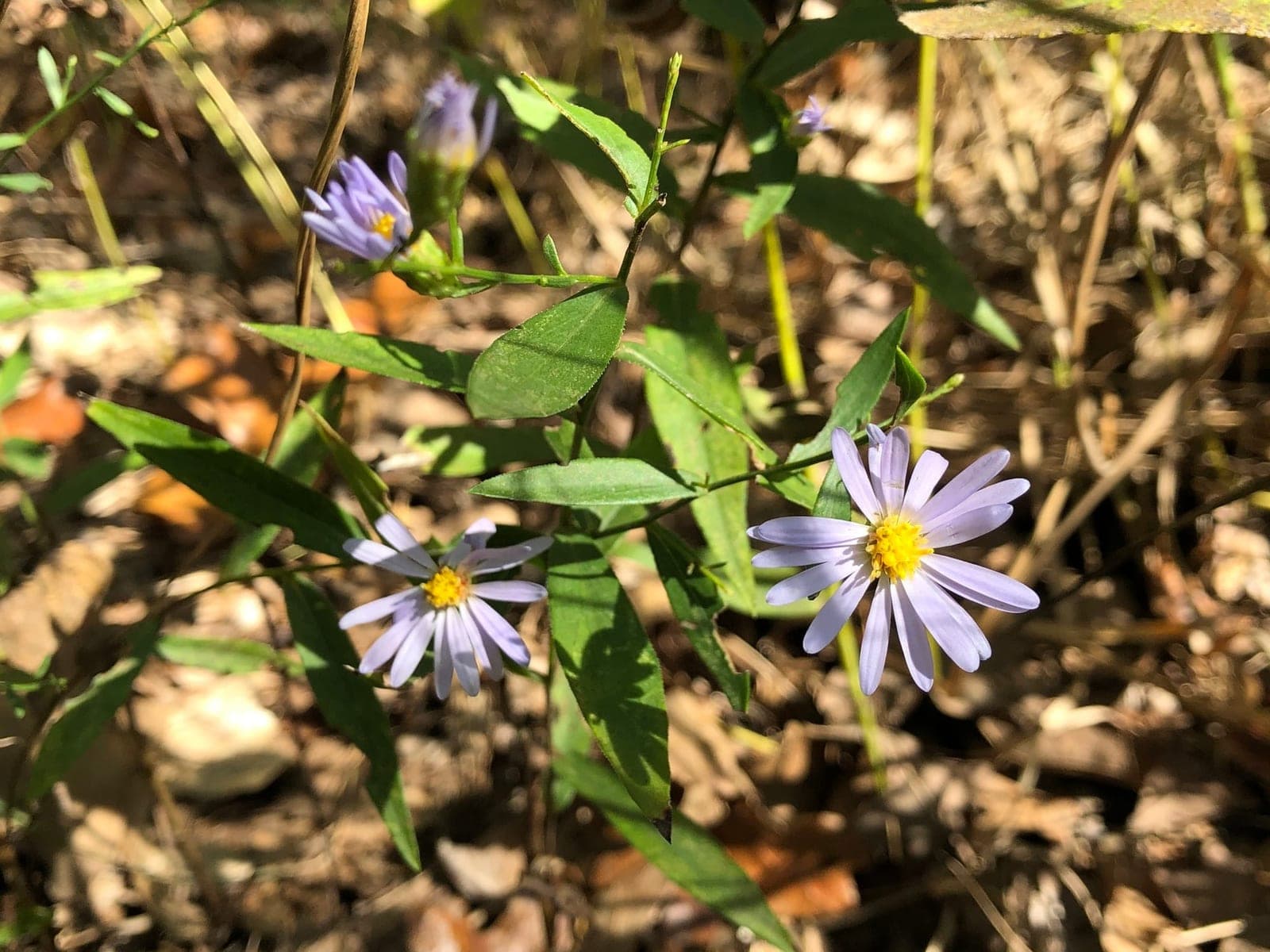
Symphyotrichum turbinellum is a native perennial aster from the central United States, concentrated in the Ozarks and extending into surrounding tallgrass prairie and open woodland regions. It produces violet to mauve ray flowers with yellow centers from August through October, making it one of the more reliable sources of late-season native color in the garden. It holds the RHS Award of Garden Merit.
This species grows naturally on prairie margins, rocky glades, and open woodland edges in well-drained to dry soils of moderate to low fertility. It tolerates drought once established and does not require supplemental feeding. Cutting plants back by one-third in late spring promotes compact, upright growth and reduces flopping without sacrificing performance. Plants spread slowly by rhizomes and benefit from division every three to four years to maintain vigor and prevent center die-out. Avoid heavy mulch at the crown, which promotes rot in poorly drained soils.
Late-season flowers provide significant forage for native bees, bumble bees, and migrating monarch butterflies. Seed heads persist into winter and are used by small seed-eating birds.
Ecoregions:Eastern Temperate ForestsGreat Plains
Powdery mildew
White or grey powdery coating on leaves - usually starting on older growth in humid conditions or when nights cool.
Improve air circulation by thinning plants. Apply neem oil or potassium bicarbonate spray at first sign. Avoid overhead watering.
Aster Yellows
Deformed, greenish flowers, stunted growth, and yellowed foliage. Flower centers may produce tufts of leafy growth instead of normal petals.
No cure. Remove and destroy infected plants immediately to stop spread. Control leafhoppers, which transmit the disease, and remove nearby weed hosts.
Rust
Orange to brown raised pustules on the undersides of leaves, with yellow spotting on the upper surface. Heavy infections cause leaves to yellow and drop.
Remove and destroy infected leaves. Avoid overhead watering and improve air circulation. Apply a sulfur or copper-based fungicide if it spreads. Clear plant debris in fall.
Fungal leaf spot
Brown or purplish spots on the leaves, often ringed with a yellow halo, that spread and merge in warm, humid, or wet weather; heavily spotted leaves yellow and drop early.
Pick off spotted leaves and clear fallen debris to remove overwintering spores. Improve air circulation by thinning, and water at the base so foliage dries quickly. If it persists, apply a copper- or sulfur-based fungicide at the first sign.