
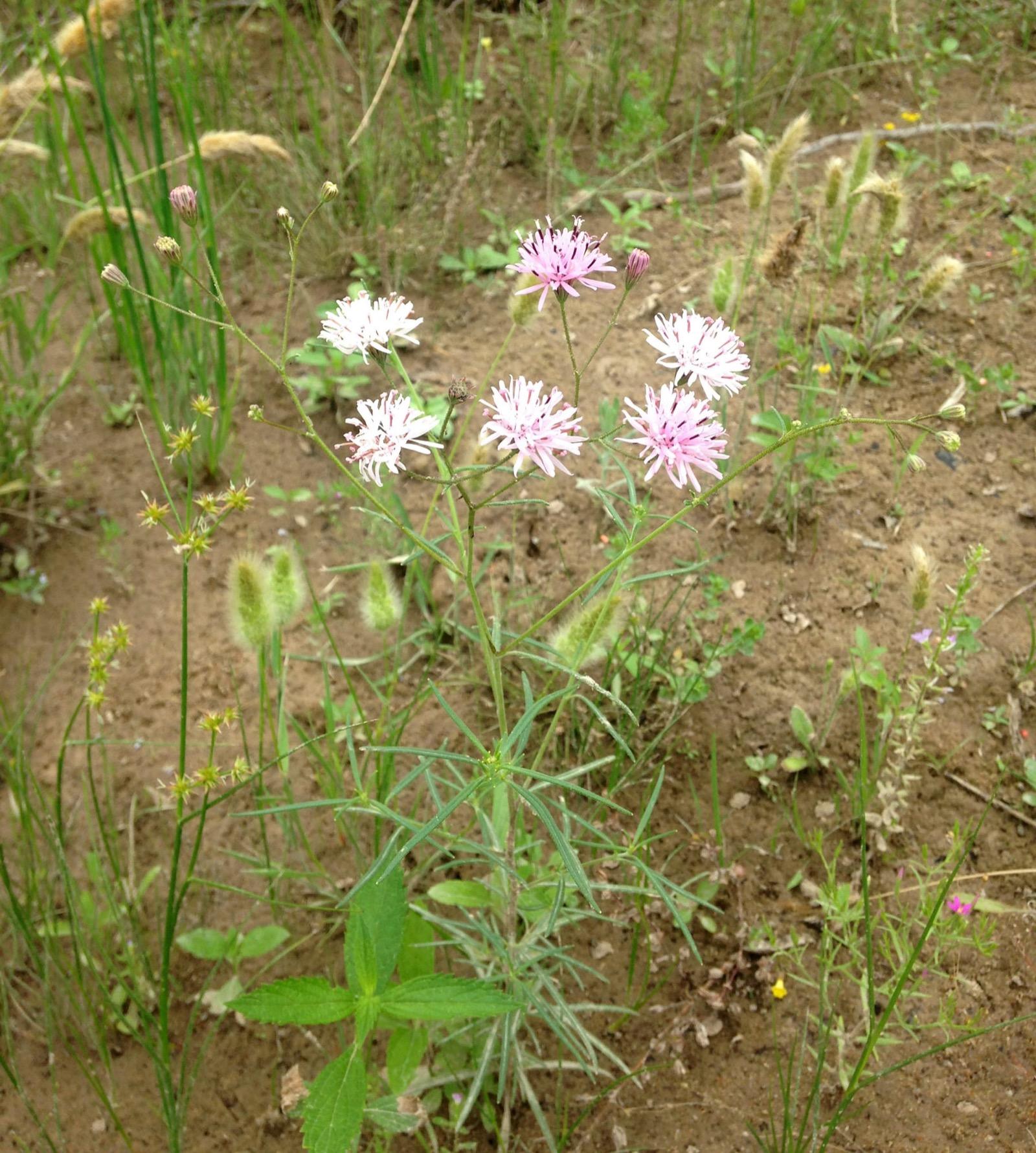
Small Palafox is a native annual wildflower of the central Great Plains, belonging to the aster family. It produces branching stems tipped with small pink to rose-colored flower heads and is adapted to open, dry, or disturbed ground where competition from more vigorous plants is limited.
This species establishes readily in sandy or rocky, low-fertility soils with no amendments needed. In suitable sites it self-sows reliably, making it a low-maintenance choice for prairie restorations, pollinator strips, and dry naturalistic gardens. It declines quickly in heavy or poorly drained soils and should not be irrigated once established.
Small Palafox provides a consistent mid-season nectar source for small native bees and butterflies, filling a gap common in prairie plantings when other forbs have finished.
Ecoregions:Eastern Temperate ForestsGreat Plains
These dates are for Zone 6b. Enter your ZIP to time every job to your own frost dates.
- cut · Any time in fallLeave the last flowers to set seed; it self-sows in lean, open ground
- buy · Jan 30 - Feb 13Order seed - about two months before sowing
- sow · Apr 10 - May 1Direct sow seed where it is to flower, barely covered, once the danger of frost has passed
Problems & troubleshooting
Common problems
Aster Yellows
Deformed, greenish flowers, stunted growth, and yellowed foliage. Flower centers may produce tufts of leafy growth instead of normal petals.
No cure. Remove and destroy infected plants immediately to stop spread. Control leafhoppers, which transmit the disease, and remove nearby weed hosts.
Fungal leaf spot
Brown or purplish spots on the leaves, often ringed with a yellow halo, that spread and merge in warm, humid, or wet weather; heavily spotted leaves yellow and drop early.
Pick off spotted leaves and clear fallen debris to remove overwintering spores. Improve air circulation by thinning, and water at the base so foliage dries quickly. If it persists, apply a copper- or sulfur-based fungicide at the first sign.
Root rot
Plants wilt, yellow, and stunt even in moist soil; lower stems and roots turn brown, soft, and mushy and the plant may collapse. Most common in heavy, wet, or poorly drained ground.
Improve drainage and stop overwatering, and never plant too deep. Lift and destroy badly affected plants along with the soil around the roots. Grow in raised or free-draining beds to prevent it returning.