
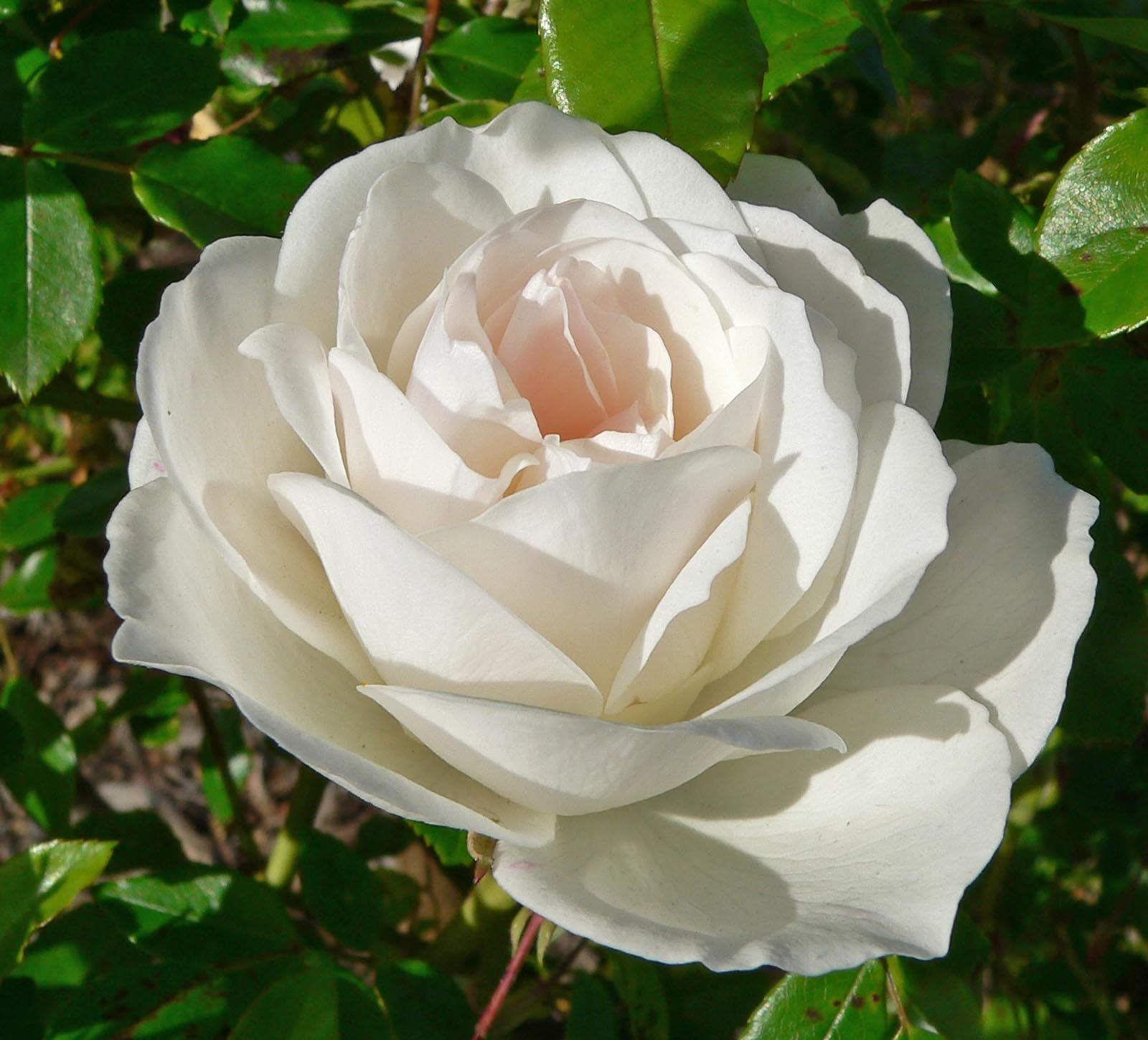
Rosa 'Iceberg' (registered as 'KORbin') is a white floribunda rose bred by Reimer Kordes in Germany in 1958 and one of the most widely planted roses in the world. It produces large, arching clusters of pure white, mildly fragrant flowers in repeated flushes from late spring through autumn on vigorous, upright canes.
Good air circulation reduces fungal disease pressure significantly. Iceberg tolerates moderate drought once established but produces its fullest growth with consistent moisture and fertile, slightly acidic soil. Mulching the root zone conserves moisture and stabilizes soil temperature. A climbing sport of Iceberg exists and can reach 10–15 ft on a trellis or wall. Removing spent clusters promptly after each flush is the most effective way to extend the blooming season.
White rose petals are edible and have a long culinary history - used fresh in salads and as garnishes, steeped for rose water, and incorporated into syrups and confections.
Growing roses? Read the Rose Care Calendar - pruning by class, feeding, pests, climbers, and growing for hips, timed to your frost dates.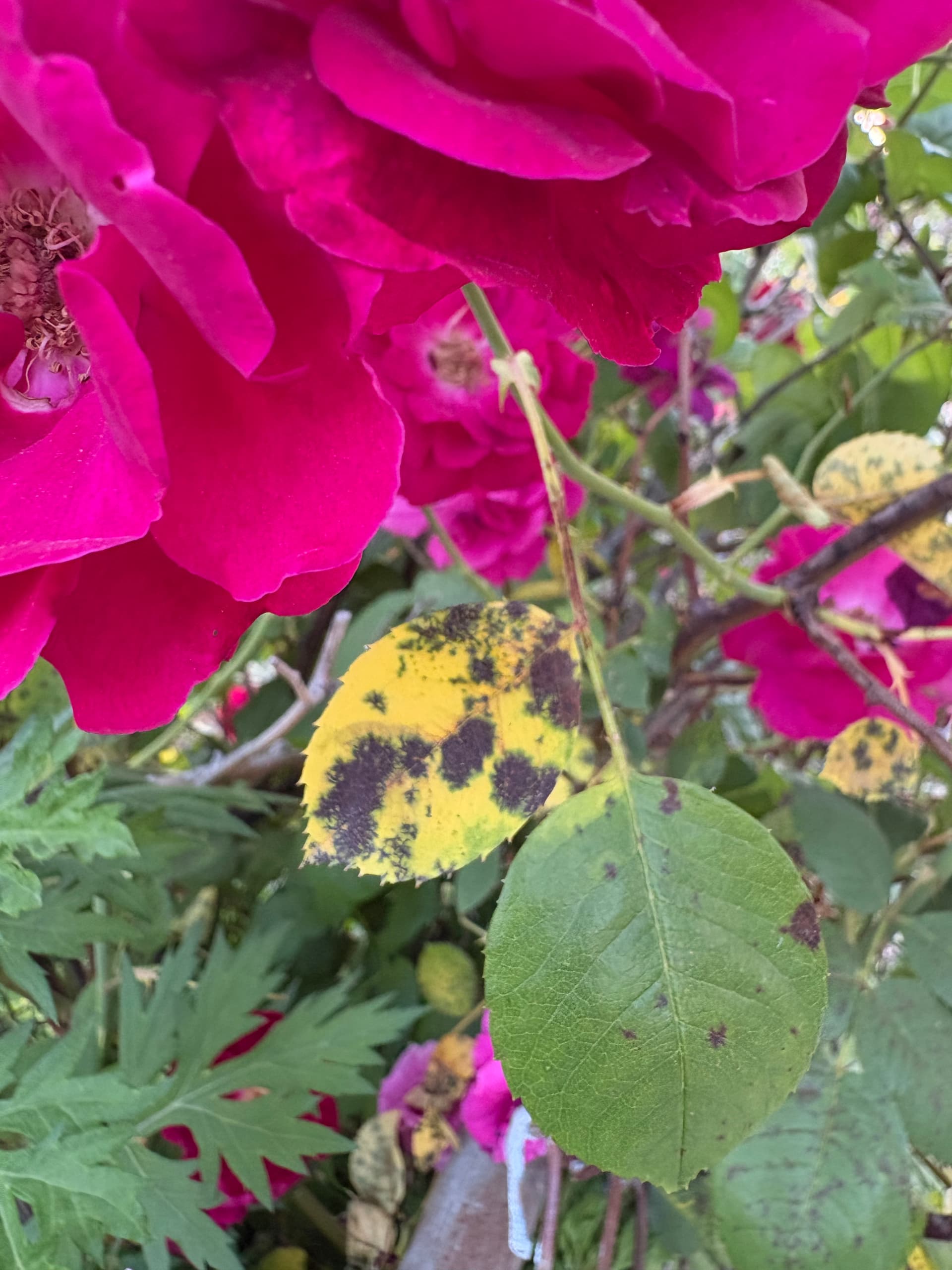
Yellow spot (rose rust)
Bright yellow spots on the upper surface of leaves, with orange-yellow powdery pustules on the underside. Leaves may drop prematurely. Worst in cool, wet springs.
Remove and bin all affected leaves - do not compost. Apply a systemic fungicide (myclobutanil or trifloxystrobin) at first sign and repeat every 10–14 days. Spray preventively from early spring before infection takes hold. Improve air circulation by pruning to an open centre.
Aphids
Aphididae →Clusters of small soft insects on new growth and flower buds.
Knock off with a strong jet of water. Ladybirds and lacewings are natural predators. Insecticidal soap as last resort.