
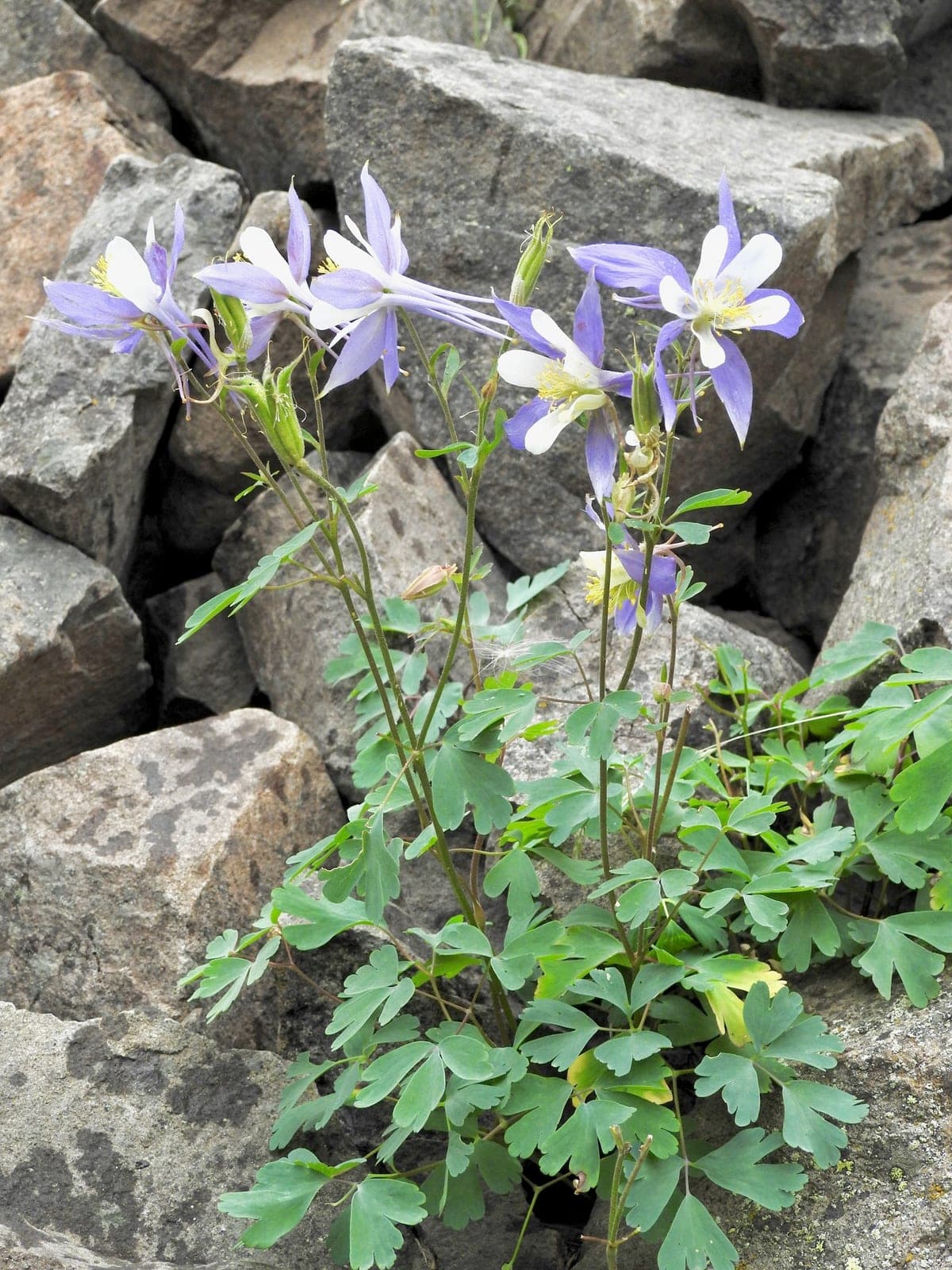
Rocky Mountain Columbine (Aquilegia caerulea) is the state flower of Colorado and a native wildflower of the Rocky Mountains, growing from foothill meadows to above timberline. Its large, spurred blue-and-white flowers are among the most distinctive in the genus and have served as a parent plant for many garden columbine hybrids. It has been in cultivation since the late 19th century.
Plants are short-lived perennials, typically lasting three to four years, but they self-seed freely in undisturbed, well-drained soil. In the warmer end of their range, afternoon shade preserves foliage quality and extends seasonal interest. Seeds require cold stratification for reliable germination; direct sowing in fall lets winter cold provide it naturally. Columbines dislike root disturbance and establish best when seeded in place or transplanted as young seedlings. Soil pH around 6.5–7.0 suits this species well, and mulching lightly around the crown helps retain moisture without promoting rot.
The flowers are pollinated primarily by bumblebees and hawkmoths, reflecting a floral structure adapted to long-tongued insects. The species hybridizes freely with other Aquilegia species, so seed collected near other columbines will produce mixed offspring within a few seasons. Leaf miners (Phytomyza aquilegiae) are a near-universal minor pest; cutting back affected foliage in early summer typically resolves infestations without chemical intervention.
Ecoregions:Northwestern Forested MountainsGreat PlainsNorth American DesertsTemperate Sierras
Powdery mildew
White or grey powdery coating on leaves - usually starting on older growth in humid conditions or when nights cool.
Improve air circulation by thinning plants. Apply neem oil or potassium bicarbonate spray at first sign. Avoid overhead watering.
Rust
Orange to brown raised pustules on the undersides of leaves, with yellow spotting on the upper surface. Heavy infections cause leaves to yellow and drop.
Remove and destroy infected leaves. Avoid overhead watering and improve air circulation. Apply a sulfur or copper-based fungicide if it spreads. Clear plant debris in fall.
Botrytis (grey mould)
Grey fuzzy mould on petals and stems, worst in cool wet conditions.
Remove affected parts immediately. Improve air circulation. Avoid overhead watering. Apply copper fungicide if severe.
Crown Rot
Lower leaves yellow and wilt; the base of the rosette turns brown and soft, sometimes with white fungal threads at the soil line. Plants collapse in wet conditions.
Remove and destroy affected plants. Improve drainage and avoid overhead watering. Do not mulch directly against the crown. Space plants for airflow and avoid replanting in the same wet spot.
Damping Off
Seedlings collapse at the soil line with thin, water-soaked stems; seeds may fail to emerge or rot before sprouting.
Sow in well-draining mix, avoid overwatering, and ensure good airflow. Remove affected seedlings and let the surface dry between waterings.