
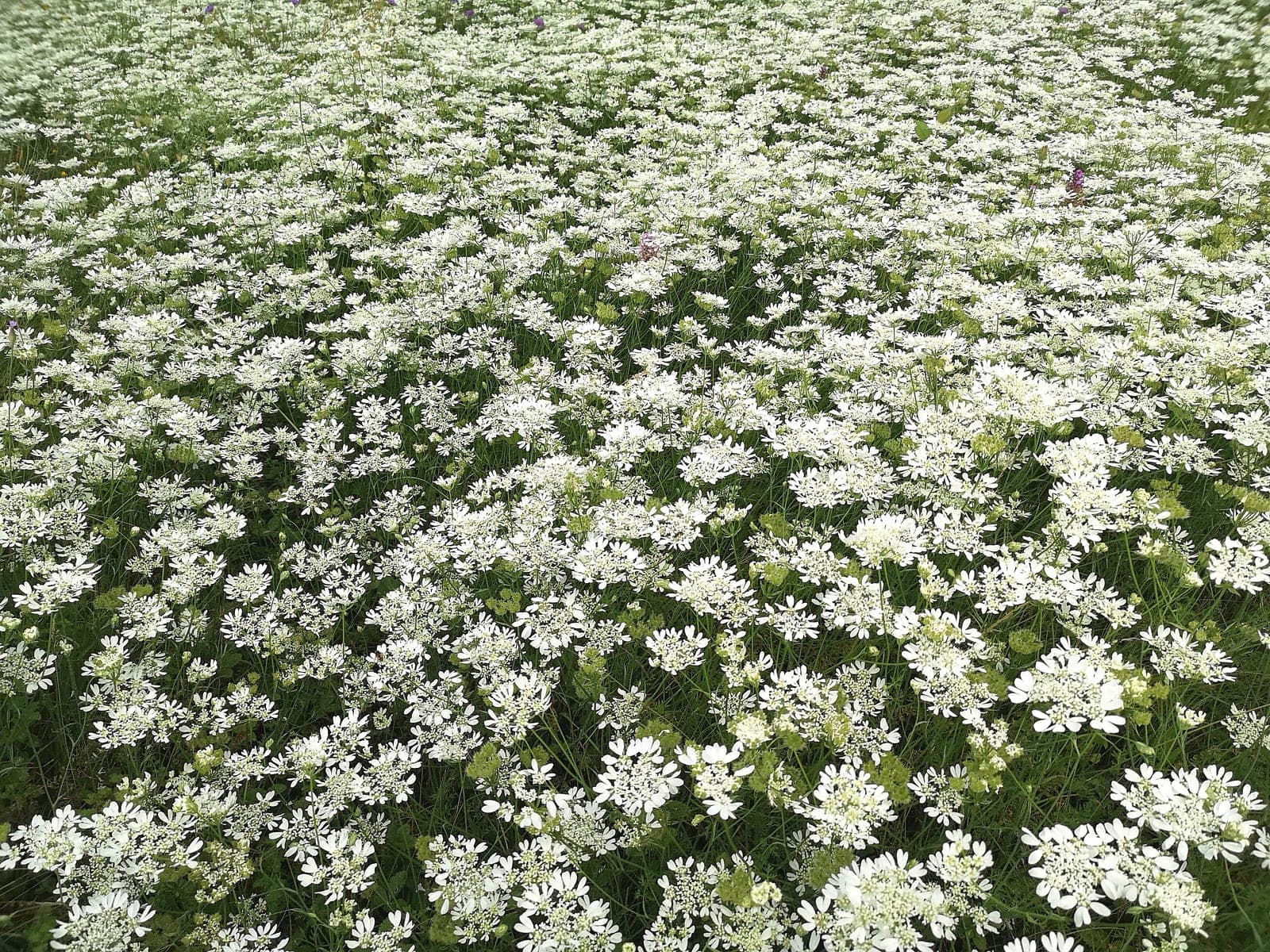
Orlaya grandiflora is a Mediterranean annual in the carrot family grown for flat-topped clusters of pure white flowers whose uneven florets create a convincing lace effect. It blends readily into cottage borders, cutting gardens, and naturalistic plantings, softening bolder companions without competing with them.
It germinates best after cold exposure, making fall direct sowing the most reliable approach in temperate climates - seeds overwinter and emerge in early spring without intervention. Spring sowing works if done several weeks before the last frost. It does not transplant reliably and should be sown where it will stand. In warm climates it runs its course by early summer; in cooler regions it blooms through midsummer. It tolerates lean, dry soil and self-seeds dependably once established. The open flower structure draws bees, hoverflies, and parasitic wasps in useful numbers.
Damping Off
Seedlings collapse at the soil line with thin, water-soaked stems; seeds may fail to emerge or rot before sprouting.
Sow in well-draining mix, avoid overwatering, and ensure good airflow. Remove affected seedlings and let the surface dry between waterings.
Powdery mildew
White or grey powdery coating on leaves - usually starting on older growth in humid conditions or when nights cool.
Improve air circulation by thinning plants. Apply neem oil or potassium bicarbonate spray at first sign. Avoid overhead watering.
Root rot
Plants wilt, yellow, and stunt even in moist soil; lower stems and roots turn brown, soft, and mushy and the plant may collapse. Most common in heavy, wet, or poorly drained ground.
Improve drainage and stop overwatering, and never plant too deep. Lift and destroy badly affected plants along with the soil around the roots. Grow in raised or free-draining beds to prevent it returning.
Botrytis (grey mould)
Grey fuzzy mould on petals and stems, worst in cool wet conditions.
Remove affected parts immediately. Improve air circulation. Avoid overhead watering. Apply copper fungicide if severe.