
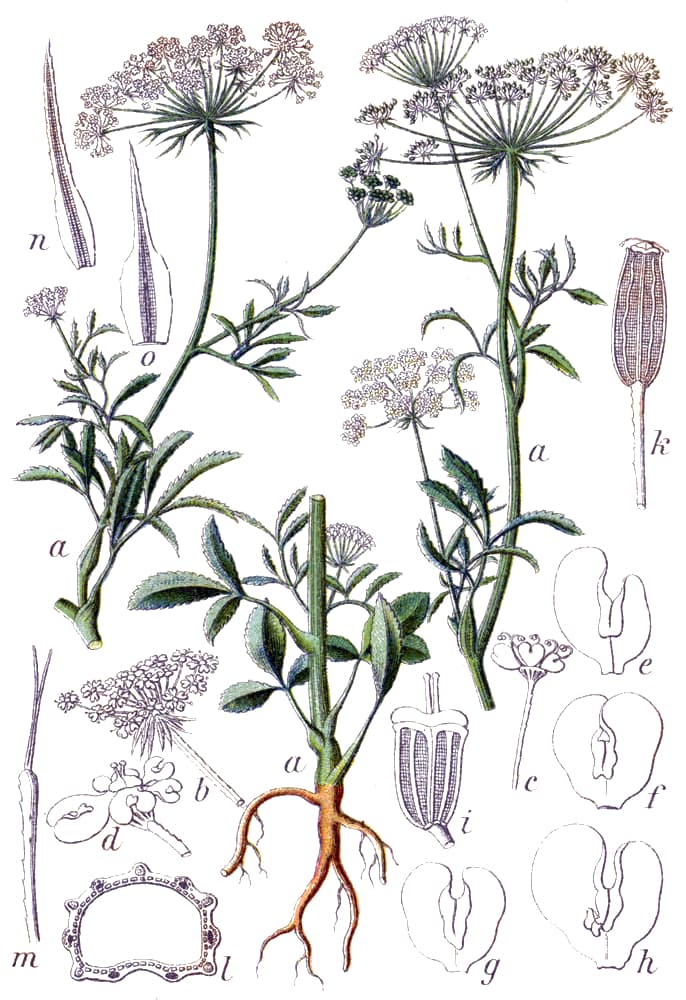
Ammi majus is a hardy annual in the carrot family, native to the Mediterranean basin and Nile River Valley. Its flat-topped clusters of tiny white florets resemble wild carrot but with a finer, more open structure. It is a standard of the cutting garden and pairs well with nearly any color.
Direct sowing is strongly preferred because the taproot does not tolerate disturbance. Sow seeds on or barely below the soil surface in early spring - plants tolerate light frost and germinate best in cool soil. In mild-winter climates, fall sowing produces an earlier, more vigorous spring crop. Plants self-seed freely where conditions suit them and stems regularly reach 3–4 feet, sometimes needing staking in exposed sites.
The plant contains furanocoumarins, particularly xanthotoxin (8-methoxypsoralen). These compounds were used in ancient Egypt to treat vitiligo and other skin depigmentation disorders and are still used in pharmaceutical PUVA (psoralen + UVA) therapy for psoriasis and vitiligo. Contact with plant sap in sunlight can cause phototoxic skin reactions.
Damping Off
Seedlings collapse at the soil line with thin, water-soaked stems; seeds may fail to emerge or rot before sprouting.
Sow in well-draining mix, avoid overwatering, and ensure good airflow. Remove affected seedlings and let the surface dry between waterings.
Powdery mildew
White or grey powdery coating on leaves - usually starting on older growth in humid conditions or when nights cool.
Improve air circulation by thinning plants. Apply neem oil or potassium bicarbonate spray at first sign. Avoid overhead watering.
Botrytis (grey mould)
Grey fuzzy mould on petals and stems, worst in cool wet conditions.
Remove affected parts immediately. Improve air circulation. Avoid overhead watering. Apply copper fungicide if severe.
Root rot
Plants wilt, yellow, and stunt even in moist soil; lower stems and roots turn brown, soft, and mushy and the plant may collapse. Most common in heavy, wet, or poorly drained ground.
Improve drainage and stop overwatering, and never plant too deep. Lift and destroy badly affected plants along with the soil around the roots. Grow in raised or free-draining beds to prevent it returning.