
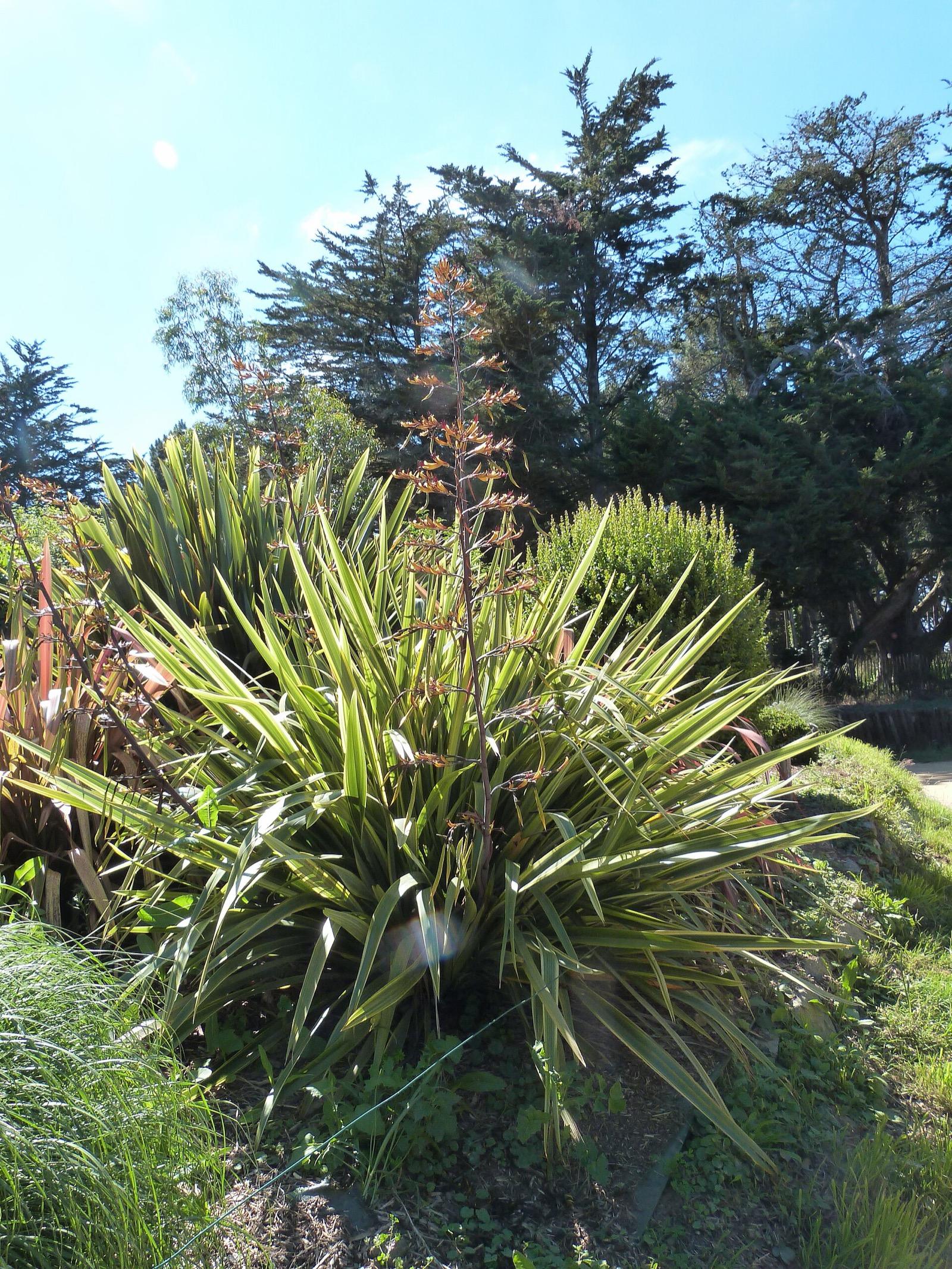
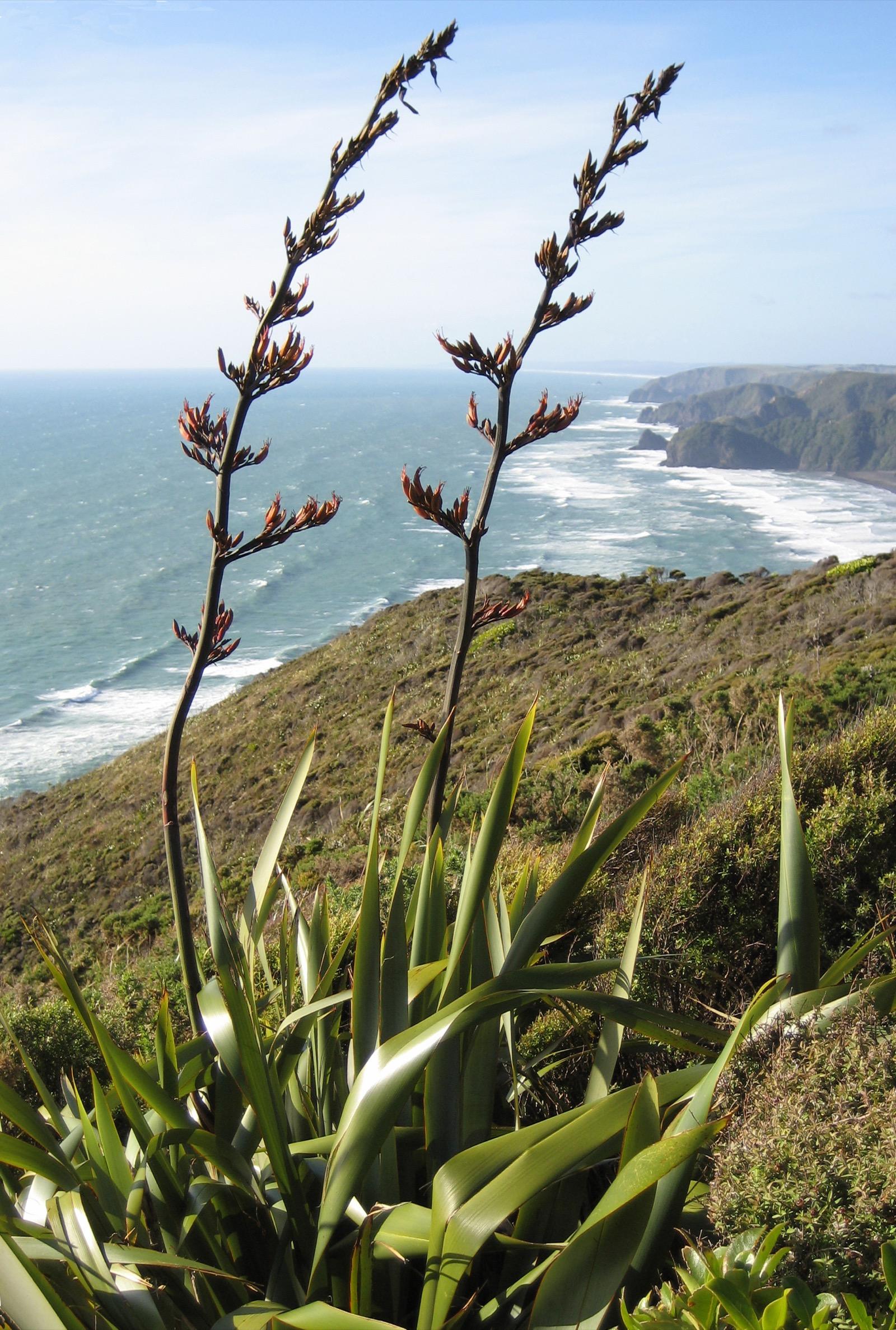
Phormium tenax is an evergreen perennial native to New Zealand and Norfolk Island, grown for bold, strap-like leaves that reach up to 6 feet. Clumps become substantial year-round focal points suited to coastal, Mediterranean, and contemporary garden styles. Cultivar selection extends the palette from olive green to bronze, copper, red, and cream-striped, making it useful as a foliage anchor in mixed plantings.
Established plants tolerate drought, coastal salt spray, and compacted soils. In zones 8–9, hard frosts may kill foliage to the ground, but the plant typically regenerates from the crown; mulching the base through winter reduces that risk. Clumps spread slowly via offsets and benefit from division every 4–6 years to maintain vigor. Tall, branched flower stems emerge on mature plants in summer and attract nectar-feeding birds.
Māori people relied on Phormium tenax as a primary fiber plant, processing leaves into strong, flexible strands for weaving cloaks, baskets, and cordage. Strips of leaf were used to bind and dress wounds, and leaf juice was applied as an antiseptic. Commercial fiber extraction was economically significant in New Zealand through the mid-twentieth century.
These dates are for Zone 6b. Enter your ZIP to time every job to your own frost dates.
- cut · Any time in fallCut spent flower stalks to the base once the seed pods brown
- buy · Feb 13 - Feb 27Buy plants - about two months before planting out
- plant · Apr 24 - May 8Plant container stock in sharply drained soil with room for a fan 6-8 ft across
- cut · Apr 24 - May 8Pull or cut browned and frost-damaged leaves at the base to keep the fan tidy
Problems & troubleshooting
Common problems
Root rot
Plants wilt, yellow, and stunt even in moist soil; lower stems and roots turn brown, soft, and mushy and the plant may collapse. Most common in heavy, wet, or poorly drained ground.
Improve drainage and stop overwatering, and never plant too deep. Lift and destroy badly affected plants along with the soil around the roots. Grow in raised or free-draining beds to prevent it returning.
Crown Rot
Lower leaves yellow and wilt; the base of the rosette turns brown and soft, sometimes with white fungal threads at the soil line. Plants collapse in wet conditions.
Remove and destroy affected plants. Improve drainage and avoid overhead watering. Do not mulch directly against the crown. Space plants for airflow and avoid replanting in the same wet spot.
Fungal leaf spot
Brown or purplish spots on the leaves, often ringed with a yellow halo, that spread and merge in warm, humid, or wet weather; heavily spotted leaves yellow and drop early.
Pick off spotted leaves and clear fallen debris to remove overwintering spores. Improve air circulation by thinning, and water at the base so foliage dries quickly. If it persists, apply a copper- or sulfur-based fungicide at the first sign.