
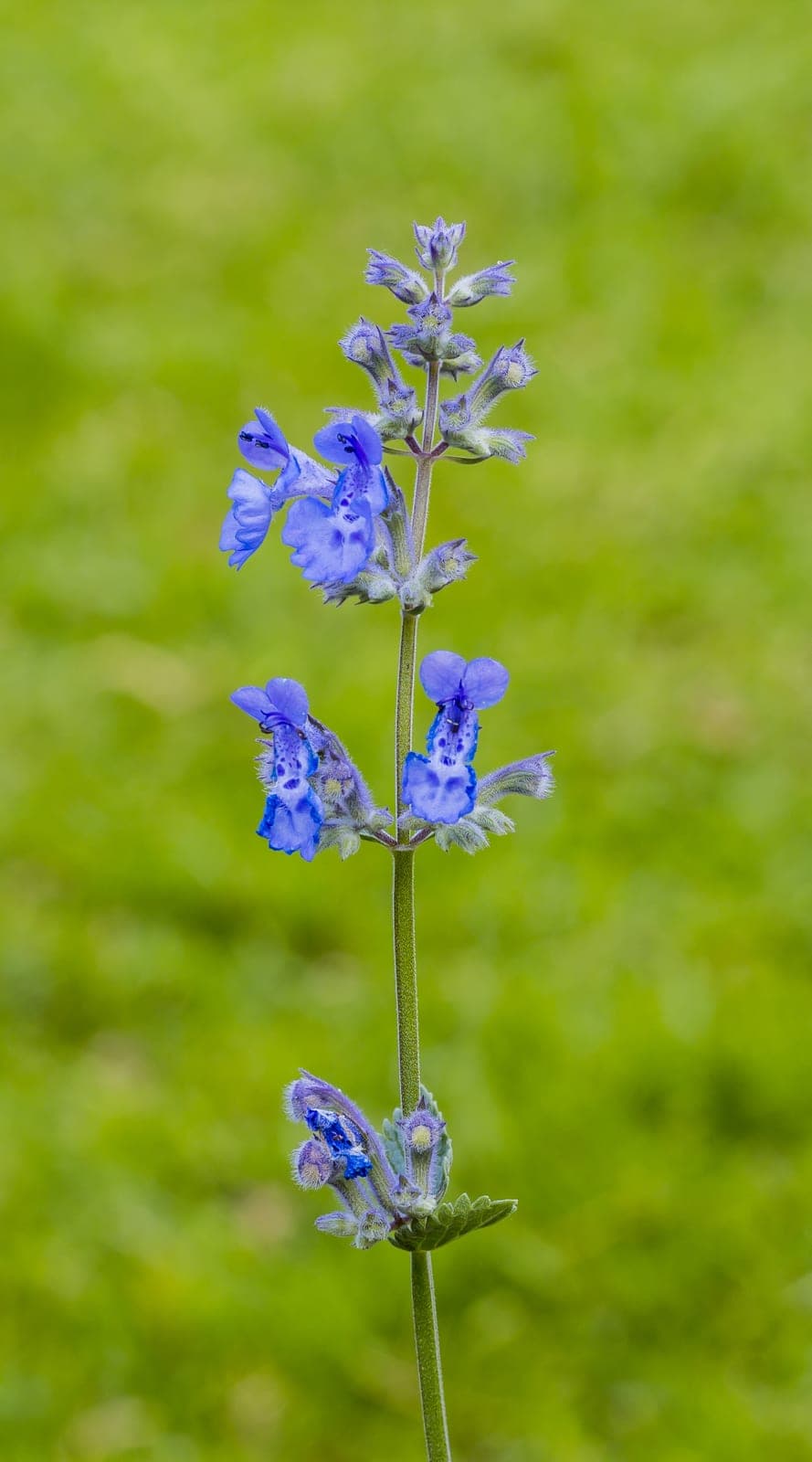
Despite the name, 'Walker's Low' isn't a dwarf - it was found growing at Walker's Low, a garden in Kent, and it's actually one of the larger catmints, building into a wide, billowing mound roughly twice the footprint of 'Mussinii' before it ever opens a flower. Sturdy stems hold the violet-blue spikes upright through summer storms without staking, which is unusual for a catmint this size. It was named Perennial Plant of the Year by the Perennial Plant Association in 2007 and carries the RHS Award of Garden Merit, largely for that combination of scale and reliability.
It also just keeps going: where most catmints need a hard midseason shear to rebloom, 'Walker's Low' will flower nearly continuously from late spring into fall with only light grooming, and it shrugs off summer humidity better than older cultivars, which makes it a stronger choice than 'Mussinii' in muggy climates. Give it room - at this size it reads more as a soft flowering shrub in a border than an edging plant. Divide every three or four years once the center starts to open up.
Powdery mildew
White or grey powdery coating on leaves - usually starting on older growth in humid conditions or when nights cool.
Improve air circulation by thinning plants. Apply neem oil or potassium bicarbonate spray at first sign. Avoid overhead watering.
Root rot
Plants wilt, yellow, and stunt even in moist soil; lower stems and roots turn brown, soft, and mushy and the plant may collapse. Most common in heavy, wet, or poorly drained ground.
Improve drainage and stop overwatering, and never plant too deep. Lift and destroy badly affected plants along with the soil around the roots. Grow in raised or free-draining beds to prevent it returning.