
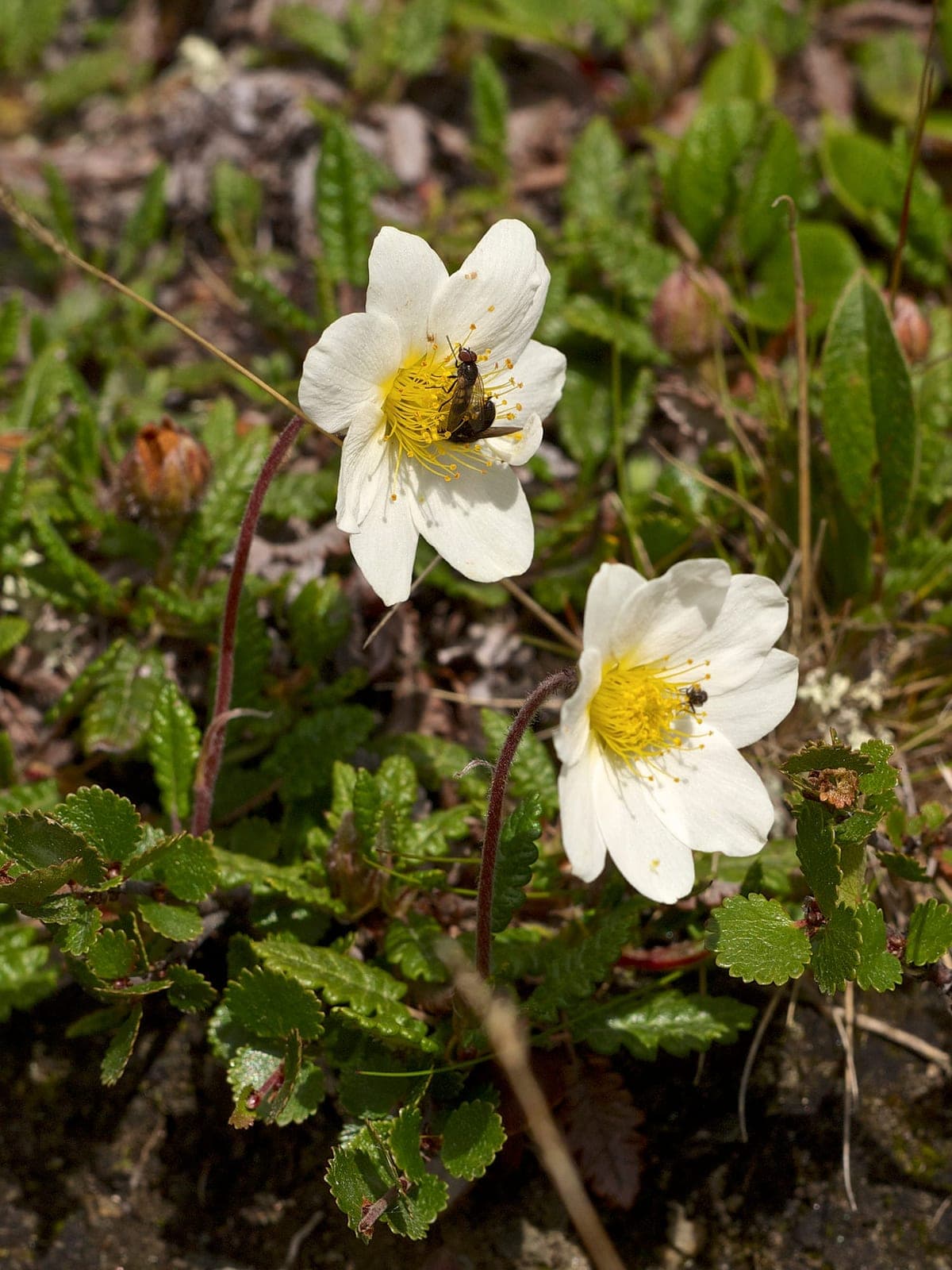
Dryas octopetala is a prostrate evergreen subshrub native to arctic and alpine habitats across the Northern Hemisphere. It forms slow-spreading mats of small, oak-like leathery leaves topped with eight-petaled white flowers in late spring to early summer - an unusual petal count for the Rosaceae family - followed by feathery, wind-dispersed seed heads that persist into fall. It is exceptionally cold-hardy and well suited to rock gardens, alpine troughs, and exposed limestone slopes in zones 2–6.
This plant demands excellent drainage and performs best in gritty, alkaline to neutral soils that replicate its natural scree and rocky ridge habitats. It is drought-tolerant once established, and a gravel or coarse grit top-dressing around plant crowns discourages crown rot while mimicking the stony conditions it evolved in. Dryas fixes atmospheric nitrogen through root associations with Frankia bacteria, making it a pioneer species on glacially disturbed terrain and useful for building fertility in nutrient-poor soils over time.
Dryas octopetala is the national flower of Iceland and holds national significance in Norway. Dried leaves have been used as a tea substitute by arctic peoples, and the species is widely recognized as a key early colonizer and soil builder in post-glacial landscapes.
Ecoregions:TundraTaigaNorthwestern Forested MountainsMarine West Coast ForestNorth American Deserts
Crown Rot
Lower leaves yellow and wilt; the base of the rosette turns brown and soft, sometimes with white fungal threads at the soil line. Plants collapse in wet conditions.
Remove and destroy affected plants. Improve drainage and avoid overhead watering. Do not mulch directly against the crown. Space plants for airflow and avoid replanting in the same wet spot.
Root rot
Plants wilt, yellow, and stunt even in moist soil; lower stems and roots turn brown, soft, and mushy and the plant may collapse. Most common in heavy, wet, or poorly drained ground.
Improve drainage and stop overwatering, and never plant too deep. Lift and destroy badly affected plants along with the soil around the roots. Grow in raised or free-draining beds to prevent it returning.
Powdery mildew
White or grey powdery coating on leaves - usually starting on older growth in humid conditions or when nights cool.
Improve air circulation by thinning plants. Apply neem oil or potassium bicarbonate spray at first sign. Avoid overhead watering.