
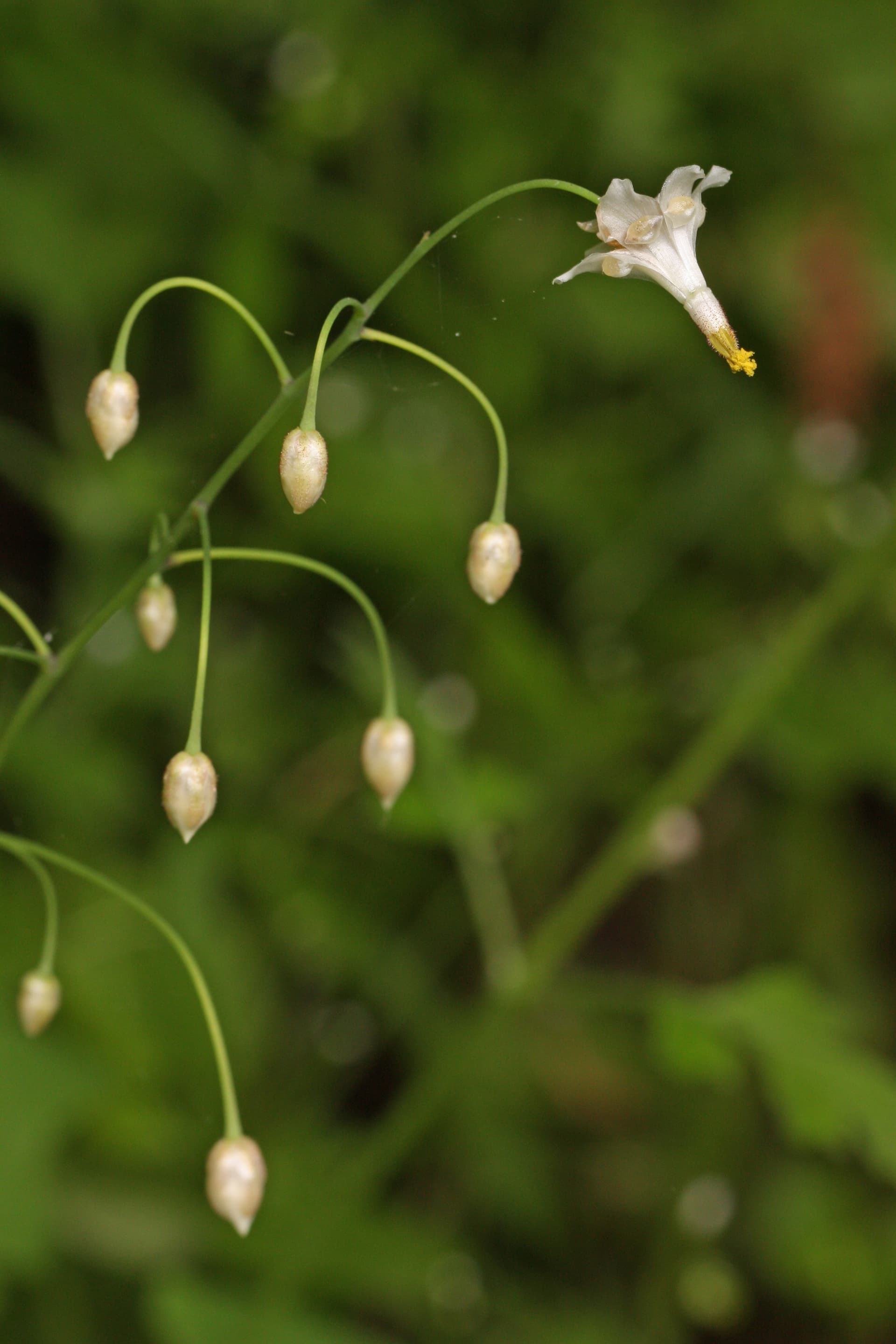
Vancouveria hexandra is a rhizomatous perennial native to the shaded coniferous and mixed forests of the Pacific Coast, from northern California through Oregon and Washington into British Columbia. Its common name refers to the small white flowers whose petals and sepals reflex sharply backward. Compound leaves with rounded, duckfoot-shaped leaflets form a dense, weed-suppressing mat beneath trees.
It requires cool shade, consistent soil moisture, and humus-rich, slightly acidic conditions (pH 5.5–6.5) that mimic its forest-floor origin. Spread is by rhizomes at a gradual, manageable rate. Foliage is semi-evergreen in mild winters and fully deciduous where temperatures drop hard. Annual mulching with shredded leaf litter sustains soil moisture, moderates temperature, and feeds soil biology. Plants are deer resistant and largely self-sufficient once established.
Vancouveria hexandra is well suited to Pacific Northwest restoration plantings under mature conifers, where few ornamentals persist. It can stabilize shaded slopes and fill structural gaps under established trees where lawn and sun-loving perennials fail.
Ecoregions:Northwestern Forested MountainsMarine West Coast Forest
Root rot
Plants wilt, yellow, and stunt even in moist soil; lower stems and roots turn brown, soft, and mushy and the plant may collapse. Most common in heavy, wet, or poorly drained ground.
Improve drainage and stop overwatering, and never plant too deep. Lift and destroy badly affected plants along with the soil around the roots. Grow in raised or free-draining beds to prevent it returning.
Fungal leaf spot
Brown or purplish spots on the leaves, often ringed with a yellow halo, that spread and merge in warm, humid, or wet weather; heavily spotted leaves yellow and drop early.
Pick off spotted leaves and clear fallen debris to remove overwintering spores. Improve air circulation by thinning, and water at the base so foliage dries quickly. If it persists, apply a copper- or sulfur-based fungicide at the first sign.
Botrytis (grey mould)
Grey fuzzy mould on petals and stems, worst in cool wet conditions.
Remove affected parts immediately. Improve air circulation. Avoid overhead watering. Apply copper fungicide if severe.