
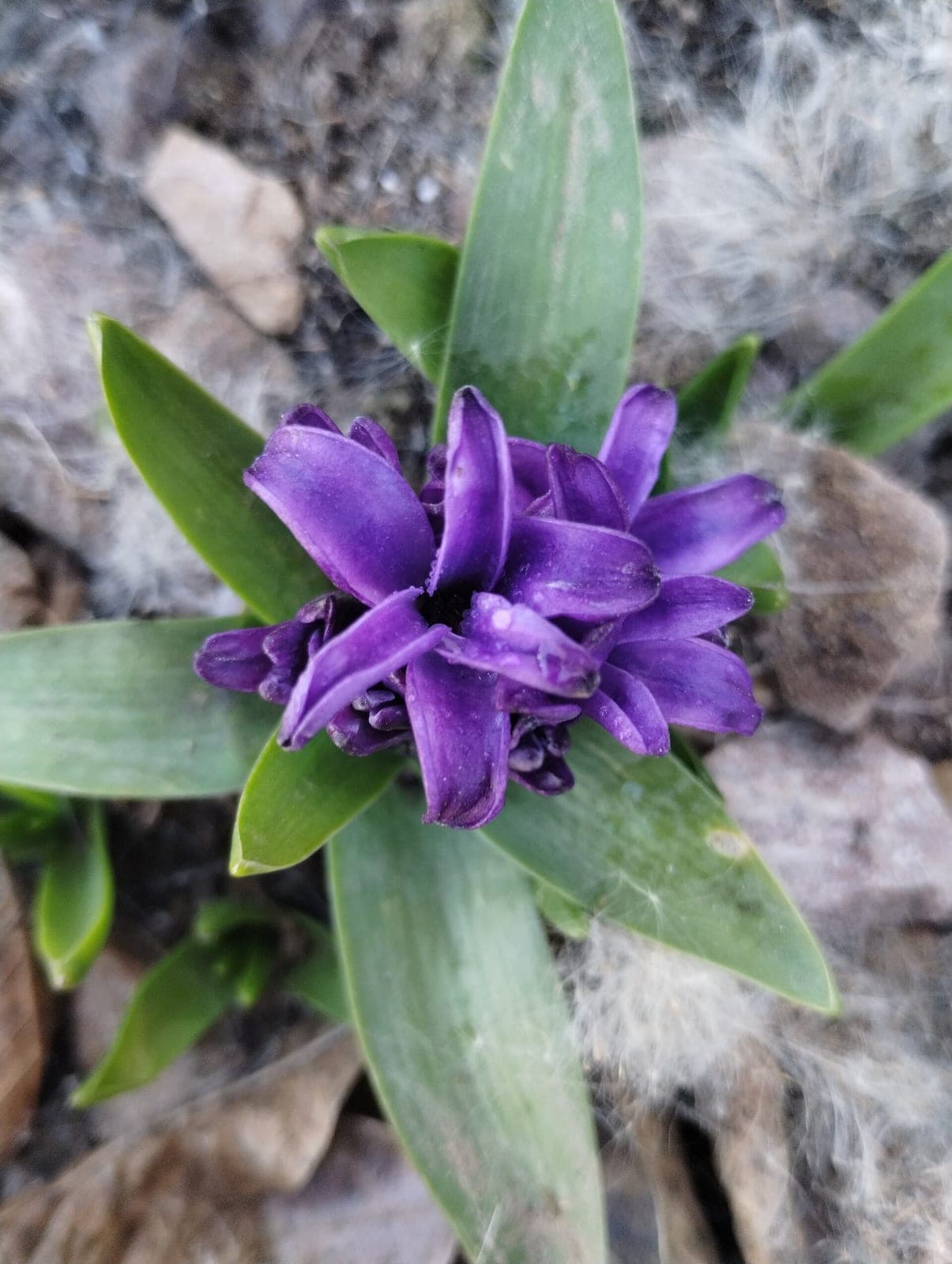
Hyacinth is prized for its intensely fragrant spring flowers - dense spikes of tiny florets in shades of pink, purple, white, blue, and occasionally yellow. A handful of stems fills a room with scent. Plant bulbs in fall, a few weeks before the ground freezes, into well-draining soil at least 6 inches deep with pointed end up. Avoid any site where water pools after rain; wet soil over winter is the primary killer.
Once established and left undisturbed, hyacinths will return year after year with reliable springtime color and fragrance. Cut spikes when the lowest flowers are just opening; subsequent florets continue to open in the vase. Allow foliage to yellow naturally after bloom - cutting green foliage weakens next year's flowers.
The perfume that fills a room is too much for a lot of people outdoors, and animals seem to agree: deer, rabbits and rodents leave hyacinths alone. The real protection is in the bulb, which is full of oxalic acid crystals - the same reason to wear gloves when planting, since they itch. That matters because voles and squirrels do their damage in fall and winter, long before any flowers open. Plant hyacinths among tulips and crocus to make the bed less inviting.
Botrytis (grey mould)
Grey fuzzy mould on petals and stems, worst in cool wet conditions.
Remove affected parts immediately. Improve air circulation. Avoid overhead watering. Apply copper fungicide if severe.