
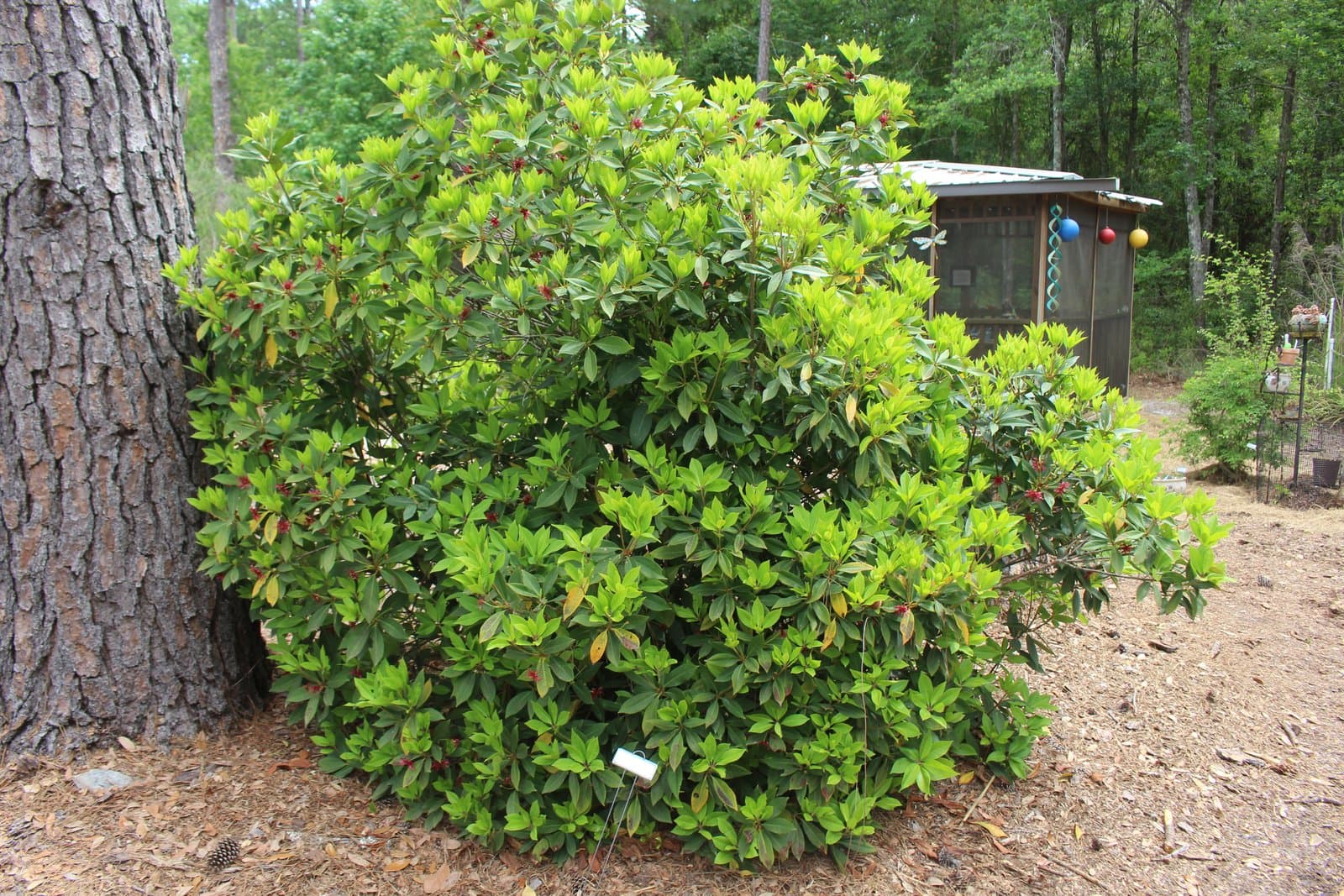
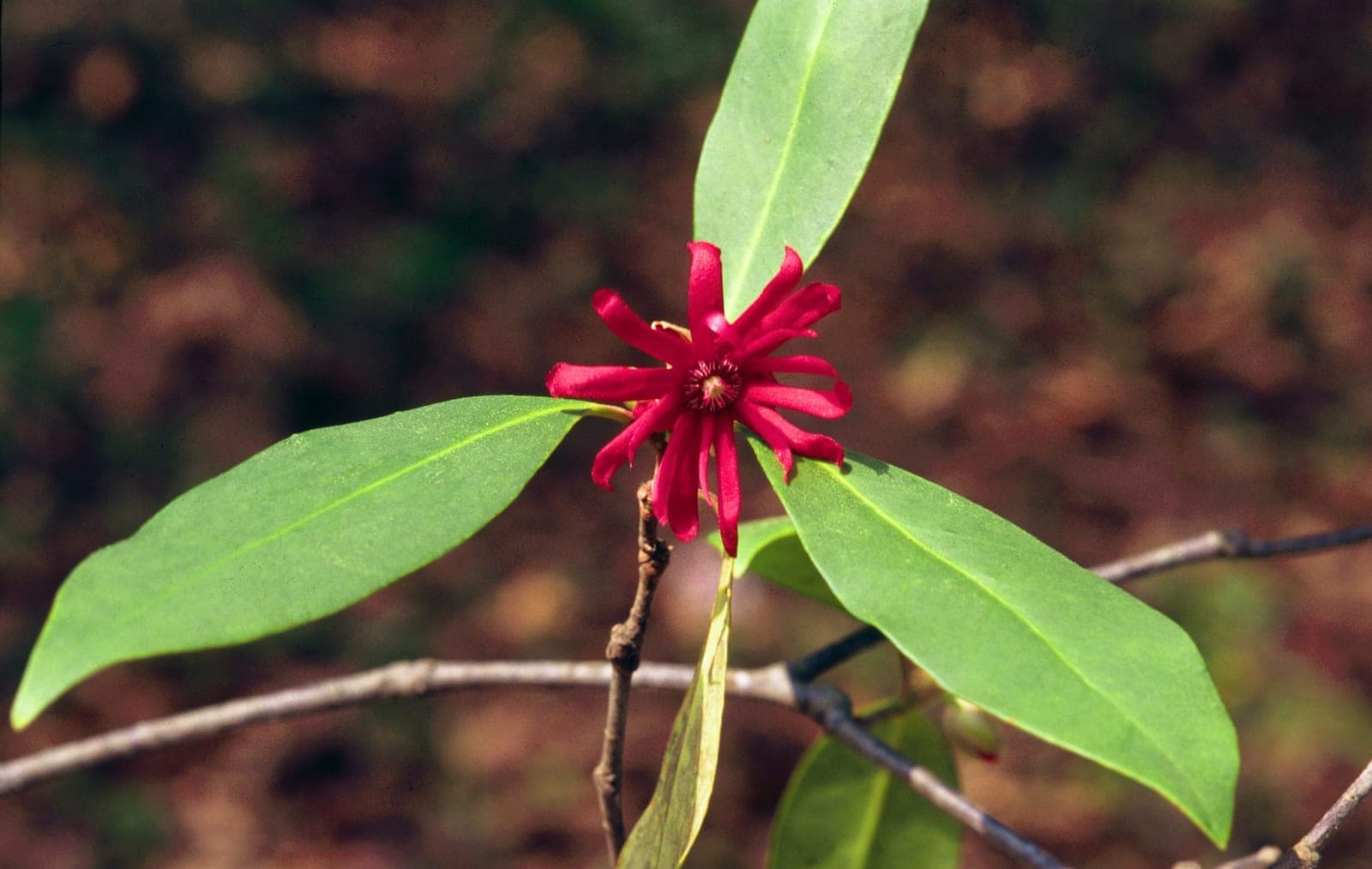
Florida anise is a broadleaf evergreen shrub native to shaded ravines, streambanks, and bottomland forests along the Gulf Coast, from Florida to Louisiana and into Mexico. The lance-shaped leaves emit a strong anise scent when crushed, and dark maroon-red flowers with narrow petals appear in mid-to-late spring. Among native evergreen shrubs, few perform as reliably in deep shade in the Southeast.
In the landscape, it functions as a screening plant or informal hedge where moist, acidic conditions prevail. It spreads slowly by suckers, filling a shaded bed or woodland edge over time. Mulching deeply maintains the consistently moist, humus-rich soil it requires and helps insulate roots at the cold edge of its range. The entire plant is toxic - it contains anisatin and related sesquiterpene lactones - and should not be confused with culinary star anise (Illicium verum). Deer typically avoid it because of this toxicity, making it a practical choice for high-browse-pressure sites.
Ecoregions:Eastern Temperate Forests
Phytophthora Root Rot
Wilting despite moist soil, yellowing leaves, stunted growth, and dark, decayed roots and crown tissue. Vines may collapse during hot weather.
Plant in well-draining soil and avoid waterlogging. Remove and destroy affected vines. Improve drainage with raised beds or amended soil and avoid overwatering.
Fungal leaf spot
Brown or purplish spots on the leaves, often ringed with a yellow halo, that spread and merge in warm, humid, or wet weather; heavily spotted leaves yellow and drop early.
Pick off spotted leaves and clear fallen debris to remove overwintering spores. Improve air circulation by thinning, and water at the base so foliage dries quickly. If it persists, apply a copper- or sulfur-based fungicide at the first sign.